
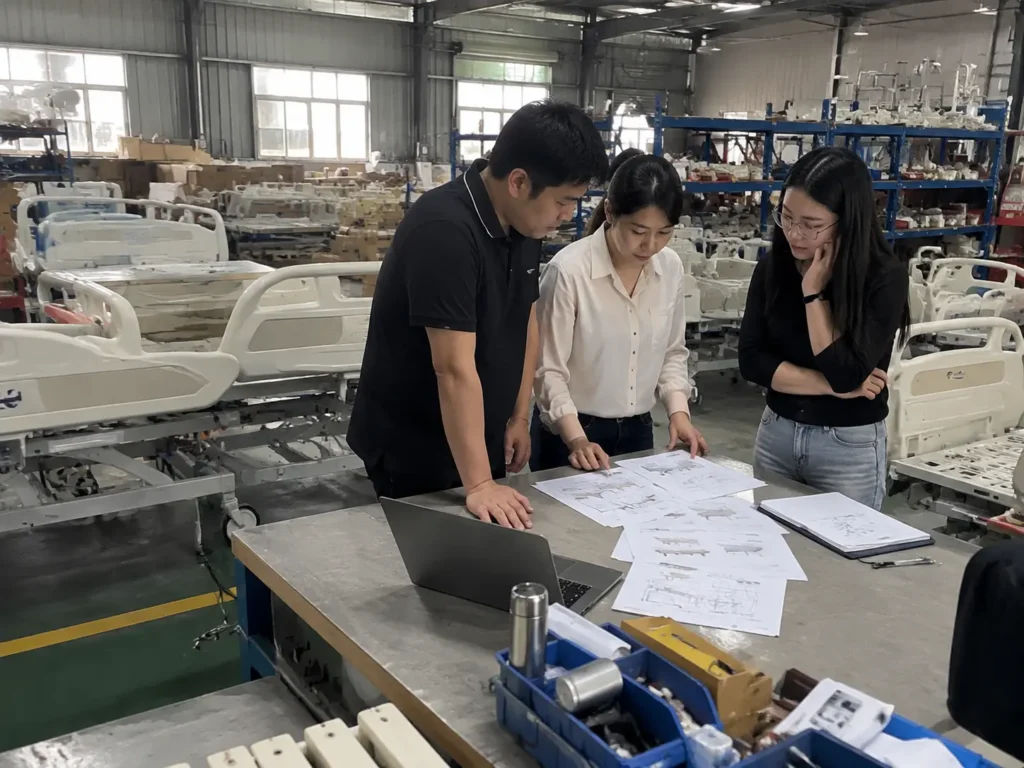
Hospital bed side rails are model-specific components used to support bed-edge awareness, positioning, transfers and caregiver access. Common designs include full-length rails, split rails, half rails, folding rails and assist rails. No rail type is automatically suitable for every patient or facility: the bed frame, mattress, rail geometry, intended user and care procedure must be assessed as one system.
This guide is for hospitals, nursing homes, home-care distributors and medical equipment buyers comparing rail configurations for new beds or replacement projects. It explains the main types, compatibility risks, inspection points, purchasing scenarios and information to include in an RFQ.
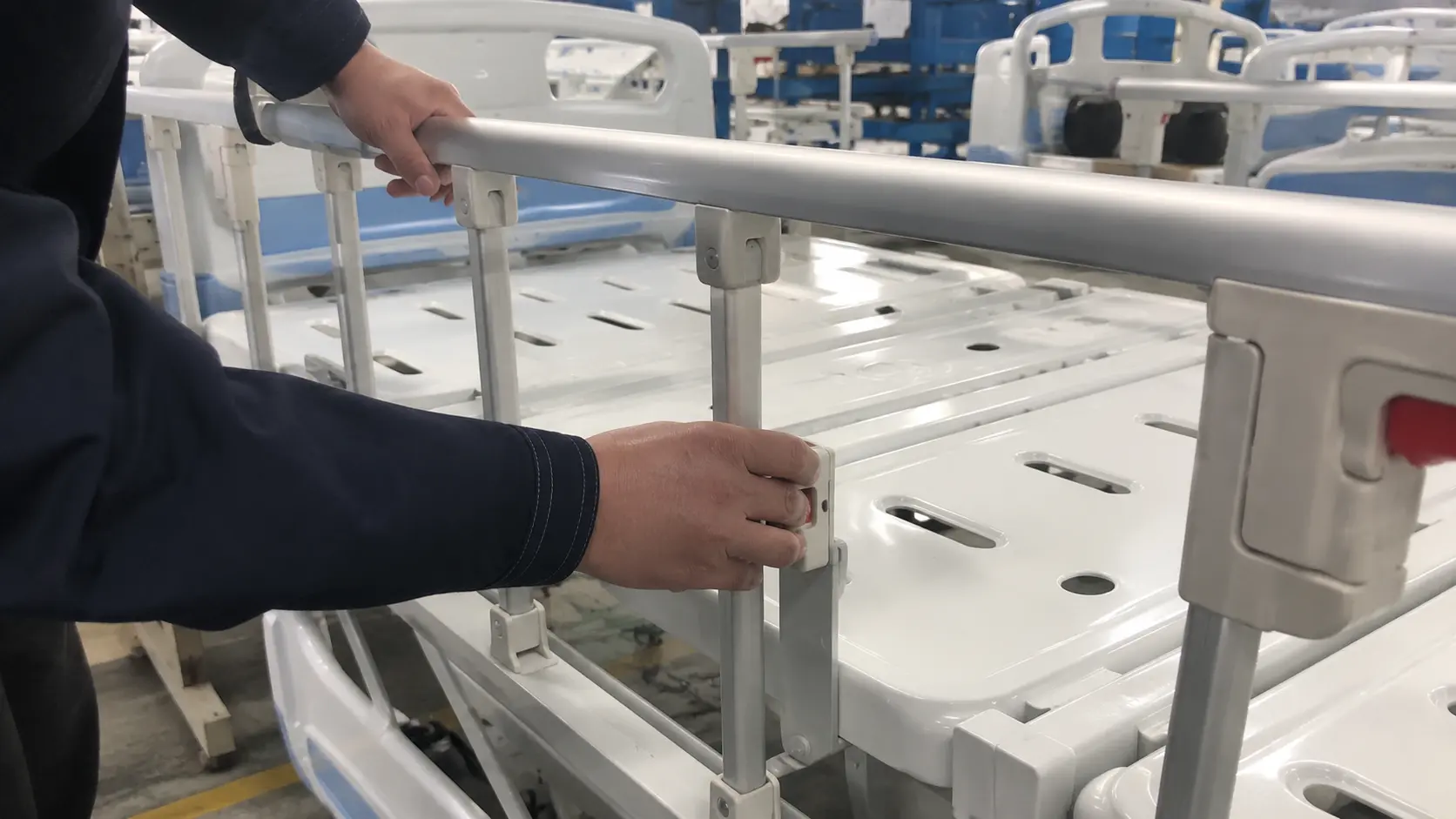
Hospital Bed Side Rail Type Comparison
| Rail type | Typical characteristic | Potential purchasing advantage | What must be checked |
|---|---|---|---|
| Full-length rail | Covers most of the bed side | Continuous side coverage | Gaps, articulation, release access and suitability for intended users |
| Split rail | Separate head and foot sections | Selective access and configuration flexibility | Space between rail sections and behavior during bed movement |
| Half or three-quarter rail | Partial side coverage | Can leave an exit or transfer area open | Rail-end gaps, mattress position and intended purpose |
| Folding rail | Folds or drops for access | Convenient caregiver access on basic ward beds | Lock engagement, pinch points, clearance and operating effort |
| Assist rail or handle | Short support near part of the mattress | May support repositioning or transfers when appropriate | Individual assessment, mounting stability and entrapment areas |
| Integrated control rail | Rail includes patient or nurse controls | Controls remain accessible at bedside | Electrical compatibility, lockout, cables, warranty and replacement parts |
These labels are descriptive, not universal specifications. Two rails sold under the same name may use different lengths, openings, materials, release mechanisms and mounting systems. Buyers should request model-specific drawings, photos and instructions rather than relying on the category name.
What Side Rails Can and Cannot Do
Depending on the bed and care plan, rails may help a person recognize the bed edge, provide a handhold for repositioning, support selected transfers or carry integrated controls. They can also help organize the working area around an articulated medical bed.
However, rails are not a universal fall-prevention solution and should not automatically be raised for every user. They may introduce risks such as entrapment between the rail, mattress and frame; injury during operation; climbing-related falls; or unnecessary restriction. Suitability should follow the facility’s clinical assessment, local requirements and the manufacturer’s instructions.
The U.S. FDA describes a bed system as the compatible combination of bed frame, mattress, rails and other accessories. Its hospital bed system guidance identifies openings around rails, mattresses and frames as potential entrapment areas. Buyers in other countries should also confirm the regulations and standards applicable at destination.
Main Hospital Bed Rail Designs
Full-length rails
Full-length rails run along most of the mattress platform and are often seen on traditional manual beds. Their continuous appearance does not eliminate the need for assessment. Openings inside the rail, the space below it, the rail ends and the way the mattress compresses all require attention. Articulated bed positions should also be evaluated because rail-to-mattress relationships can change as the deck moves.
Split rails
Split systems commonly use separate head and foot rail sections. One section may be lowered while another remains raised, which can improve access for care tasks. Buyers must check the gap between sections, each release mechanism, the relationship to deck articulation and whether controls are installed in one or both rails.
Folding or drop-down rails
Folding rails are common on manual and general ward beds. Designs may pivot, collapse or move downward beside the frame. Procurement teams should test whether the rail locks clearly, whether staff can operate it with one hand where required, and whether it contacts casters, cranks, cables or surrounding furniture.
Assist rails and handles
Short rails or handles may be intended to assist selected users with repositioning or transfers. They still require compatibility and risk assessment. Adding an aftermarket handle to an existing bed without manufacturer confirmation can create new gaps or unstable mounting conditions.
Rails with integrated controls
Some electric and ICU beds place patient controls, nurse controls or status indicators in the rail. These rails are electrical assemblies as well as structural components. Replacement requires the correct connector, control logic, cable routing, software or control-box compatibility and lockout functions.
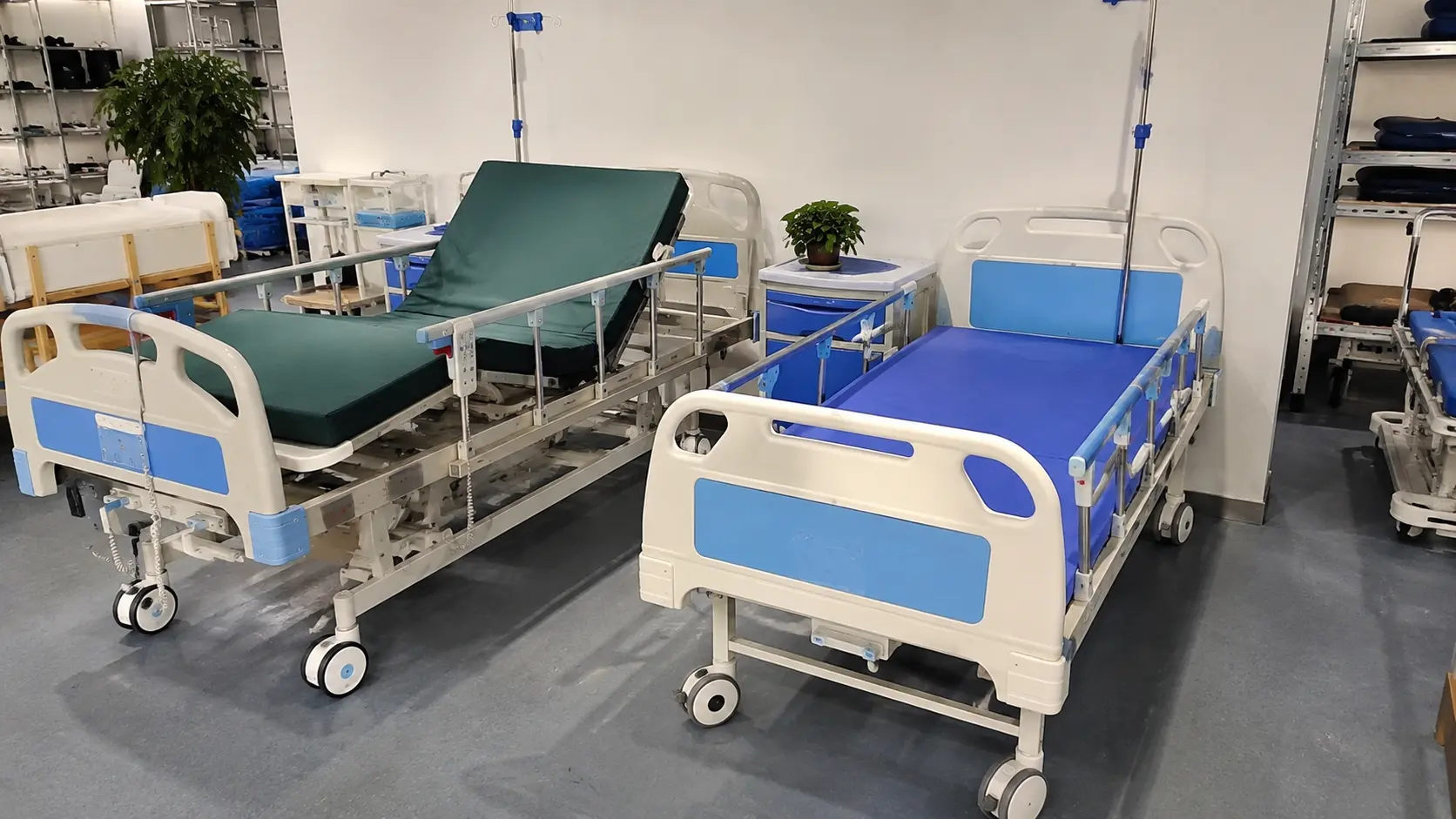
Bed, Mattress and Side Rail Compatibility
Rail compatibility cannot be confirmed by rail length alone. A complete review should include the following factors.
Mattress width, length and thickness
A mattress that is too narrow, short, thick, soft or compressible can change spaces around the rail. Specialty and powered surfaces may behave differently from standard foam. Check the permitted dimensions and surface types for the exact bed model. The hospital bed mattress size guide explains how to document platform and mattress measurements.
Rail openings and surrounding gaps
Potential entrapment areas can occur within the rail, under it, between the rail and mattress, around rail ends, between split sections, and near the headboard or footboard. A visual glance is not a dimensional assessment. Follow the manufacturer’s test method and the guidance or requirements relevant to the destination market.
Bed articulation
Raise and lower the backrest, knee section and bed height while observing the rail, mattress and cables. A gap can change as the mattress bends or shifts. Full-length rails also need evaluation in articulated positions rather than only when the platform is flat.
Mounting system
Confirm brackets, fasteners, pivot pins, weldments and left/right orientation. Similar-looking rails may attach to different frame versions. Replacement quotations should reference the bed model and production batch or serial number where available.
Rail height and mattress compression
Mattress thickness affects how far the rail extends above the sleep surface. Compression under a person’s weight can also change the geometry. A thicker mattress is not automatically better, and an unapproved topper may alter the intended relationship.
User and care setting
Technical compatibility does not by itself make a rail suitable for an individual. Clinical and care teams should consider mobility, cognition, behavior, transfers, monitoring and alternatives. Procurement defines the available configuration; qualified local professionals determine appropriate use.
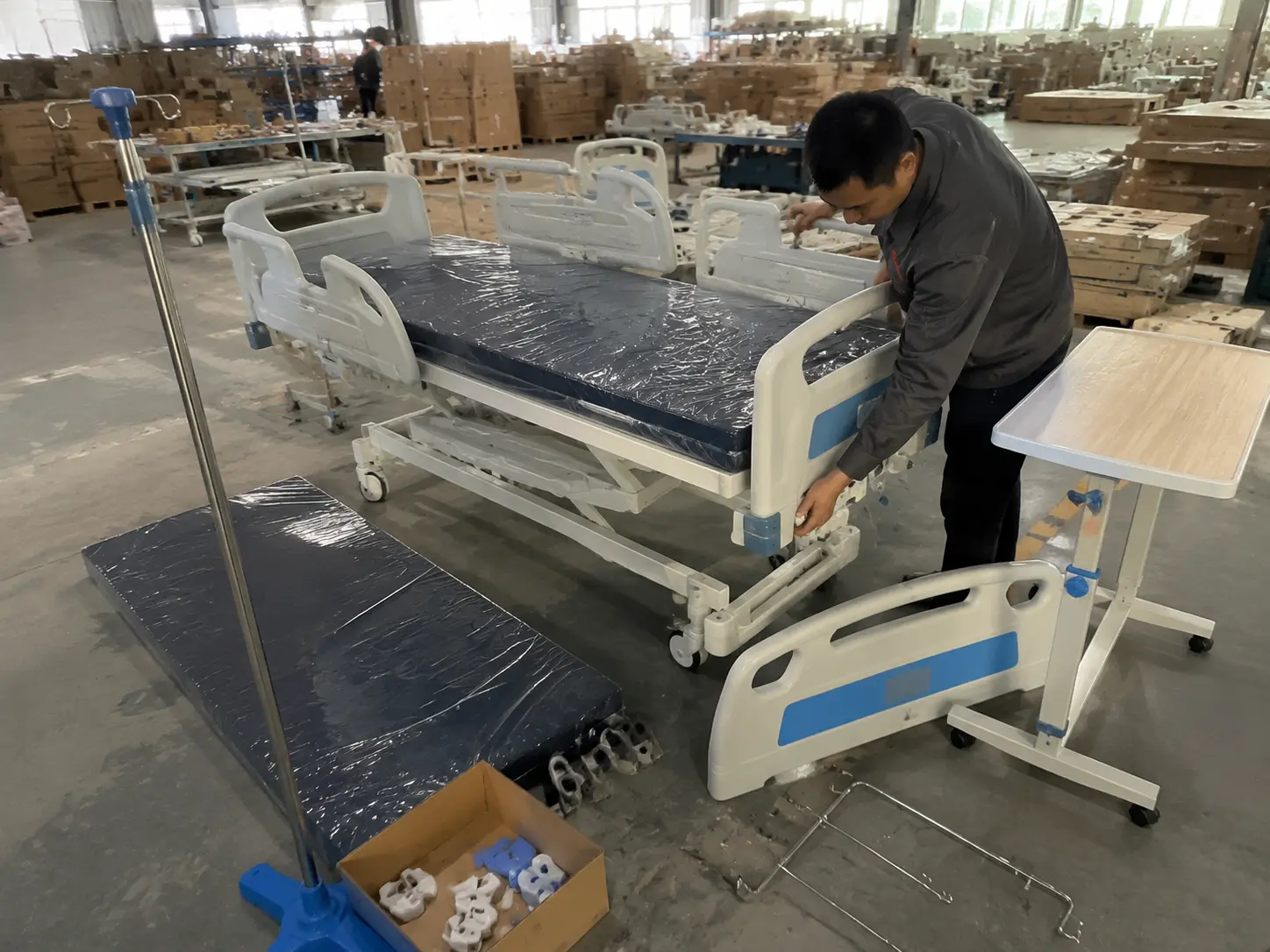
How Procurement Teams Should Select Side Rails
- Identify the bed category. State whether the project uses manual, electric, ICU, nursing, home-care or bariatric beds.
- Define the intended setting. General ward, critical care, long-term care and home care have different workflows.
- Specify the rail design. Request full-length, split, folding or another defined configuration rather than “standard rails.”
- Match the mattress. Give the mattress code, dimensions, thickness and surface type.
- Review dimensions and testing. Request the supplier’s applicable rail and entrapment assessment information for the complete system.
- Test daily operation. Check raising, lowering, locking, release access, cleaning and clearance through all bed movements.
- Confirm materials. Record rail material, finish, panels, release components and cleaning requirements.
- Define control features. For integrated rails, specify patient buttons, nurse controls, lockouts and indicators.
- Plan replacement parts. Ask for rail assemblies, locks, dampers, pins and control components by part number.
- Approve a reference sample. Inspect the complete bed, mattress and rail system before volume production.
Buyers comparing rail systems within a larger equipment order can use the hospital bed accessories guide to separate standard equipment, options and spare parts. Available hospital bed configurations should then be reviewed model by model.
Hospital Bed Side Rail Procurement Scenarios
Scenario 1: New electric beds for a general ward
The hospital wants split rails for caregiver access. The tender should specify how many rail sections are required, which sections include controls, the mattress configuration and the expected release method. One assembled sample should be operated through backrest, knee and height movements before approval.
Scenario 2: Replacement rails for an older bed fleet
The facility should inventory bed manufacturer, model, production reference, mattress and existing rail type. Photos and measurements are useful, but the original or current manufacturer should confirm compatibility. If an exact replacement is unavailable, the facility needs a documented assessment rather than an improvised installation.
Scenario 3: Nursing-home standardization
A nursing-home group may want one rail design across several locations. First determine whether the beds and mattresses are actually identical. Then consider resident assessment procedures, staff training, inspection frequency and the availability of low-bed or non-rail alternatives for individuals where rails are not appropriate.
Scenario 4: Home-care distributor packages
The distributor should sell defined bed, mattress and rail combinations. Each package needs installation instructions and a compatibility record. Sales staff should not substitute a locally sourced mattress or portable rail without checking the complete configuration.
Scenario 5: ICU bed tender
Integrated rail controls, angle indicators and split sections can materially affect price and maintenance. The buyer should separate required features from optional ones and ask for replacement control-rail pricing, cable information and warranty terms.
Incoming Inspection and Maintenance Checks
Incoming inspection should verify that the correct rails arrived with each bed model and that no shipping damage, loose hardware or deformation is present. Assemble a sample from each batch before distributing beds to wards.
| Inspection item | What to check | When to check |
|---|---|---|
| Mounting | Correct brackets, fasteners, pins and orientation | Installation and after service work |
| Movement | Smooth raising, lowering or folding without obstruction | Incoming inspection and routine checks |
| Lock | Clear engagement and release according to instructions | Before use and scheduled maintenance |
| Gaps | Bed, rail and mattress relationship in relevant positions | Installation, mattress change and periodic assessment |
| Damage | Cracks, bends, worn latches, loose panels or sharp edges | Routine inspection and after impact |
| Controls | Buttons, lockouts, cables and indicators | Installation and functional inspection |
| Cleaning | Residue, inaccessible areas and material condition | Under the facility’s cleaning procedure |
Reassess the system whenever the mattress, rail, frame component or accessory changes. Rails can loosen or shift over time, and mattresses can compress or be replaced with a different construction. Record inspection findings by bed asset number so recurring problems can be traced.
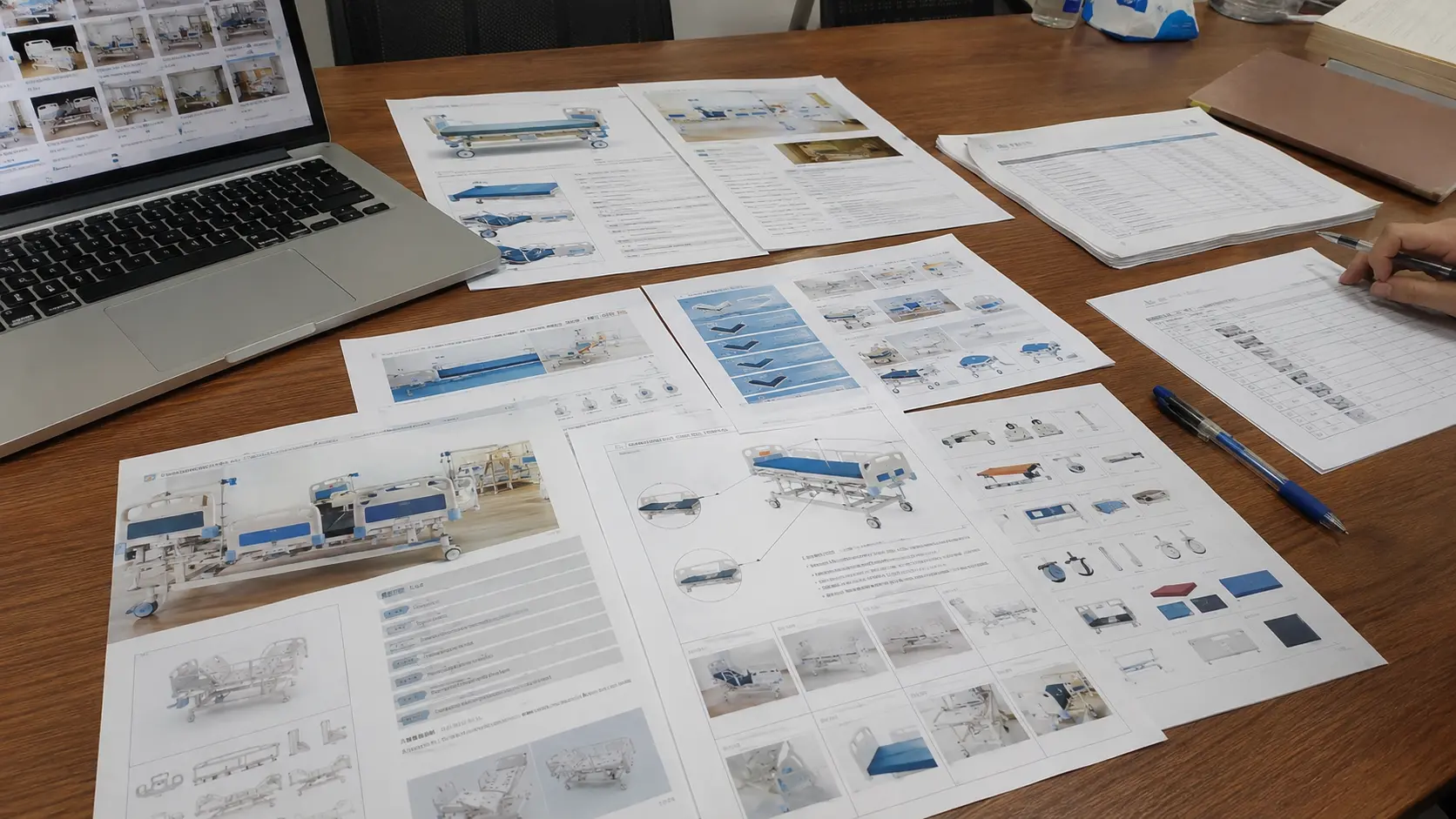
Hospital Bed Side Rails RFQ Checklist
- New bed order or replacement-rail request
- Bed manufacturer, model and production reference
- Bed type, function count and intended care setting
- Required rail type and number of rail sections
- Rail material, finish and panel requirement
- Mattress code, width, length, thickness and construction
- Rail dimensions, openings and mounting drawing
- Locking and release mechanism
- Integrated control, indicator and lockout requirements
- Required compatibility or assessment documentation
- Quantity per bed and total quantity
- Spare locks, pins, dampers, brackets or control parts
- Cleaning and material requirements
- OEM labels, color and packaging
- Destination country, port, lead time and documentation needs
Ask the supplier to state whether each rail is included in the base bed price, optional or supplied as a replacement part. For export orders, confirm whether rails fold against the frame, detach or pack separately because this affects carton volume and assembly work.
Hospital Bed Side Rails FAQ
What are the main types of hospital bed side rails?
Common designs include full-length, split, half, three-quarter, folding, assist and integrated-control rails. Names vary by manufacturer, so the exact geometry and mounting system must be reviewed.
Are hospital bed rails universal?
No. Most bed-mounted rails are designed for specific frames, brackets and mattresses. Matching length or appearance does not confirm compatibility.
Do side rails prevent every patient fall?
No. Rails are not a universal fall-prevention solution and can introduce other risks. Their use should follow an individual assessment, the care plan, local requirements and manufacturer instructions.
Why does mattress thickness matter?
Thickness and compressibility change rail height above the sleep surface and the spaces between the mattress, rail and frame. Confirm the approved mattress range for the exact bed.
Can a full-length rail still present an entrapment concern?
Yes. Openings within or around any rail type should be assessed, including when the bed is articulated. Continuous length alone does not establish suitability.
What information is needed to order a replacement rail?
Provide the bed manufacturer, model, serial or batch reference, side and rail position, mattress details, photos of the rail and mounts, control information and required quantity.
Request a Compatible Bed and Rail Configuration
Haoshangjia Medical is a China hospital bed manufacturer and supplier serving hospitals, nursing homes, clinics, rehabilitation centers and medical equipment distributors. Send the bed type, model, mattress, rail design, quantity, destination country and documentation requirements for a model-specific quotation.