
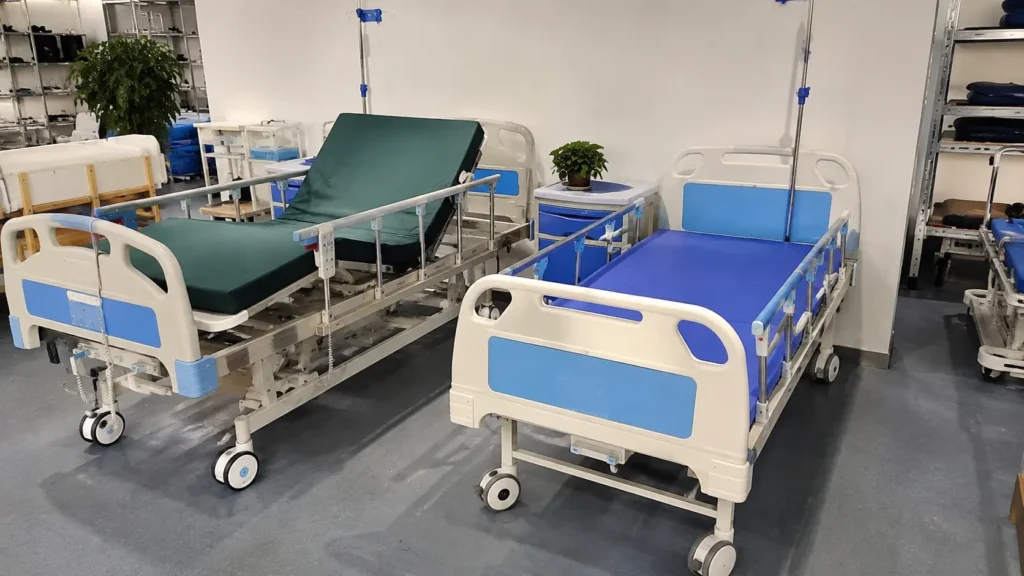
Short answer: ICU bed buyers should check bed functions, safe working load, height range, Trendelenburg positions, side rails, castors, braking system, CPR release, mattress platform, accessory options, electrical requirements, packing and documentation support before sending an RFQ. The best ICU bed is not the model with the longest feature list. It is the bed that matches the care environment, staff workflow, project budget and local import requirements.
This ICU bed specifications buying guide is written for hospital procurement teams, project contractors, distributors and healthcare buyers comparing intensive care beds for public hospitals, private hospitals, emergency units and medical equipment tenders.
If you need a standard ward bed instead of an intensive care bed, review the electric hospital bed page first. If the project includes critical care rooms, use this guide to prepare a clearer ICU bed RFQ.
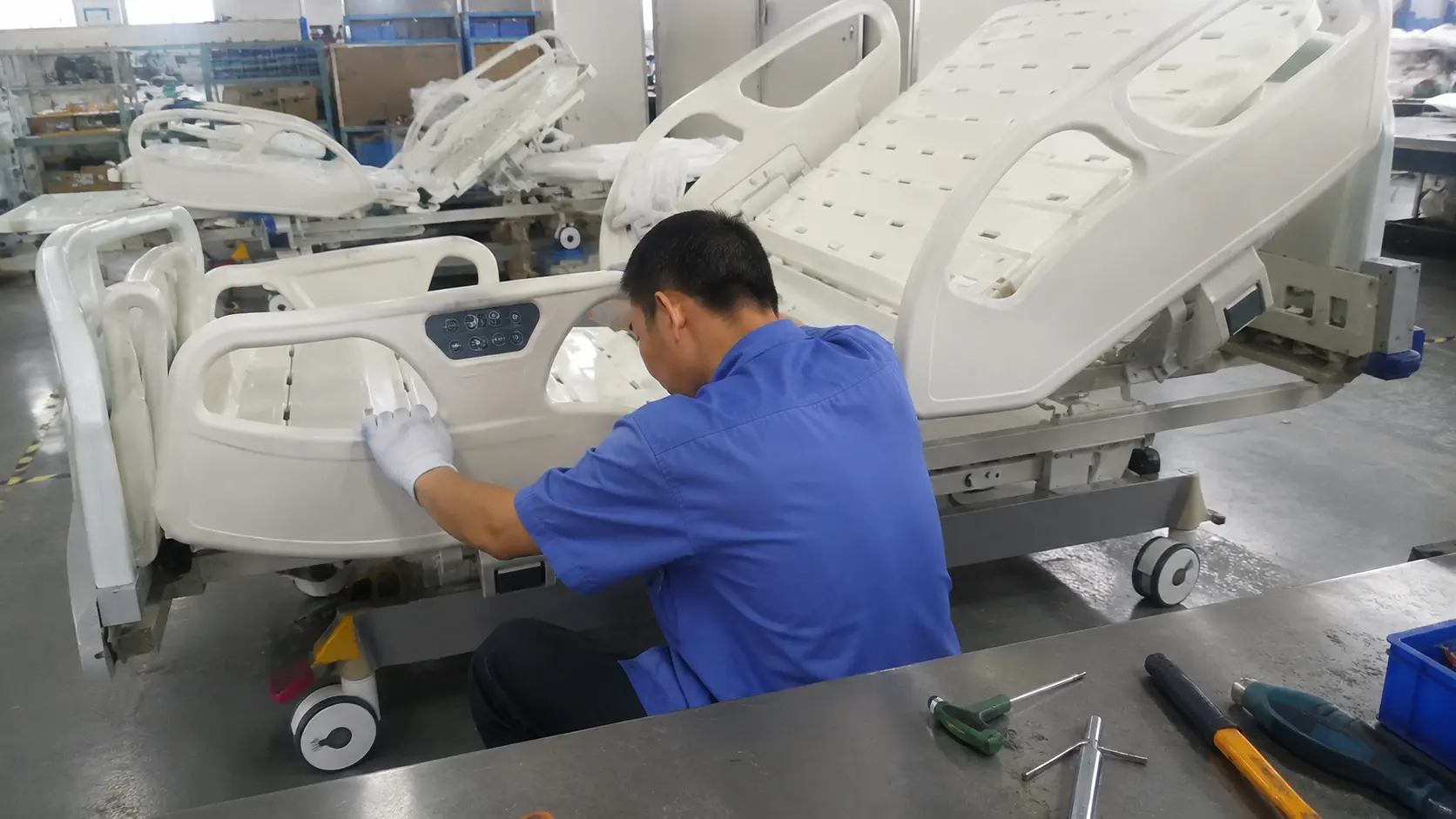
ICU Bed Specifications: Quick Buyer Checklist
Before comparing prices, prepare a specification checklist. This helps suppliers quote the same configuration and reduces misunderstanding during hospital project procurement.
| Specification Area | What To Confirm | Why It Matters |
|---|---|---|
| Bed functions | Backrest, leg-rest, height, Trendelenburg, reverse Trendelenburg and other movements. | Functions affect patient positioning and staff workflow. |
| Safe working load | Maximum load rating for patient, mattress and accessories. | Important for project specifications and daily use planning. |
| Side rails | Rail material, height, lock type and operation method. | Side rail design affects patient protection and caregiver operation. |
| Castors and braking | Castor size, central brake or individual brake, directional locking. | Important for bed movement, stability and cleaning workflow. |
| CPR function | Manual or electric CPR release depending on model. | Critical care rooms often require quick bed flattening capability. |
| Electrical requirements | Voltage, plug, motor system, control panel and backup options if available. | Electric components must match the destination market. |
| Accessories | Mattress, IV pole, drainage hooks, nurse control, bed extension or other options. | Accessories can change function, price, packing and container loading. |
How ICU Beds Differ From Standard Electric Hospital Beds
An ICU bed is usually more complex than a standard electric ward bed. A standard electric bed may be suitable for general wards, clinics or nursing homes. An ICU bed is designed for more demanding patient care environments and may include stronger structure, advanced positioning, central braking and more accessory options.
The difference does not mean every hospital room needs an ICU bed. ICU beds should be selected for rooms where the functions and structure are actually needed.
| Item | Standard Electric Bed | ICU Bed |
|---|---|---|
| Primary use | General wards, private rooms, nursing homes and clinics. | Intensive care units, emergency departments and higher-care rooms. |
| Function level | Usually 3-function or 5-function models. | Often multi-function with more positioning and emergency workflow support. |
| Braking system | May use individual castor brakes or simpler locking. | Often requires stronger braking and easier staff operation. |
| Accessories | Basic accessories such as IV pole and mattress. | More accessory options and critical-care related configuration may be requested. |
| Procurement focus | Comfort, price and general use. | Function, stability, workflow, safety-related design and specification compliance. |
If you are still choosing between ward bed types, the 3 function vs 5 function electric hospital bed guide may help before you move to ICU bed specifications.
Core ICU Bed Functions To Confirm
The function list is the first section most buyers check, but function names can vary between manufacturers. Always ask for a specification sheet with function descriptions and adjustment ranges.
| Function | Buyer Question | Procurement Note |
|---|---|---|
| Backrest adjustment | What is the adjustment range? | Check whether the range fits the hospital’s intended use. |
| Leg-rest adjustment | Is it independent or combined with another movement? | Function control can vary by model. |
| Height adjustment | What are the lowest and highest platform heights? | Important for patient transfer, caregiver work and emergency access. |
| Trendelenburg | What angle is available? | Confirm the actual degree and control method. |
| Reverse Trendelenburg | What angle is available? | Useful for advanced positioning and some care workflows. |
| CPR release | Is CPR release manual, electric or both? | Hospitals should confirm the required operation style before order. |
Frame, Mattress Platform and Safe Working Load
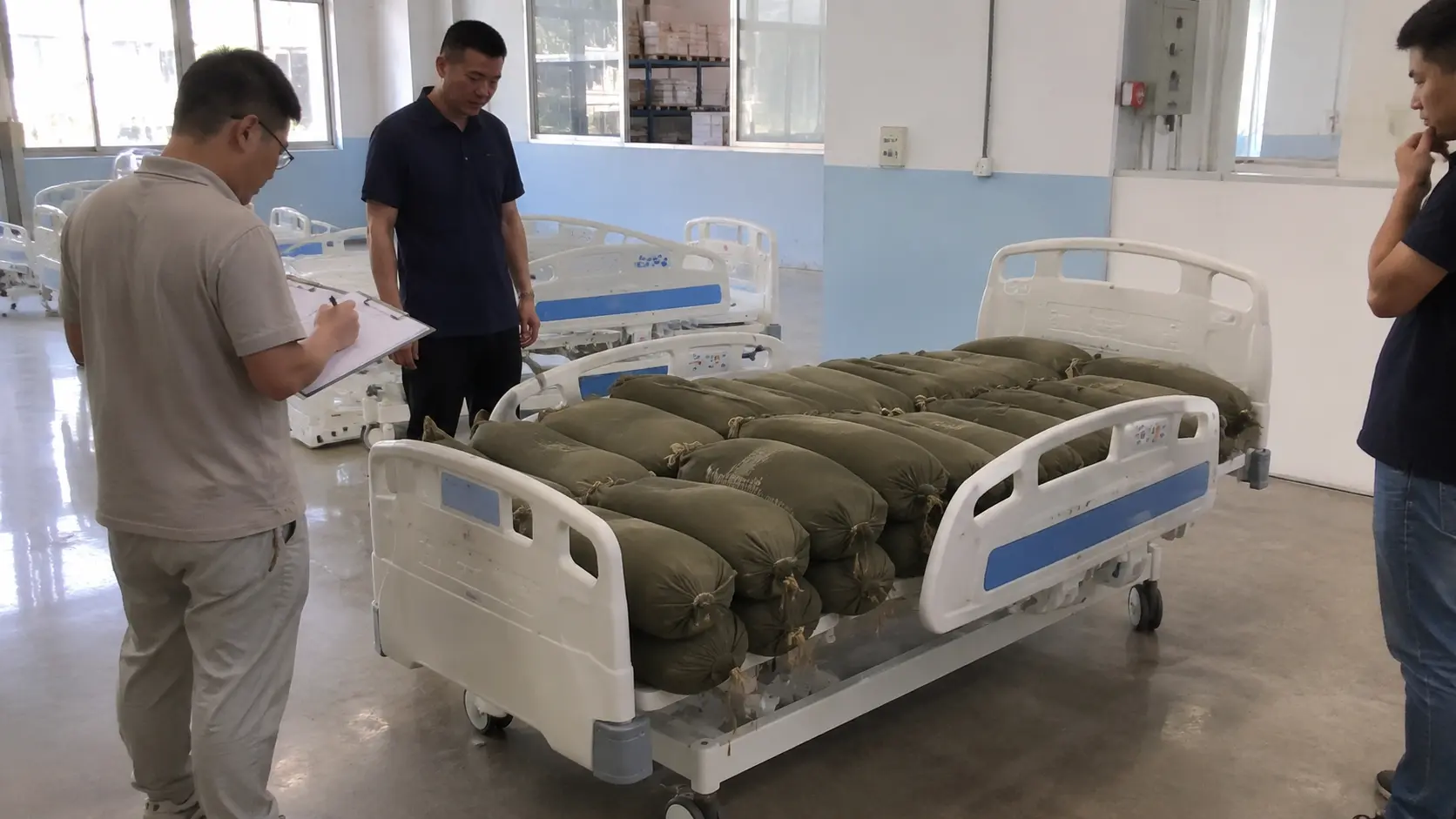
The bed frame and mattress platform affect stability, cleaning, durability and compatibility with the mattress. ICU buyers should not only look at the appearance of the bed. They should confirm the structural details in writing.
Ask the supplier to confirm:
- Overall bed dimensions.
- Mattress platform size.
- Frame material and surface treatment.
- Safe working load.
- Back section and leg section structure.
- Cleaning-friendly design details.
- Mattress compatibility and mattress thickness recommendations.
Safe working load should be evaluated according to the hospital’s patient profile, mattress and accessories. Do not compare load rating without checking the whole specification.
Side Rails, Castors and Braking System
Side rails, castors and brakes are daily-use components. They affect caregiver operation as much as the motor functions do. For ICU beds, these parts should be checked carefully before confirming the model.
| Component | What To Check | Common Buyer Concern |
|---|---|---|
| Side rails | Material, height, lock design and operation method. | Easy operation and secure locking during daily care. |
| Castors | Size, material, movement quality and load rating. | Smooth movement and reliable stability. |
| Central brake | Whether central braking is included or optional. | Staff need fast and consistent bed locking. |
| Directional lock | Whether one castor can guide straight movement. | Useful when moving beds through corridors. |
| Bumpers | Corner protection and wall impact protection. | Reduces damage during movement and cleaning. |
Electrical System and Control Options
An ICU bed is usually electric, so power compatibility must be confirmed before production. Importers should not assume one voltage or plug type fits every destination market.
Ask about:
- Voltage and frequency options.
- Plug type for the destination country.
- Motor system and control box configuration.
- Handset, nurse control panel or side rail control options.
- Battery backup availability if required.
- Emergency lowering or CPR function operation.
- Spare motor, handset and cable availability.
For distributors, spare parts planning is especially important. A small spare parts package can reduce future downtime and improve local service response.
Accessories To Include in the RFQ
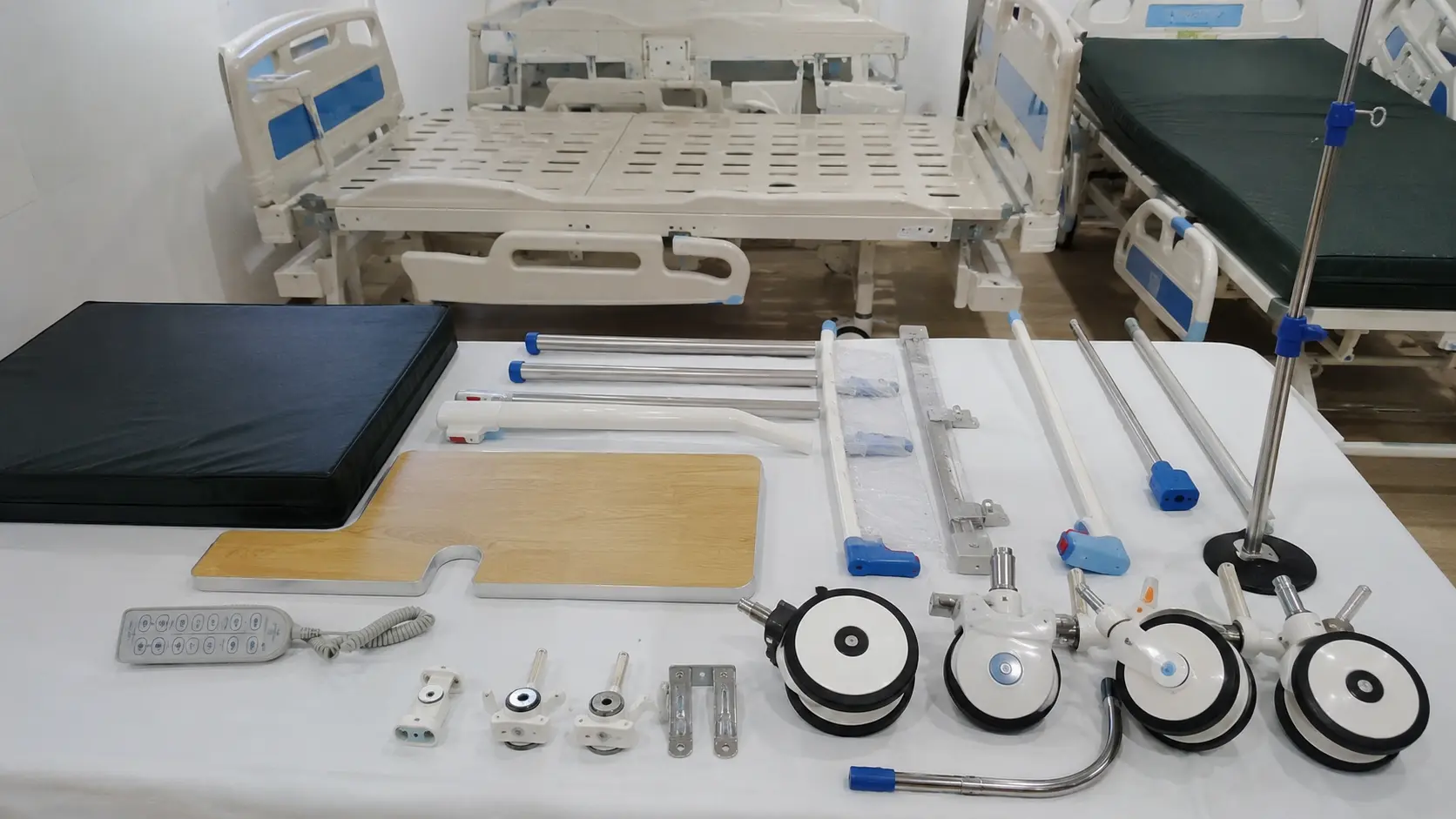
ICU bed accessories can change the final price, packing size and container loading quantity. Buyers should list accessories clearly instead of assuming they are included.
| Accessory | RFQ Question | Why It Matters |
|---|---|---|
| Mattress | Is a mattress included? What type and thickness? | Mattress choice affects comfort, care use and packing volume. |
| IV pole | Included or optional? | Common accessory for hospital projects. |
| Drainage hooks | How many hooks are included? | Useful in clinical care settings. |
| Bed extension | Available or not? | May be needed for some patient profiles. |
| Bedside cabinet | Same shipment or separate item? | Changes packing and container planning. |
Documentation and Import Support
For ICU bed procurement, documentation should be discussed early. Different destination countries and tenders may request different files. Document availability can also vary by model.
Ask the supplier what can be provided for the selected model:
- Commercial invoice and packing list.
- Product specification sheet.
- User manual or operation guide.
- Model photos and labels.
- Available certificate or quality document copies, depending on model.
- Packing details and loading information.
- Any documents requested by your local registration agent or tender file.
A responsible supplier should confirm available documents instead of making broad claims about universal approval in every country.
RFQ Checklist for ICU Bed Buyers
A clear RFQ saves time and helps the supplier prepare a more accurate quotation. Include enough details for technical and export teams to respond properly.
- Quantity of ICU beds.
- Destination country and destination port.
- Required bed functions and adjustment ranges if specified.
- Safe working load requirement if specified by the tender.
- Side rail type and castor/brake requirements.
- Voltage and plug type.
- Mattress and accessory list.
- Documentation requirements.
- Expected lead time and shipment schedule.
- Whether this is a tender, distributor stock order or hospital project.
Common Mistakes When Buying ICU Beds
Mistake 1: Treating ICU Beds Like Standard Ward Beds
ICU beds usually need stronger specification review than general ward beds. Buyers should confirm functions, braking, side rails, safe working load and accessories in detail.
Mistake 2: Comparing Prices Without Configuration
Two ICU bed quotations can look similar but include different functions, rails, castors, controls, mattresses and accessories. Compare the full configuration, not only the unit price.
Mistake 3: Forgetting Power Requirements
Voltage, plug type and electrical system details should be checked before order confirmation, especially for importers serving multiple markets.
Mistake 4: Discussing Documents Too Late
Document requirements should be discussed during the RFQ stage. Waiting until shipment can create delays for tenders, import clearance or local registration support.
FAQ: ICU Bed Specifications Buying Guide
What specifications should I check before buying an ICU bed?
Check bed functions, adjustment ranges, safe working load, frame, mattress platform, side rails, castors, braking system, CPR release, electrical system, accessories, packing and documentation support.
Is an ICU bed the same as a 5 function electric hospital bed?
No. A 5 function electric bed may be suitable for higher-care wards, but an ICU bed often has additional structural, braking, accessory and workflow requirements. Buyers should compare full specifications.
What accessories are commonly requested with ICU beds?
Common accessories include mattress, IV pole, drainage hooks, bedside cabinet, bed extension and spare parts. Exact accessory needs depend on the hospital project.
Should ICU bed buyers ask for spare parts?
Yes. Importers and hospitals should discuss spare motors, handsets, rails, castors and other parts before shipment to reduce future downtime.
Can Haoshangjia Medical help prepare an ICU bed quotation?
Yes. Haoshangjia Medical can discuss ICU bed specifications, quantity, accessories, destination country, voltage and documentation requirements before preparing a quotation.
Next Step: Send Your ICU Bed Specification Requirements
Haoshangjia Medical is a China hospital bed manufacturer and supplier for hospitals, nursing homes, clinics, rehabilitation centers and medical equipment distributors, supplying electric hospital beds, manual hospital beds, ICU beds, nursing beds and home care medical beds with export documentation and quotation support.
To compare models, review the ICU bed page or request a hospital bed quote with your quantity, destination country, voltage, required functions, accessories and documentation requirements.