
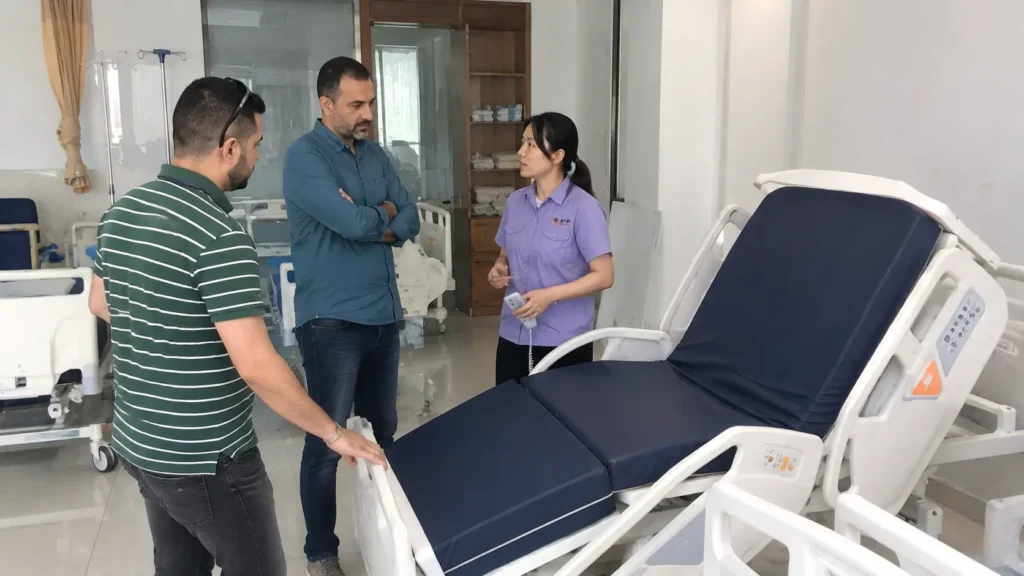
The most common hospital bed accessories include mattresses, side rails, IV poles, drainage hooks, overbed tables, lifting poles, bed extensions, battery backups and nurse-control components. However, buyers should not choose them as isolated add-ons. Every accessory must match the exact bed model, intended care environment, load requirement, electrical system and applicable purchasing specification.
This guide helps hospitals, nursing homes, clinics, home-care distributors and medical equipment importers decide which accessories belong in a hospital bed quotation, which items require compatibility confirmation and how to avoid missing costs during procurement.
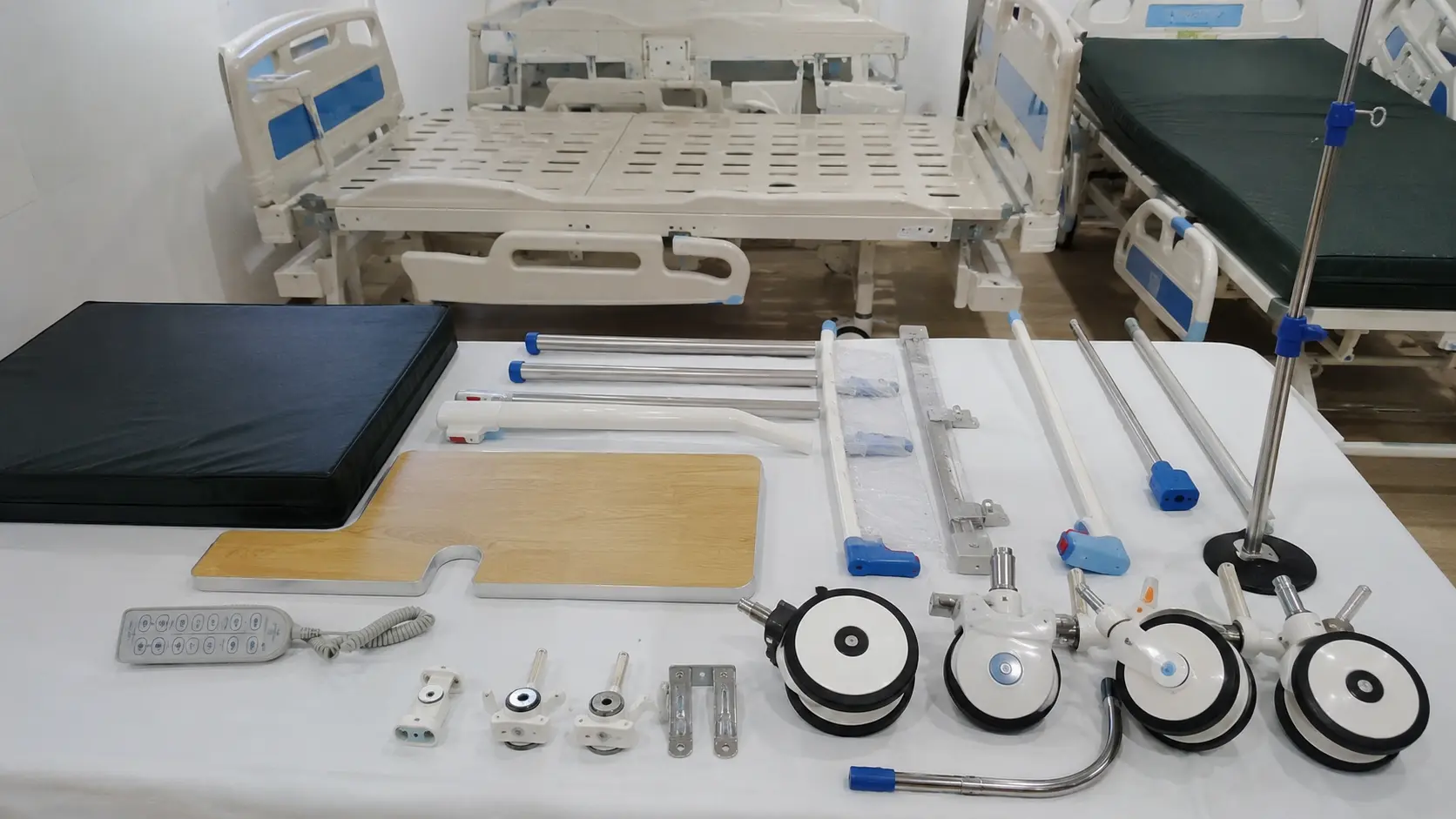
Quick List of Common Hospital Bed Accessories
| Accessory | Main purpose | Key purchasing check |
|---|---|---|
| Hospital bed mattress | Provides the patient support surface | Platform size, thickness, articulation and rail clearance |
| Side rails | Support positioning and help define bed edges | Bed model, rail type, locking system and mattress height |
| IV pole | Holds infusion containers | Socket size, height adjustment, hooks and load limit |
| Drainage hooks | Organize drainage bags below the mattress platform | Mounting location and clearance during bed movement |
| Overbed table | Provides a movable surface for meals and daily activities | Base clearance, height range and caster layout |
| Lifting or self-help pole | Supports repositioning where appropriate | Approved socket, load rating and care requirements |
| Bed extension | Adds usable length for taller patients | Frame mechanism, mattress extension and rail coverage |
| Battery backup | Supports selected powered functions during interruption or transport | Bed electronics, voltage, battery specification and replacement cycle |
| Controls and handsets | Operate electric bed functions | Function count, connector, software/electrical compatibility and lockout |
| Wall bumper or protective wheel | Helps reduce contact between the bed and surrounding surfaces | Mounting point, diameter and room layout |
Not every project needs every item. A basic manual ward bed may require a mattress, IV pole and drainage hooks. An ICU project may specify additional controls, oxygen-cylinder storage, monitor shelves or imaging-related components. A home-care package may prioritize a mattress, side rails and an overbed table. The correct list depends on the bed and the use case.
Hospital Bed Accessory Groups and Their Purposes
Patient-support accessories
The mattress is the most important patient-support item associated with a bed. Its width, length and thickness must match the mattress platform and rail configuration. Foam construction, cover specification and pressure-management requirements should be defined by the buyer and responsible care team. For measurement details, use our hospital bed mattress size guide.
Some projects also request a removable head or foot pillow, an extension pad or a compatible powered surface. These should be identified with a supplier part number rather than described only as “standard.”
Safety and positioning components
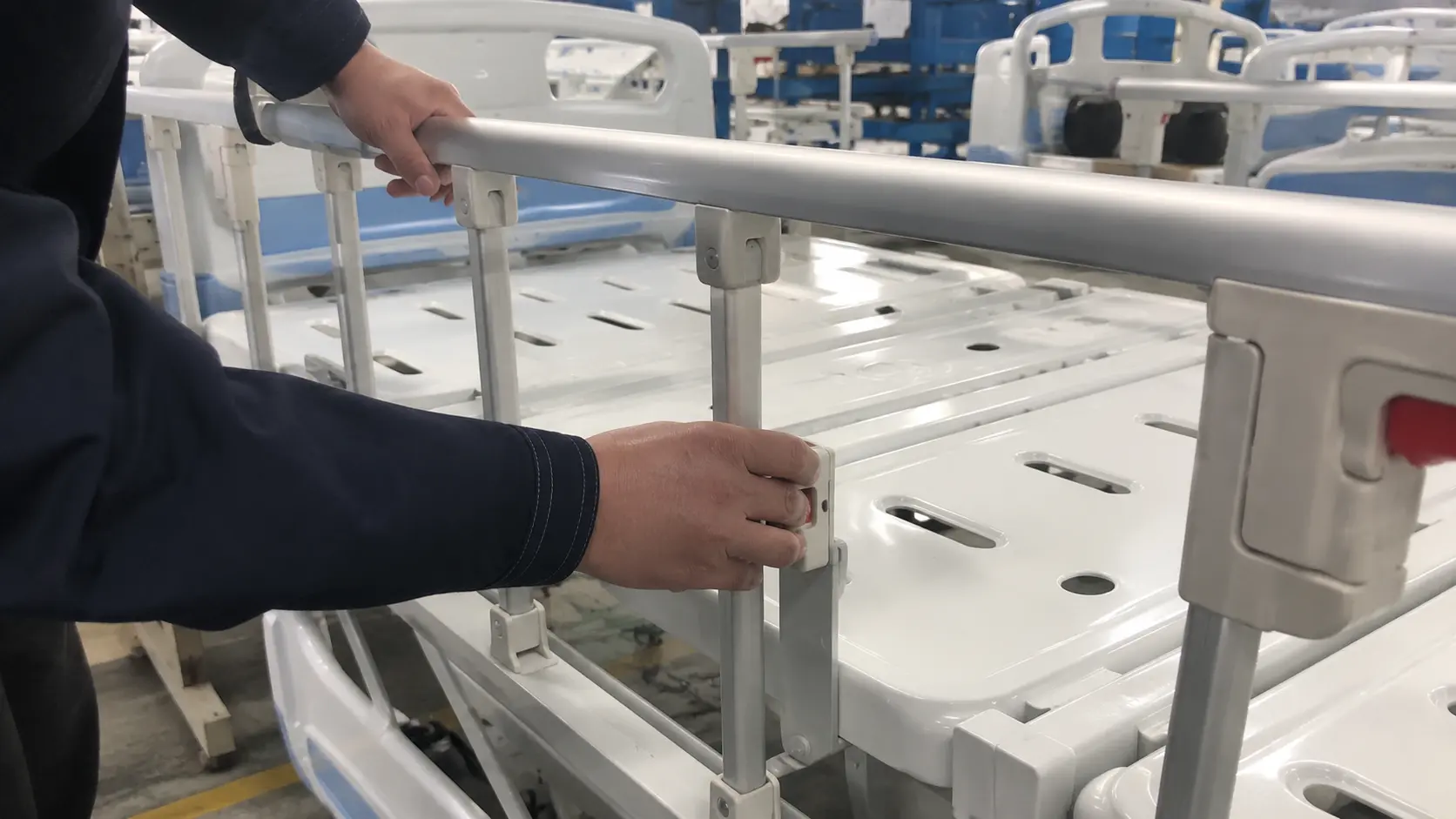
Side rails may be full-length, split, folding or removable. They are model-specific components, not universal metal barriers. Rail height must be evaluated with the mattress, and locking performance should be checked in the assembled configuration. Headboards, footboards and mattress retainers also contribute to how the surface stays positioned.
Do not add unapproved padding, rail covers or fabricated extensions to solve a compatibility problem. Buyers should follow manufacturer instructions and the requirements that apply in the destination market.
Clinical workflow accessories
IV poles, drainage hooks, urine-bag holders, oxygen-cylinder holders and monitor shelves help organize equipment around the bed. Their usefulness depends on mounting position and clearance. An accessory that fits a socket may still obstruct a rail, cable, caster or Trendelenburg movement if it was not designed for that location.
Hospitals should state how many accessories are required per bed. For example, an IV pole may be one per bed, one per two beds or supplied only for selected wards. This small detail can materially change the final project price.
Mobility and room accessories
Overbed tables, bedside cabinets and patient chairs are often purchased with hospital beds, although they may be separate product categories rather than bed-mounted accessories. Confirm the under-bed clearance, table base shape, height range and caster size. A table that works with a high ward bed may not roll correctly under a low nursing bed.
Electrical and control accessories
Electric beds may use patient handsets, nurse controls, control boxes, actuators, cables, batteries and power cords. Replacements need exact electrical compatibility. Connector appearance alone is not enough. Buyers should record bed model, function count, control-box reference, input voltage and plug requirement.
Which Accessories Are Standard and Which Are Optional?
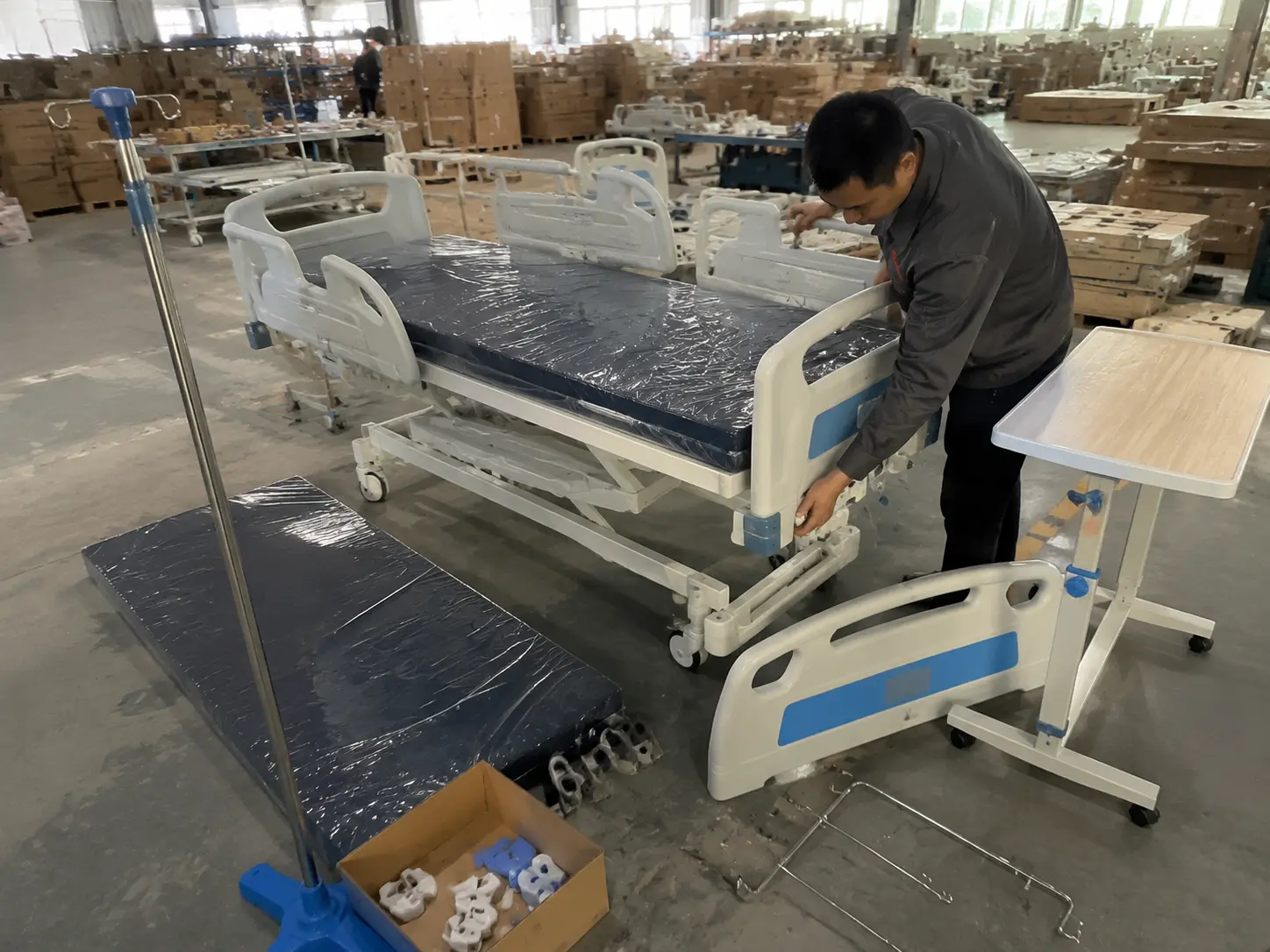
There is no universal inclusion rule. “Standard configuration” means only the items included in a particular supplier’s stated model quotation. It does not mean the same package across all manufacturers.
| Quotation status | What it should mean | Buyer action |
|---|---|---|
| Included as standard | Part of the quoted bed configuration and unit price | Request model, quantity, specification and packing confirmation |
| Optional accessory | Compatible item available at additional cost | Add it as a separate priced line with quantity |
| Third-party compatible item | Item sourced separately but confirmed for use with the bed | Request written compatibility and responsibility boundaries |
| Not included | Shown in a photo or brochure but excluded from the offer | Remove assumptions and source or quote it separately |
| Spare part | Replacement component intended for maintenance inventory | Confirm part number, warranty status and shelf/storage requirements |
A professional proforma invoice or tender response should separate the base bed, mattress, accessories and spare parts. Product photos are not a reliable inclusion list. Ask the supplier to mark every visible item as included, optional or for display only.
Seven Compatibility Checks Before Ordering
- Exact bed model: Record the manufacturer, model code and bed function configuration.
- Mounting interface: Confirm socket diameter, bracket type, fixing holes, fasteners and left/right mounting positions.
- Mechanical clearance: Test the accessory through backrest, knee-rest, height and tilt movements.
- Load limit: Obtain the accessory’s intended load and make sure installation does not change the bed’s approved configuration.
- Mattress and rail relationship: Check gaps, rail height and surface retention as one assembled system.
- Electrical specification: Match voltage, connector, control logic, motor count and plug type where relevant.
- Cleaning and materials: Confirm surfaces, seams and removable parts fit the facility’s cleaning procedure.
For a new order, the easiest approach is to ask one supplier to assemble a reference bed with the complete accessory package. For existing beds, send clear photos of the model label, mounting points and current components. Dimensions alone may not reveal connector or bracket differences.
Accessory Priorities by Hospital Bed Type
Manual hospital beds
Common priorities include a compatible mattress, IV pole, drainage hooks, side rails and spare crank handles where the design permits replacement. Buyers should confirm whether crank handles fold and whether they remain inside the bed footprint. See the manual hospital bed range for configuration context.
Electric ward beds
In addition to basic items, buyers may need patient handsets, nurse-control options, battery backup and spare electrical components. The RFQ should state destination voltage and plug type. If beds will move between wards, request cable-management and accessory-storage information.
ICU beds
ICU accessories are normally the most model-specific. Options may include additional controls, monitor shelves, oxygen-cylinder holders, extension components or other critical-care workflow items. Define each required feature in the tender rather than asking for a “fully equipped ICU bed.”
Nursing and home-care beds
These applications may prioritize split rails, lifting poles, overbed tables and mattresses selected for the care setting. Minimum bed height and transfer conditions must be checked after the mattress is installed. Home-care distributors should create fixed bundles so sales teams do not mix incompatible frames and surfaces.
Bariatric beds
Wider surfaces, extensions and higher-load accessories require complete-system confirmation. A lifting pole or table described for a standard bed should not automatically be used with a bariatric model. Ask for load ratings and part numbers for the actual configuration.
Hospital Bed Accessory Procurement Scenarios
Scenario 1: A hospital tenders 200 electric beds
The tender should use a configuration schedule. For each bed, specify mattress, rail type, IV pole and drainage hooks; then list ward-specific options separately. Request one assembled sample before mass production. This makes evaluation easier than comparing suppliers whose base prices include different items.
Scenario 2: A distributor stocks multiple bed models
Create a compatibility matrix with columns for bed model, accessory name, accessory code, mounting position and packing carton. Use separate inventory codes even when components look similar. Include a small initial spare-parts stock based on the supplier’s maintenance recommendation and local service plan.
Scenario 3: A nursing home replaces accessories on existing beds
Audit the bed fleet first. Group units by model and production batch, photograph labels and note missing or damaged components. Ask whether current replacement parts are compatible with older versions. Do not use a generic rail or control handset simply because its dimensions appear close.
Scenario 4: A project buyer prepares container loading
Accessory cartons affect volume, weight and loading sequence. Ask which components pack inside the bed carton and which ship separately. Long items such as IV poles and bulky overbed tables may reduce loading efficiency. The final packing list should show carton count and dimensions by product group.
Incoming Inspection and Spare-Parts Planning
When the shipment arrives, compare accessory quantities with both the packing list and the bed-by-bed configuration schedule. Inspect cartons for labels and confirm that mounting hardware, fasteners and instructions are present. Assemble a sample from each model or batch before distributing components across the facility.
Functional inspection may include:
- Rail raising, lowering and locking
- IV pole height adjustment and hook condition
- Table height adjustment, casters and bed-base clearance
- Mattress position through the full bed movement range
- Handset buttons, lockout functions and cable connections
- Battery labeling and charging behavior according to instructions
- Presence of mounting screws, brackets and protective caps
Spare-parts planning should focus on components that can be safely replaced by the buyer’s authorized maintenance team. Ask for exploded diagrams, part numbers and replacement instructions where available. Clarify which work requires supplier support and whether unauthorized parts affect warranty coverage.
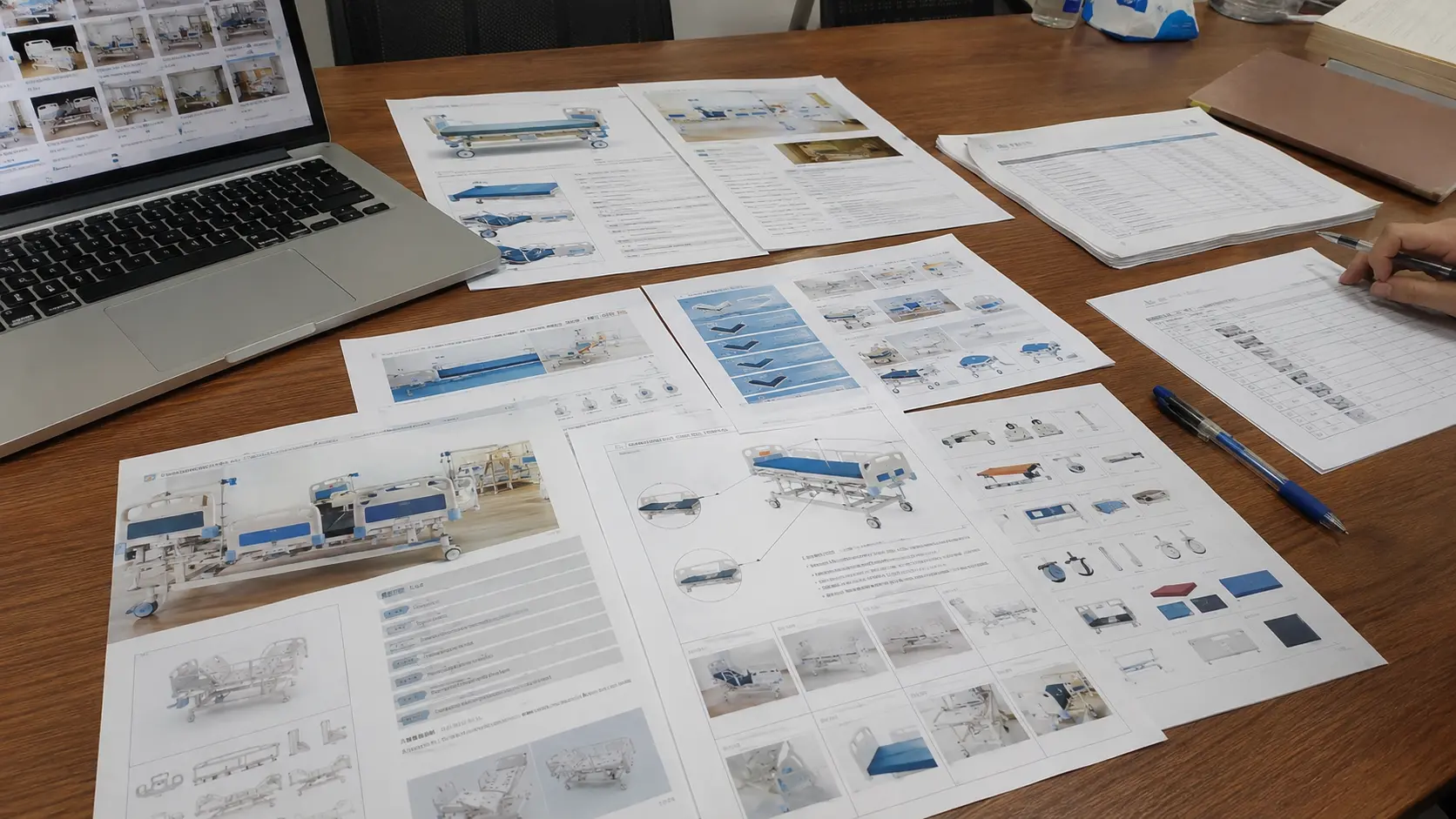
Hospital Bed Accessories RFQ Checklist
Include these details when requesting a quotation:
- Bed type, supplier and exact model
- New-bed package or replacement-accessory request
- Quantity of beds and quantity of each accessory
- Mattress dimensions, thickness and surface requirement
- Side-rail type and mattress relationship
- IV pole hook count, adjustment and mounting position
- Drainage-hook and oxygen-cylinder-holder requirements
- Overbed table and bedside cabinet quantities
- Required electrical controls, voltage and plug type
- Battery-backup requirement
- Load requirements for poles, shelves or lifting components
- OEM labels, colors and packaging
- Spare-parts list and expected support period
- Destination country, port and documentation requirements
- Required lead time and sample-inspection plan
Haoshangjia Medical is a China-based hospital bed supplier serving hospitals, nursing homes, clinics, rehabilitation centers and medical equipment distributors. Product configurations, accessory compatibility and available documentation should be confirmed for each model before order.
Hospital Bed Accessories FAQ
What accessories usually come with a hospital bed?
Inclusions vary by supplier and model. A quoted configuration may include rails, IV pole and drainage hooks, while the mattress, table or battery is optional. Always request a written inclusion list.
Are hospital bed accessories universal?
Most bed-mounted components are not universal. Rails, controls, batteries, lifting poles and mattress retainers must match the bed model, mounting interface and load requirements.
Is a hospital bed mattress considered an accessory?
It is often quoted as a separate accessory or option, but it functions as part of the bed system. Size, thickness, articulation and rail compatibility must be checked together.
Can accessories from one manufacturer fit another hospital bed?
Only if both manufacturers provide appropriate compatibility information. Similar appearance or matching socket diameter is not sufficient evidence for safe use.
Which accessories should importers keep as spare parts?
The list depends on installed models and local service capacity. Common planning items may include specified handsets, cables, casters, crank components and hardware, but the supplier should provide exact part numbers and replacement guidance.
How should accessories appear in a supplier quotation?
Each item should have a description, compatible model, quantity, unit price, inclusion status and packing information. Optional items and spare parts should be separated from the base bed price.
Build a Complete Hospital Bed Configuration
Send Haoshangjia Medical your bed models, quantities, intended facility, destination country, voltage, mattress requirement and full accessory list. We can organize a model-specific quotation and clarify which items are included, optional or supplied as spares.