Standing rehabilitation table used in physiotherapy centers and rehabilitation hospitals for early-stage standing training of stroke, spinal cord injury, post-surgery and orthostatic hypotension patients. Smooth 0–90° tilt with 3-point safety harness and emergency stop.
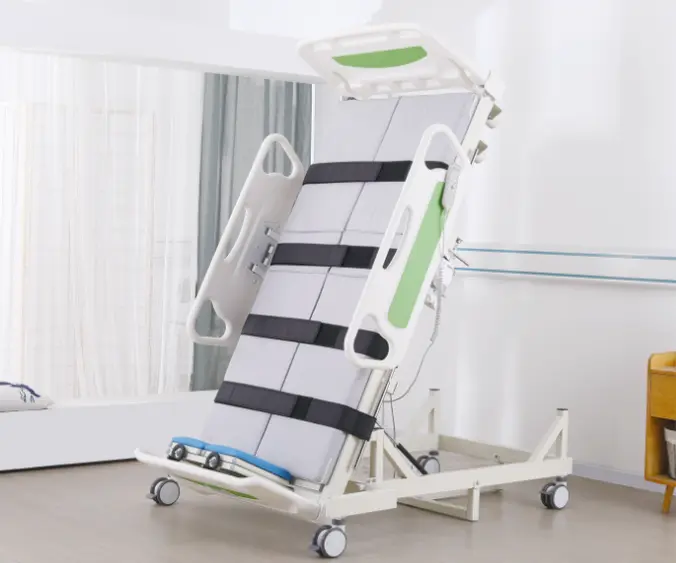 Electric Tilt Table · Factory Photo
The features that distinguish rehab-grade tilt tables from gym-style standing frames — each one matters during real patient sessions.
Smooth electric tilt from supine to fully vertical standing in ~30 seconds. Therapists can adjust angle continuously during a session as the patient acclimates to standing position.
Tilt speed adjustable from 1°/sec to 3°/sec. Slow tilt prevents orthostatic hypotension (sudden blood pressure drop) in deconditioned patients first standing after weeks in bed.
Chest, hip and knee safety straps prevent patient collapse during vertical training. All straps quick-release in 1 second for emergency exit. Padded for prolonged session comfort.
Mushroom-head emergency stop accessible to both patient and therapist. One press freezes the table in place instantly. Releases on twist for resuming the session.
Foot board adjustable in height for patients of different statures (120–200 cm). Anti-slip rubber surface, ankle straps optional. Bears patient weight during vertical position.
Soft polyurethane sponge mattress with seamless PU leather cover — wipe-clean between patients with hospital-grade disinfectant. No fabric for bacterial harboring.
Optional drop-down armrests for hand support during early standing. Removable side rails for patient stability or transfer assistance. Both add ~USD 80 per set.
Ø125 mm castors with central braking system — table can be moved between gym bays then locked for patient session. Folds for tighter clinic storage.
Standard rehab tilt table specifications. Pediatric version available with smaller mattress on request.
Six rehabilitation settings where tilt tables are core equipment — anywhere patients need early-stage standing training.
Post-stroke patients regain standing tolerance — progressive vertical training reduces orthostatic hypotension and prepares for gait training.
SCI patients with paraplegia or tetraplegia — tilt table training prevents bone density loss and orthostatic complications during early rehab.
Post-op orthopedic, cardiac and neurosurgical patients transitioning from bed rest. Slow vertical positioning preserves blood pressure stability.
Patients leaving ICU after weeks of ventilation — tilt table is the first stage of vertical mobilization before walking trials.
Pediatric rehab centers — pediatric tilt table version with smaller mattress and harness for children with CP, traumatic brain injury or muscular dystrophy.
Hospital-based physical therapy and occupational therapy units — core equipment for any inpatient rehab program.
Other equipment commonly ordered alongside tilt tables for rehab centers.
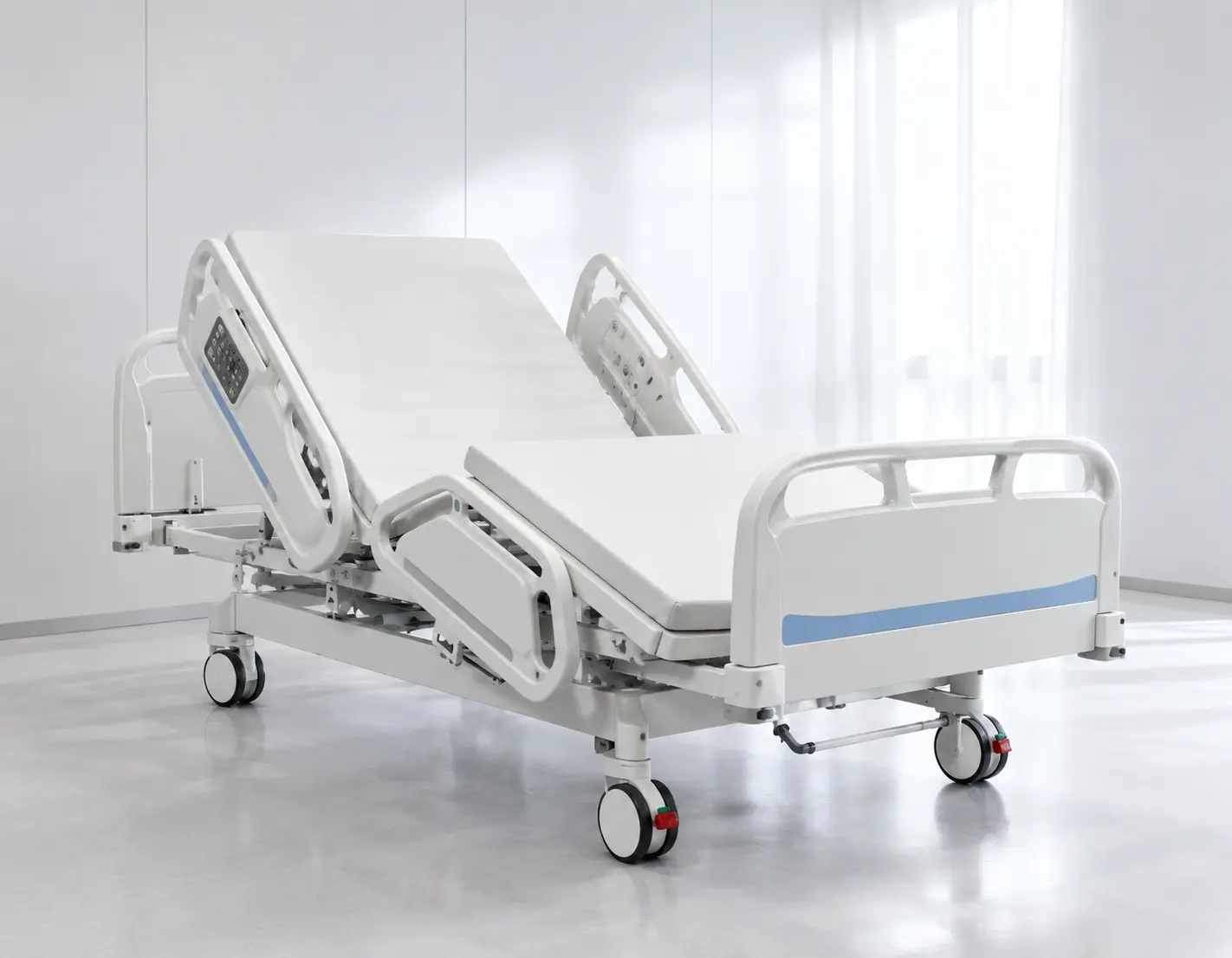
5-function electric beds for rehab patient rooms with smooth positioning.
View details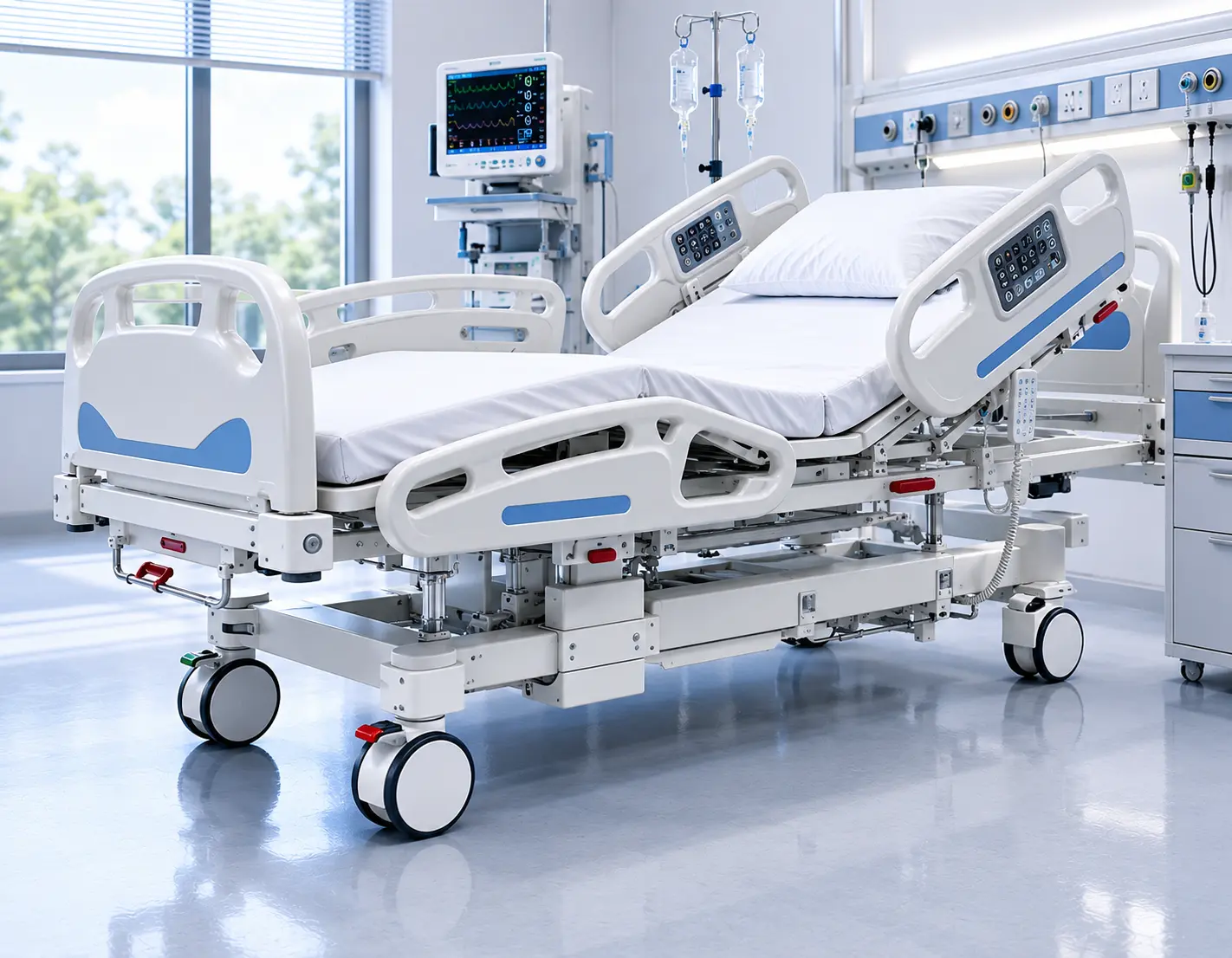
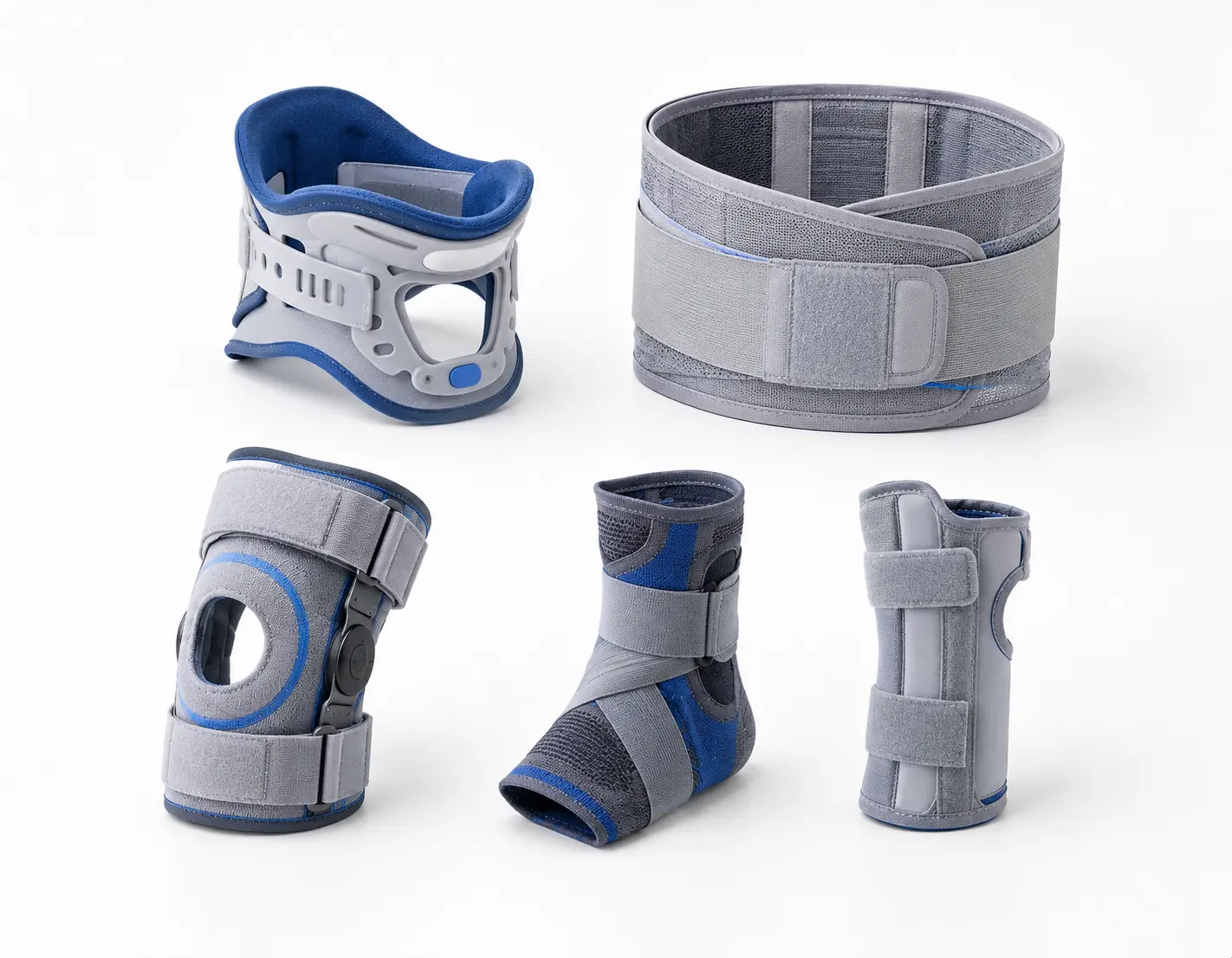
Knee braces, shoulder immobilizers and lumbar support belts for rehab patient dispensing.
View detailsQuestions rehab center directors and procurement managers ask most often.
Share quantity, voltage, adult or pediatric, and any accessory options. We will reply with itemized FOB / CIF quotation, production schedule and accessory pricing within 12 working hours.