
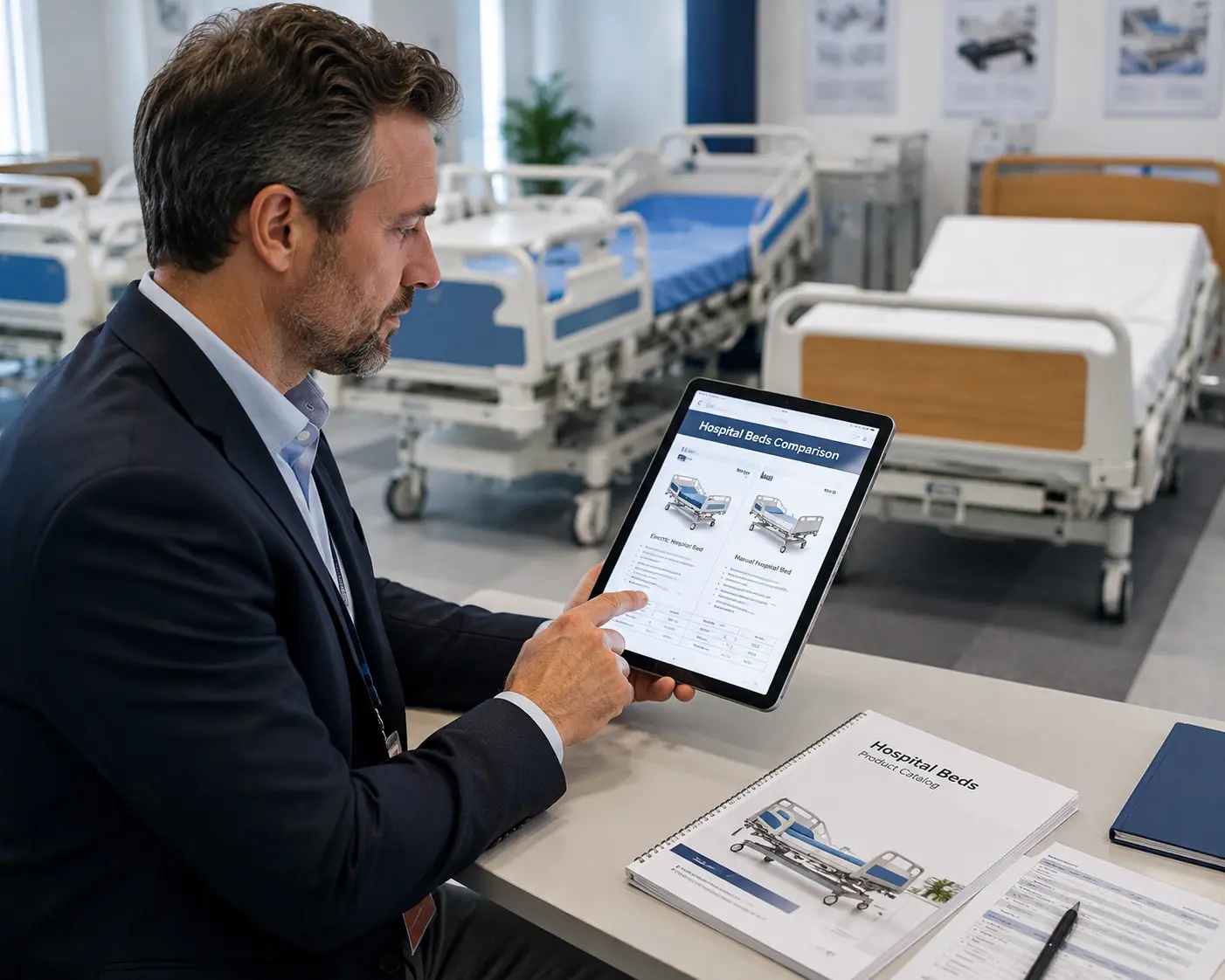
Short answer: the best hospital bed manufacturer is not always the largest brand. For importers, distributors, hospital procurement teams and project contractors, the right choice depends on bed type coverage, manufacturing consistency, customization support, spare parts, documentation, packing, lead time and after-sales communication.
Many buyers search for top hospital bed manufacturers because they want a reliable shortlist. Well-known international brands can be strong references for clinical design and premium hospital projects, while export-focused manufacturers in China can be practical partners for bulk procurement, OEM orders, nursing home projects and price-sensitive tenders.
This guide explains how to compare hospital bed manufacturing companies before sending an RFQ, and how to decide whether your project needs a premium global brand, a direct factory partner, or a flexible hospital bed supplier that can support different bed types in one order.
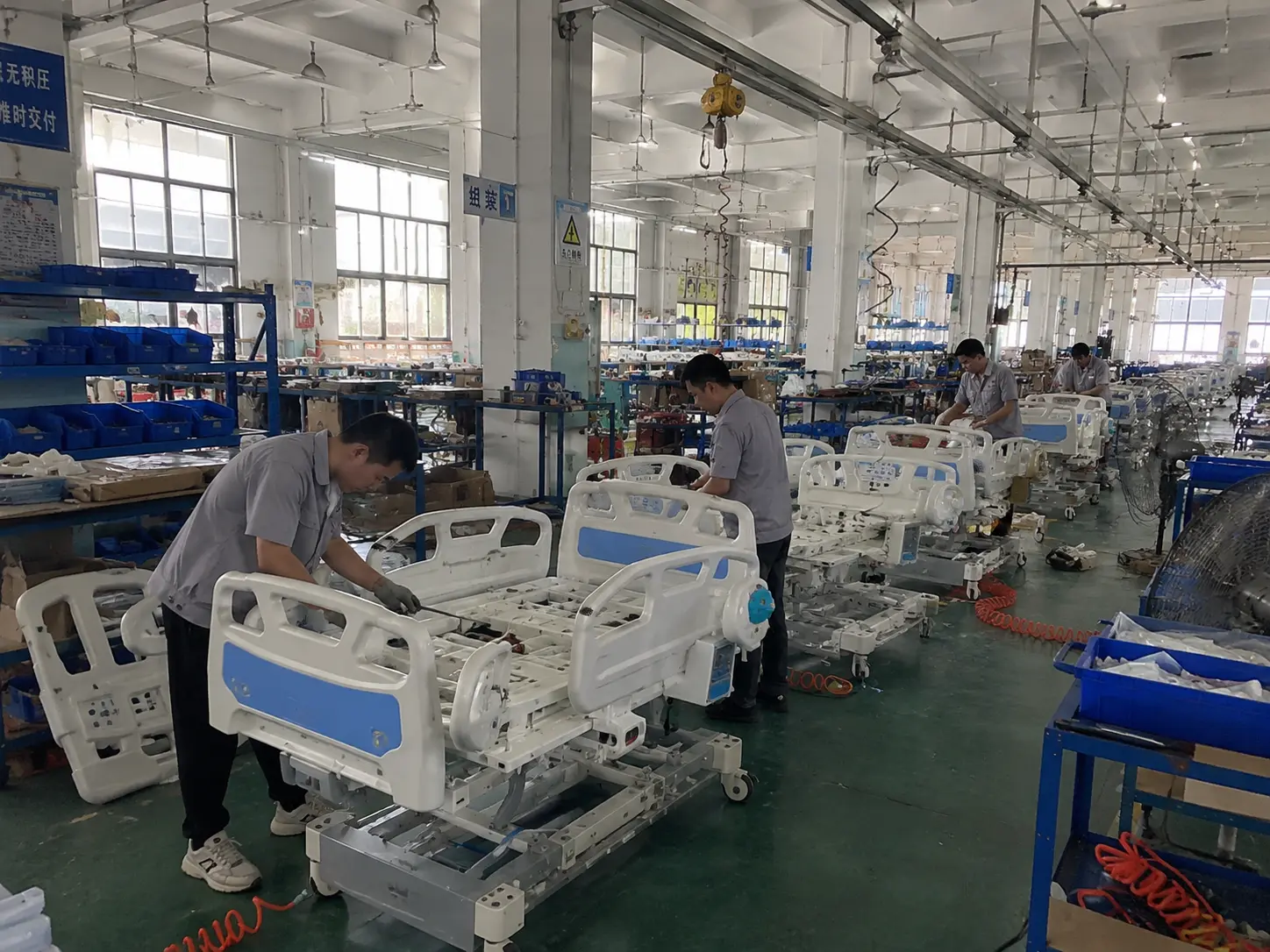
What Makes a Hospital Bed Manufacturer “Top” for B2B Buyers?
A top manufacturer should be evaluated by fit, not by name alone. A hospital bed used in a private hospital ICU, a long-term care facility, a rehabilitation center and a home-care distribution channel may require different functions, rails, castors, motors, headboards, accessories and documentation.
For B2B buyers, the core question is simple: can the manufacturer deliver the correct bed configuration consistently, communicate clearly before production, and support the order after shipment?
When comparing manufacturers, pay attention to these factors:
- Product range: electric hospital bed, manual hospital bed, ICU bed, nursing bed and home care bed options.
- Manufacturing control: stable welding, surface treatment, assembly, testing and packing processes.
- Configuration flexibility: bed functions, side rails, mattress platform, head and foot boards, castors, IV pole, dining table and mattress options.
- Export support: quotation clarity, HS code support, packing list, commercial invoice, user manual and destination-country documentation requirements.
- Communication speed: ability to confirm technical details before the buyer commits to a bulk order.
- After-sales practicality: spare parts, installation guidance, videos, drawings and clear response process.
For many importers, this practical capability is more important than choosing the largest hospital bed manufacturer by brand awareness.
Well-Known Hospital Bed Manufacturers Buyers Often Research
The hospital bed market includes large international medical technology companies, regional manufacturing groups and export-focused factories. The table below is not a ranking. It is a buyer-oriented reference for how different types of suppliers may fit different procurement situations.
| Manufacturer or Brand Type | What Buyers Usually Evaluate | Best-Fit Buyer Scenario | Procurement Note |
|---|---|---|---|
| Stryker | Premium hospital bed systems, acute care solutions, clinical support features and established global reputation. | Hospitals that prioritize advanced acute-care equipment, brand recognition and premium product ecosystems. | Useful as a benchmark for high-end feature expectations, especially in developed hospital systems. |
| Hillrom / Baxter | Smart hospital bed platforms, connected care positioning, patient safety features and broad hospital equipment ecosystem. | Healthcare systems seeking integrated premium hospital bed solutions and brand-backed clinical technology. | Often researched by buyers comparing advanced electric bed and smart bed features. |
| LINET | Hospital and intensive care beds, European manufacturing background, design, safety and clinical environment fit. | Projects that need established international bed brands with strong hospital-sector positioning. | Common reference for buyers studying ICU and ward bed design standards. |
| Arjo | Medical beds, patient handling, hygiene and care-environment equipment portfolio. | Hospitals and care facilities that want bed systems connected with broader patient mobility and care workflows. | Relevant when the bed purchase is part of a wider patient-care equipment package. |
| Haoshangjia Medical | China-based hospital bed manufacturing and supply support, practical product range and export-oriented RFQ communication. | Importers, distributors, clinics, nursing homes and project buyers looking for configurable hospital beds at B2B scale. | A practical option when buyers need product matching, OEM discussion, container planning and responsive export support. |
For buyers who need direct factory communication, flexible product matching and export coordination, working with a China-based hospital bed manufacturer can be more practical than only contacting premium international brands.
How To Compare Hospital Bed Manufacturing Companies
Before choosing a supplier, build your comparison around the purchase goal. A hospital project tender, a distributor inventory order and a nursing home replacement plan should not use the same evaluation checklist.
| Evaluation Area | What To Ask | Why It Matters | Warning Sign |
|---|---|---|---|
| Bed Type Coverage | Can the supplier provide electric, manual, ICU, nursing and home care bed options? | A broader range helps buyers combine products under one shipment and reduce sourcing time. | The supplier gives one generic bed model for every application. |
| Function and Configuration | Which functions are available: backrest, knee-rest, height adjustment, Trendelenburg, reverse Trendelenburg or CPR? | Bed functions directly affect patient care, staff operation and project suitability. | The quotation does not clearly state functions, accessories or motor brand options. |
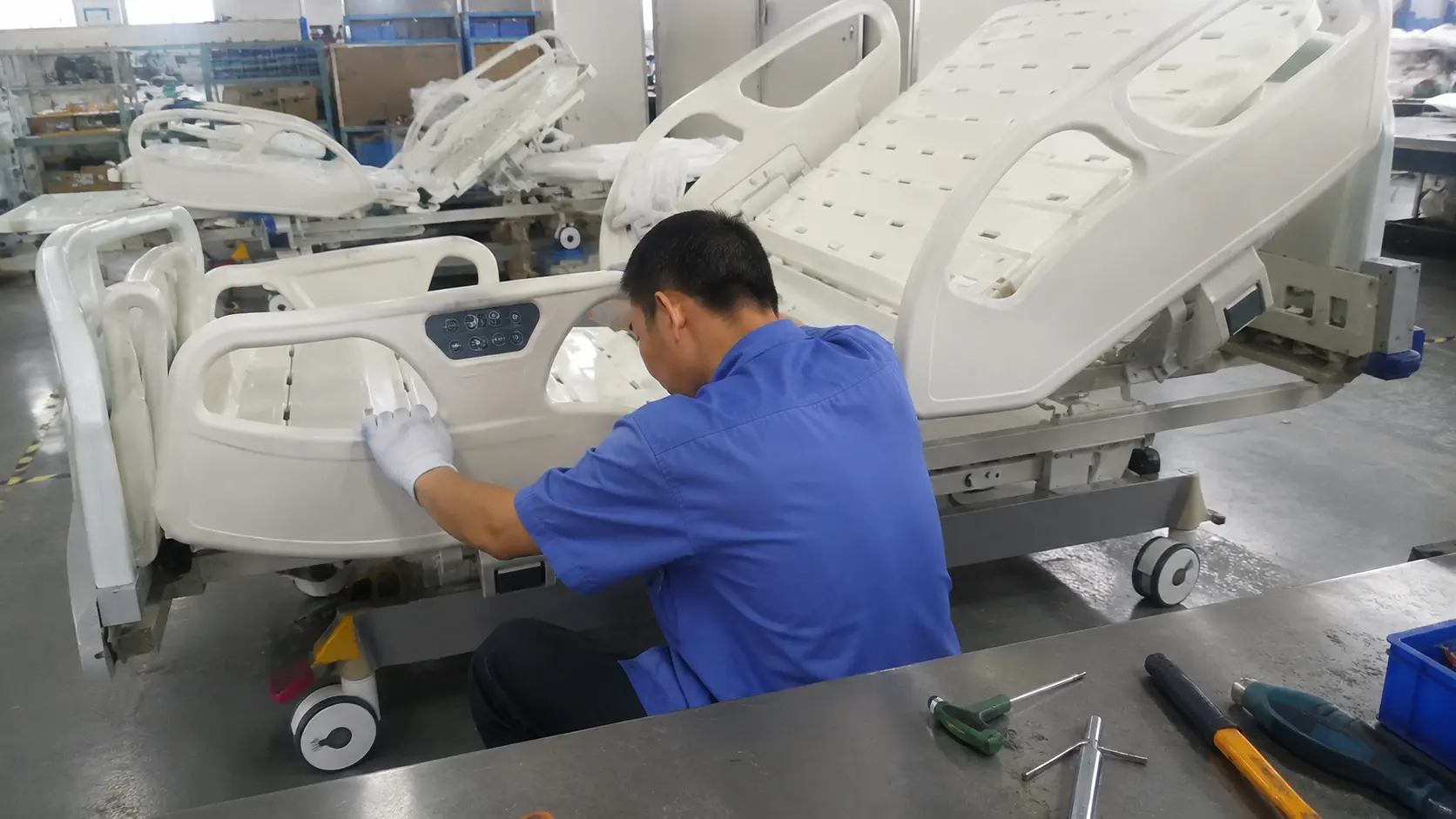
| Manufacturing Consistency | How are frames, surfaces, rails, castors and packing checked before shipment? | Consistent production reduces after-sales issues in bulk orders. | No inspection photos, testing details or packing confirmation are available. |
| Export Documentation | Can the manufacturer support invoice, packing list, product specifications, manuals and requested document copies? | Importers need clear documents for customs, tenders and internal purchasing files. | The supplier avoids document questions until after payment. |
| Spare Parts | Are motors, handsets, side rails, castors, boards and accessories available as spare parts? | Spare parts are important for distributors and healthcare facilities after installation. | The supplier cannot explain part replacement or accessory ordering. |
| Communication | Can the sales and technical team confirm details quickly and in writing? | Written confirmation reduces misunderstanding before mass production. | The supplier only sends a price without matching the application. |
Which Hospital Bed Manufacturer Type Fits Your Purchase?
Different buyers need different supplier types. The most efficient choice depends on your quantity, budget, delivery schedule and required bed functions.
1. Hospital Project Buyers
Hospital project buyers often need multiple bed types in one package: standard ward beds, ICU beds, treatment furniture and accessories. They should choose a manufacturer that can provide clear specifications, stable packing, export documentation and configuration support.
If the project includes critical care rooms, review the ICU bed specifications carefully. Ask about bed functions, safe working load, castors, central locking, side rails, CPR release, mattress compatibility and accessory options.
2. Medical Equipment Distributors
Distributors usually need repeatable models, competitive pricing and spare parts. They should avoid choosing a supplier based only on the lowest unit price. A bed that is difficult to maintain can damage the distributor’s local reputation.
For distributor inventory, it is useful to compare a basic manual hospital bed with a standard electric hospital bed. This gives your local market both budget and upgraded options.
3. Nursing Homes and Long-Term Care Facilities
Nursing home buyers often care about comfort, caregiver operation, side rail design, cleaning, stability and cost. They may not need the most advanced ICU functions, but they do need durable beds and practical accessories.
For this buyer group, compare nursing beds, home care beds and standard ward beds before ordering. The right model should match daily care workflow, room size, cleaning routine and user mobility.
4. Importers Handling Tender or Government Orders
Tender buyers should prepare the specification sheet first, then ask each manufacturer to quote against the same requirements. This prevents suppliers from quoting different configurations under similar product names.
Ask for model photos, specification sheets, packing details, estimated lead time, optional accessories, warranty terms and document availability before making the shortlist.
RFQ Checklist Before Contacting Hospital Bed Manufacturers
A clear RFQ helps manufacturers respond faster and quote more accurately. Before sending an inquiry, prepare the following information:
- Required bed type: electric hospital bed, manual hospital bed, ICU bed, nursing bed or home care bed.
- Quantity for each model.
- Destination country and destination port.
- Required functions, such as backrest, leg-rest, height adjustment, Trendelenburg or CPR.
- Accessories: mattress, IV pole, dining table, overbed table, side rails, castors and bedside cabinet.
- Power and plug requirements for electric beds.
- Any tender documents, target specifications or local documentation requirements.
- Preferred packing method and delivery schedule.
If you are unsure which model fits your application, send the intended use case first. A supplier can recommend suitable options for hospitals, clinics, nursing homes, rehabilitation centers or home-care distribution.
Common Mistakes When Choosing a Hospital Bed Manufacturer

Mistake 1: Comparing Price Without Comparing Configuration
Two hospital beds can look similar but have different motors, rails, castors, frame structure, surface treatment, control systems, accessories and packing. Always compare the full specification, not only the product name.
Mistake 2: Treating All Hospital Beds as the Same Product
A standard ward bed, an ICU bed and a home care bed serve different environments. If the supplier does not ask about application, room type or buyer scenario, the recommendation may be too generic.
Mistake 3: Ignoring Spare Parts and After-Sales Support
Spare parts are especially important for distributors and facility buyers. Ask whether motors, handsets, side rails, castors and boards can be ordered later.
Mistake 4: Waiting Too Long To Discuss Documentation
Import documents, technical files and tender requirements should be discussed before confirming the order. Documentation support can vary by model and destination country, so it should be checked early.
FAQ: Top Hospital Bed Manufacturers
Who manufactures hospital beds?
Hospital beds are manufactured by global medical technology companies, regional hospital equipment brands and specialized hospital bed factories. Buyers often compare premium international brands with export-focused manufacturers depending on budget, product function, delivery needs and support requirements.
What is the difference between a hospital bed manufacturer and a hospital bed supplier?
A manufacturer produces or controls the production of hospital beds. A supplier may be a manufacturer, trading company, distributor or sourcing partner. For B2B buyers, the key is whether the supplier can confirm specifications, support production details, manage export documents and provide after-sales communication.
Should I choose the largest hospital bed manufacturer?
Not always. Large brands can be strong choices for premium hospital systems, but many importers and distributors need a manufacturer that fits their target price, product range, customization needs, MOQ and export process. The best choice is the supplier that matches your project requirements.
What information should I send to get an accurate hospital bed quote?
Send bed type, quantity, destination country, required functions, voltage, accessories, documentation requirements and delivery schedule. If you have a tender specification, send it with the RFQ.
Can one supplier provide electric beds, manual beds and ICU beds together?
Yes, some hospital bed suppliers can provide multiple product types in one order. This is useful for hospital projects, distributor inventory and mixed healthcare facility purchases because it simplifies communication and shipment planning.
Next Step: Build a Practical Hospital Bed Shortlist
If you are comparing top hospital bed manufacturers for an upcoming order, start with your real purchasing scenario. Decide whether you need premium brand systems, direct factory pricing, OEM discussion, mixed product categories or fast export communication.
Haoshangjia Medical supports global buyers with hospital bed selection, configuration discussion and export-oriented quotation support. You can review the full hospital bed supplier category or request a hospital bed quote with quantity, destination country, bed type and accessory requirements.
Reference Examples
Buyers researching international hospital bed brands may also review official product information from Stryker ProCuity, Hillrom / Baxter Centrella Smart+ Bed, LINET and Arjo. Use these references to understand high-end bed features, then compare them against your budget, shipping plan and local market needs.