
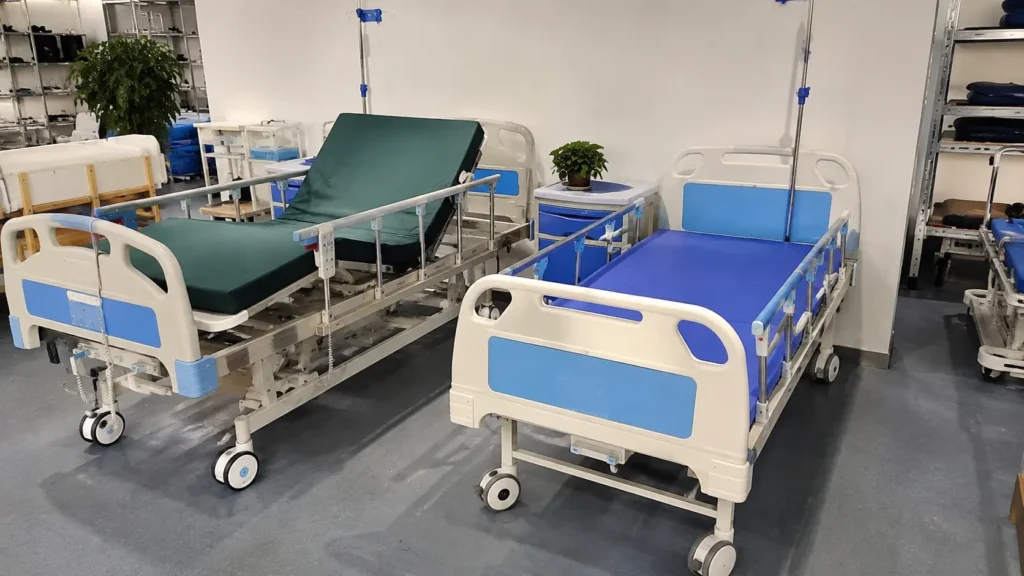
Short answer: choose a hospital bed manufacturer when you need direct production control, OEM discussion, stable specifications and repeat orders. Choose a hospital bed supplier when you need product matching, mixed categories, faster sourcing support or a flexible export partner. For many importers, the best option is a partner that works as both: a practical hospital bed manufacturer with supplier-level communication and export support.
Many buyers search for hospital bed manufacturer vs supplier because both terms appear in quotations, websites and trade platforms. The difference matters. A manufacturer is closer to production. A supplier is closer to the buying process. In hospital bed procurement, the right partner depends on quantity, customization, lead time, documentation, destination market and after-sales expectations.
This guide explains the difference in practical B2B terms so importers, distributors, hospitals, nursing homes and project buyers can send clearer RFQs and avoid comparing the wrong type of partner.
Hospital Bed Manufacturer vs Supplier: Basic Difference
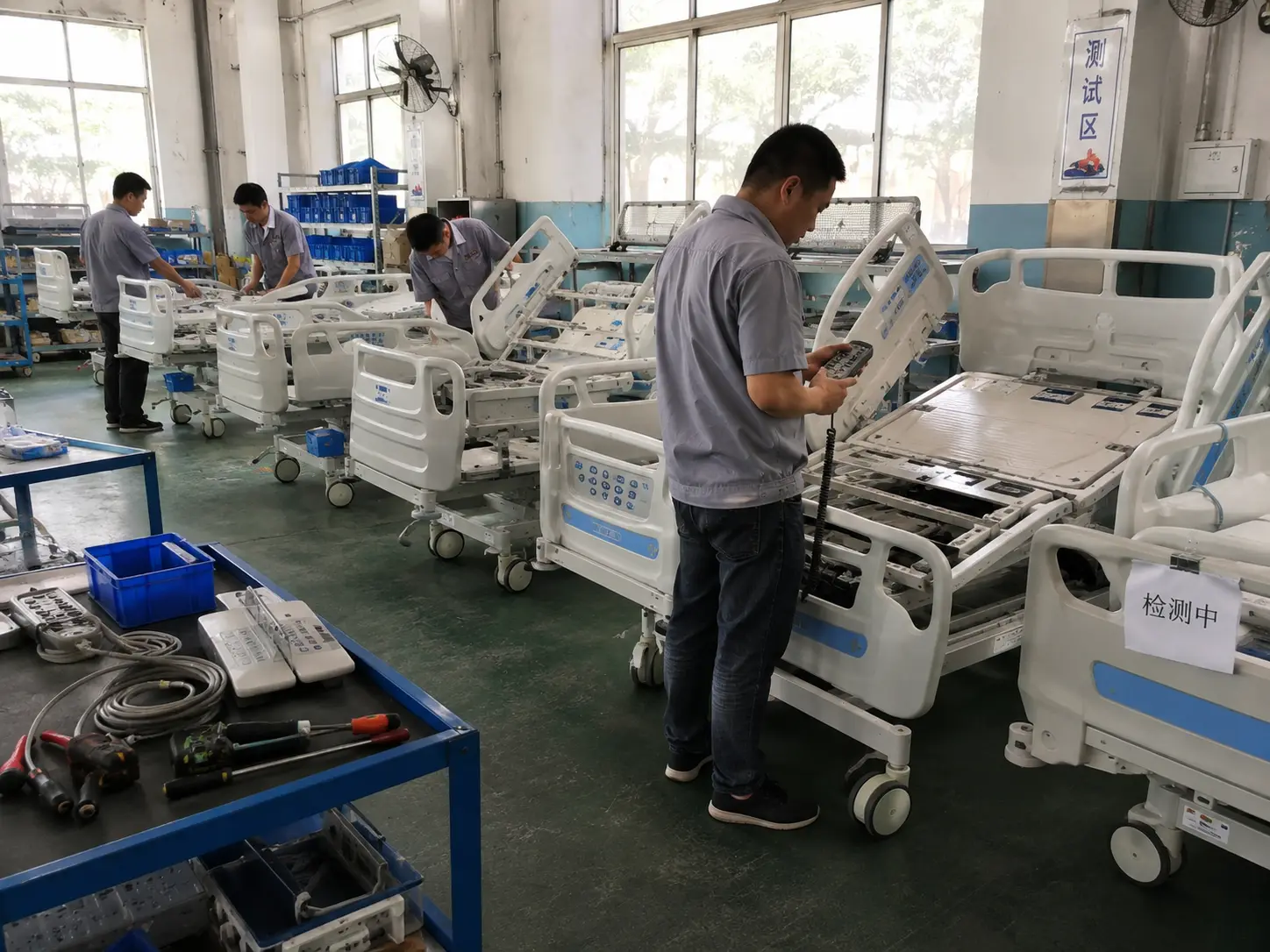
A hospital bed manufacturer produces hospital beds or controls the production process. A hospital bed supplier sells and supports hospital beds for buyers. Sometimes the same company can be both a manufacturer and supplier, especially when a factory sells directly to overseas importers.
| Partner Type | Main Role | Best For | Main Risk To Check |
|---|---|---|---|
| Hospital Bed Manufacturer | Controls production, specifications, quality checks and model consistency. | Bulk orders, OEM projects, repeat purchases, tender supply and custom configuration. | Communication may be too technical or slow if there is no export support team. |
| Hospital Bed Supplier | Matches products to buyer needs, prepares quotations and supports export communication. | Mixed-category sourcing, smaller orders, fast comparison and procurement support. | The supplier may not control the factory or long-term product consistency. |
| Manufacturer-Supplier | Combines production knowledge with direct sales, RFQ support and export documentation. | Importers and distributors that need both factory control and practical communication. | Buyers still need to confirm model details, documents, lead time and spare parts. |
For hospital beds, the most useful partner is usually not defined by the label alone. It is defined by whether the company can confirm the correct bed model, explain configuration choices and support the order before and after shipment.
When Should You Choose a Hospital Bed Manufacturer?
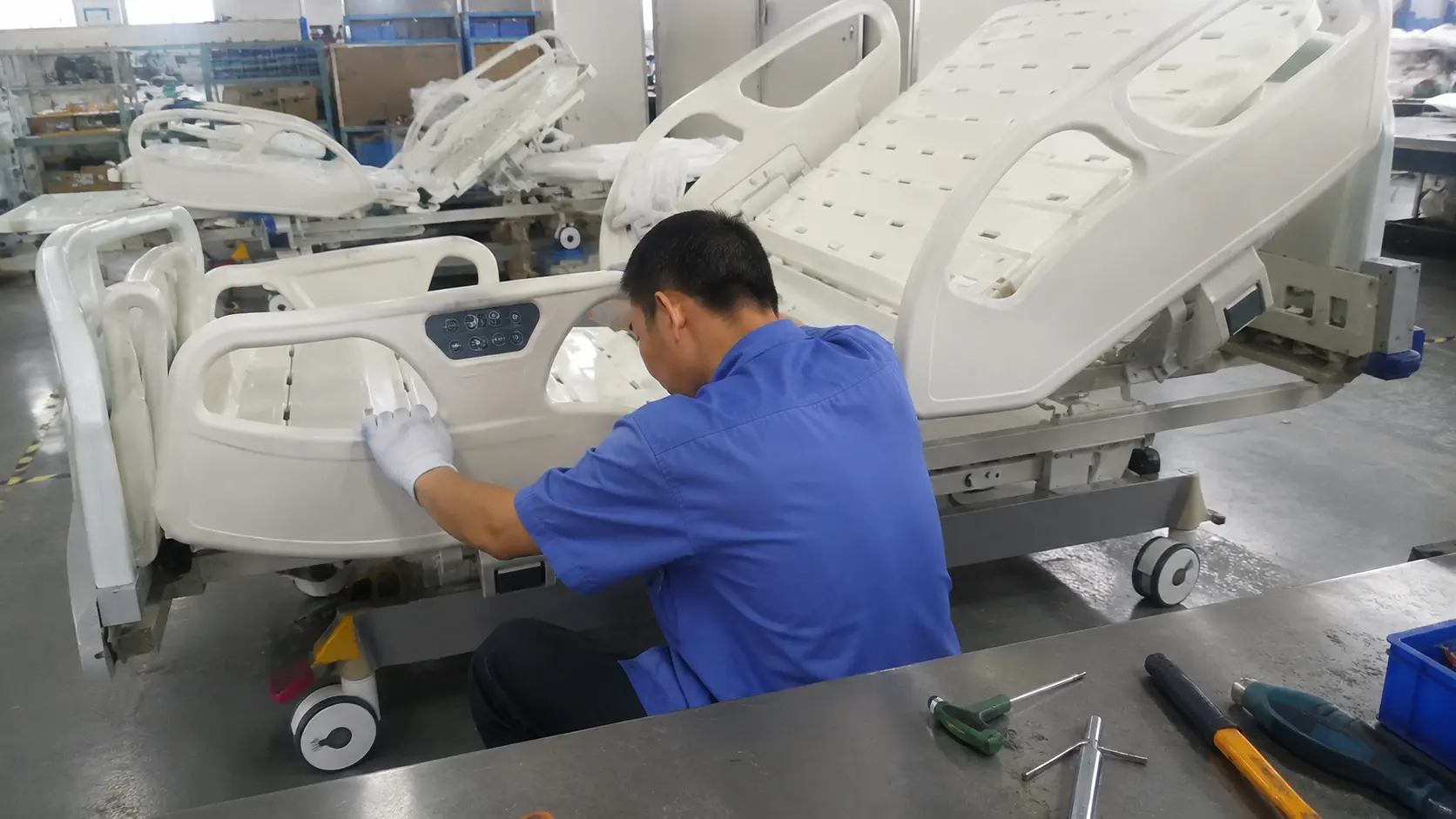
Choose a manufacturer when your order depends on production stability. This is especially important for importers, distributors and healthcare project buyers that plan repeat orders or need consistent specifications across many beds.
A manufacturer is usually the better fit when you need:
- Bulk hospital bed orders with stable model specifications.
- OEM branding, color, logo or accessory discussion.
- Clear control over bed frame, rails, castors, motors, boards and packing.
- Technical confirmation for electric, manual, ICU, nursing or home care beds.
- Repeat supply for distributors or tender projects.
- Spare parts planning for future after-sales support.
For example, if you are purchasing 3-function or 5-function electric hospital bed models for a distributor warehouse, direct manufacturer communication helps you confirm functions, voltage, plug, side rail type, mattress platform and packing before production.
When Should You Choose a Hospital Bed Supplier?
Choose a supplier when your purchasing problem is not only production, but also selection. A good supplier helps you compare models, match applications and prepare a quotation that fits your market.
A supplier is often useful when you need:
- Several hospital bed types in one inquiry.
- Quick model recommendations for hospitals, clinics, nursing homes or home care.
- Support comparing manual beds, electric beds, ICU beds and nursing beds.
- Mixed medical equipment categories in one shipment.
- Export paperwork support and practical RFQ communication.
- A sourcing partner who can explain options in buyer language.
For a buyer building a new healthcare facility, one supplier may help compare a basic manual hospital bed, a standard electric ward bed and an ICU bed before the buyer decides how to split the budget.
The risk is that not every supplier controls production. If the supplier is only a trading company, ask how they manage factory selection, model consistency, spare parts and inspection before shipment.
Manufacturer, Supplier or Trading Company: How To Tell the Difference
Many websites use similar words, so buyers should verify the working model instead of trusting the label. The questions below help you understand whether the company can really support your hospital bed order.
| Question To Ask | What a Strong Answer Looks Like | Why It Matters |
|---|---|---|
| Do you produce this model or source it from another factory? | The company clearly explains production control, partner factory relationship or direct manufacturing role. | It shows whether they can manage specification changes and repeat orders. |
| Can you provide a specification sheet before quotation? | The supplier shares model dimensions, functions, material details, accessories and packing information. | It prevents price comparison based on incomplete product names. |
| What bed configurations are available? | The team can explain manual, electric, ICU, nursing and home-care options by application. | It shows whether the supplier understands real healthcare procurement scenarios. |
| What documents can you support? | The company can discuss invoice, packing list, manuals, specification files and model-dependent document copies. | Importers and registration agents often need documents before final confirmation. |
| Can spare parts be ordered later? | The answer includes motors, handsets, rails, castors, boards or accessory replacement options. | After-sales support matters for distributors and healthcare facilities. |
Which Partner Is Better for Importers?
For importers, the best partner is usually a manufacturer-supplier: a company close enough to production to control specifications, but experienced enough in export communication to help with quotations, model selection and documents.
If you only choose a manufacturer, you may get better production control but weaker sales support. If you only choose a general supplier, you may get faster product matching but less control over consistency. The right balance depends on your purchase stage.
| Buyer Situation | Better Partner Type | Reason |
|---|---|---|
| You need one model in large quantity. | Manufacturer | Production control, repeat consistency and cost structure become more important. |
| You need several bed types for a hospital project. | Manufacturer-supplier | You need both product range and technical confirmation. |
| You are testing a new local market. | Supplier or manufacturer-supplier | Model recommendation and small-order support may matter more at the beginning. |
| You need private label or OEM discussion. | Manufacturer | Customization should be confirmed directly with production capability. |
| You need beds plus related medical equipment. | Supplier | A supplier can help combine categories and simplify sourcing communication. |
RFQ Checklist for Hospital Bed Buyers
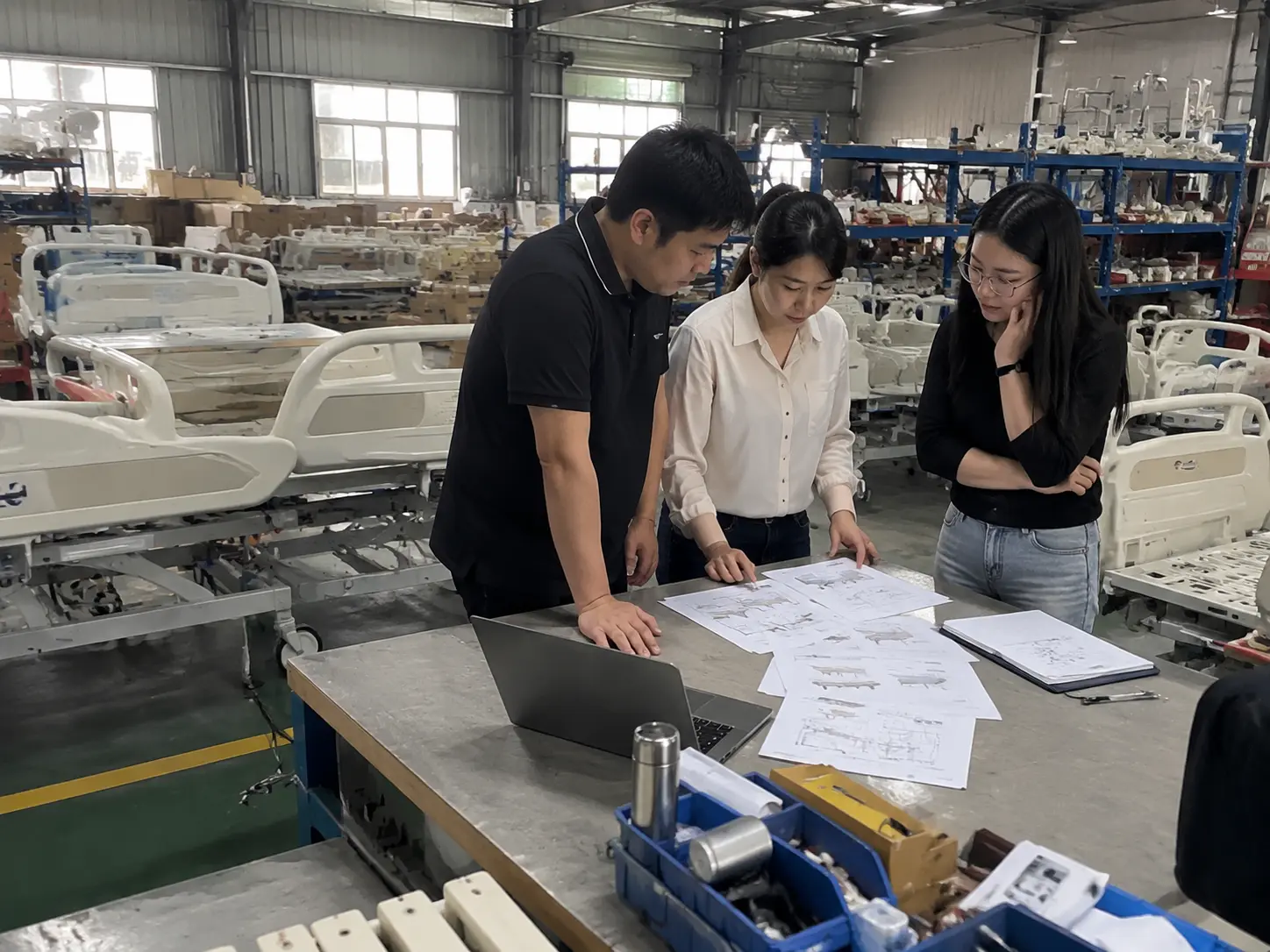
Whether you contact a manufacturer or a supplier, your RFQ should be specific. A clear RFQ reduces wrong quotations and helps the sales team recommend the correct bed model.
- Bed type: electric, manual, ICU, nursing or home care hospital bed.
- Quantity for each model.
- Destination country and destination port.
- Required functions: backrest, knee-rest, height adjustment, Trendelenburg, CPR or other options.
- Accessories: mattress, IV pole, dining table, side rails, overbed table, bedside cabinet and castors.
- Voltage and plug requirements for electric beds.
- Documentation needs for import, tender or registration support.
- Expected lead time and shipment plan.
- OEM logo, color or packaging requirements if needed.
If you do not know the exact model, describe the application. For example: 50 beds for a nursing home, 20 electric beds for a private hospital ward, or 10 ICU beds for a project tender. A good partner should help translate the use case into suitable specifications.
Common Mistakes When Comparing Manufacturer vs Supplier
Mistake 1: Assuming Factory Always Means Better
A factory can be strong in production but weak in export communication. If the team cannot confirm documents, packing, accessories and shipping details clearly, the order may still become difficult.
Mistake 2: Assuming Supplier Always Means Middleman
Some suppliers are also manufacturers or factory-direct export teams. Others are trading companies. Ask direct questions instead of judging only by the word “supplier”.
Mistake 3: Comparing Unit Price Without Specifications
A low price may exclude accessories, stronger castors, mattress, side rail options, packing requirements or spare parts. Always compare the full configuration.
Mistake 4: Leaving Documents Until the Last Step
Documentation support can vary by product model and destination market. Discuss invoice, packing list, manuals, specification files and available certificates before confirming the order.
FAQ: Hospital Bed Manufacturer vs Supplier
Is a hospital bed manufacturer better than a supplier?
Not always. A manufacturer can be better for production control, OEM and bulk orders. A supplier can be better for product matching, mixed categories and flexible sourcing support. Many importers prefer a company that combines both roles.
Can a hospital bed supplier also be a manufacturer?
Yes. Some companies manufacture hospital beds and also sell directly to overseas buyers. In that case, they can support both production details and export communication.
What should I ask before choosing a hospital bed supplier?
Ask whether they control production, which models they recommend for your application, what specifications are included, what documents can be provided and whether spare parts are available after shipment.
Which partner is better for OEM hospital bed orders?
A manufacturer or manufacturer-supplier is usually better for OEM orders because branding, color, configuration, packaging and repeat consistency need production-level confirmation.
How can I avoid choosing the wrong hospital bed partner?
Send a clear RFQ, compare full specifications, ask about documents and spare parts, and choose a partner that explains trade-offs instead of only sending the lowest price.
Next Step: Choose Based on Your Buying Scenario
For hospital bed importers, the question is not only manufacturer vs supplier. The better question is: who can understand your buying scenario and deliver the right bed configuration consistently?
Haoshangjia Medical is a China hospital bed manufacturer and supplier for hospitals, nursing homes, clinics, rehabilitation centers and medical equipment distributors, supplying electric hospital beds, manual hospital beds, ICU beds, nursing beds and home care medical beds with export documentation and quotation support.
You can review the full hospital bed supplier category or request a hospital bed quote with your quantity, destination country, bed type, voltage, accessories and documentation requirements.