
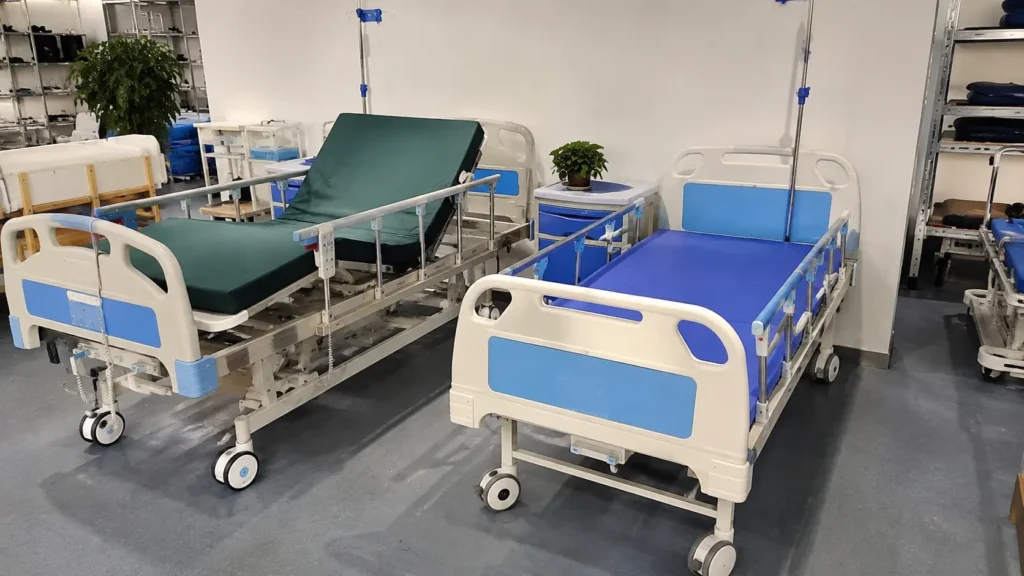
Short answer: choose a hospital bed manufacturer by checking product range, production control, bed configuration, documentation support, spare parts, export experience, communication quality, packing, lead time and after-sales process. For importers and healthcare project buyers, the best manufacturer is not simply the cheapest factory. It is the partner that can match the correct bed type to your application and keep the order consistent from quotation to shipment.
This guide explains how to choose a hospital bed manufacturer before you send a formal RFQ. It is written for hospital procurement teams, medical equipment distributors, nursing home buyers, clinic owners and project contractors comparing suppliers for electric hospital beds, manual beds, ICU beds, nursing beds and home care medical beds.
If you already know your required bed type, you can review Haoshangjia Medical’s hospital bed supplier category first. If you are still comparing supplier types, start with the checklist below.
1. Check Whether the Manufacturer Understands Your Buying Scenario
A good manufacturer should ask about your application before pushing a model. Hospital beds are not one product. A private hospital ward, ICU room, nursing home, rehabilitation center and home-care distributor may all need different functions and accessories.
Before comparing prices, tell the manufacturer your buyer scenario:
- Hospital ward procurement
- ICU or emergency care project
- Nursing home or long-term care facility
- Clinic or rehabilitation center
- Home-care medical equipment distribution
- Government tender or project contractor order
If the supplier gives the same recommendation for every scenario, be careful. A serious hospital bed manufacturer should help you match bed type, function, accessories and documentation to the real use case.
2. Compare Product Range, Not Only One Model
Many buyers begin with one product name, such as “hospital bed” or “medical bed”. In practice, you should compare whether the manufacturer can support the full range needed by your project or market.
| Bed Type | Typical Use | Buyer Questions To Ask |
|---|---|---|
| Electric hospital bed | Hospital wards, private hospitals, upgraded clinics and nursing facilities. | How many functions are available? What voltage and plug options can be supported? |
| Manual hospital bed | Budget wards, clinics, emergency stock and regions with limited electricity. | Is it 2-crank or 3-crank? What is included in the standard configuration? |
| ICU bed | Intensive care rooms, emergency departments and higher-spec hospital projects. | Which critical care functions, side rails, castors and CPR options are available? |
| Nursing bed | Nursing homes, elderly care centers and long-term care facilities. | How easy is daily operation for caregivers? Which side rail and mattress options fit elderly care? |
| Home care hospital bed | Home medical distributors, pharmacies and post-discharge recovery users. | Is the bed suitable for residential use, home delivery and retail-style support? |
If you need mixed categories, ask whether the manufacturer can combine electric hospital bed, manual hospital bed and ICU bed options in one quotation.
3. Confirm Production Control and Model Consistency
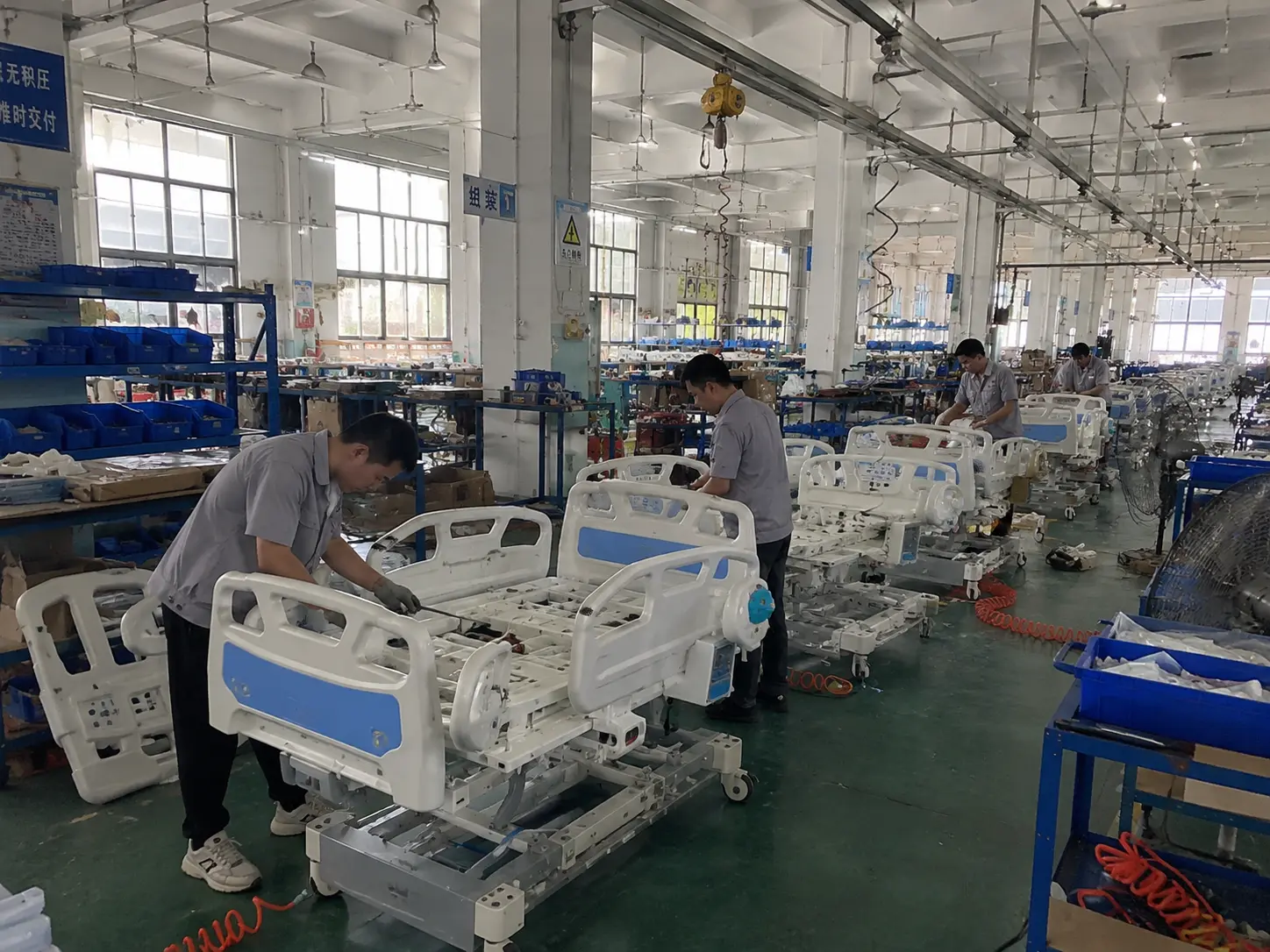
For repeat orders, production consistency matters more than a slightly lower first-order price. Ask how the manufacturer controls welding, surface treatment, assembly, accessory fitting and packing.
A practical manufacturer should be able to explain:
- How the bed frame is produced and checked.
- Which parts are standard and which parts are optional.
- How electric functions are tested before shipment.
- How side rails, castors, headboards and footboards are inspected.
- How packing is arranged for container shipping.
You do not need a long factory story. You need clear answers that reduce order risk.
4. Ask for a Complete Specification Sheet
Do not compare hospital bed quotations by product name alone. One “3-function electric hospital bed” can include different motors, side rails, castors, mattress platforms, boards and accessories compared with another.
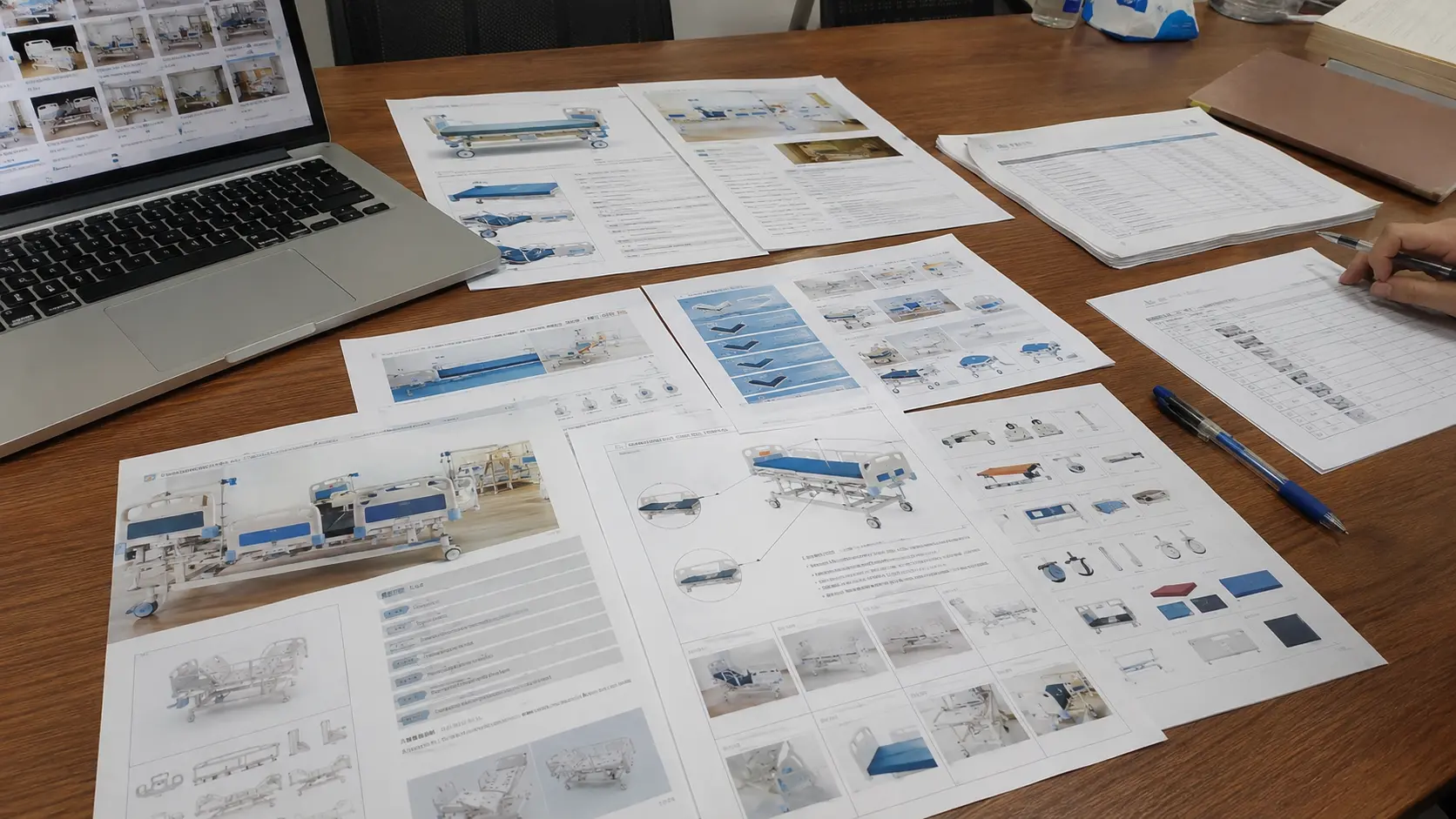
Ask each manufacturer to provide a specification sheet that includes:
- Bed dimensions and mattress platform size.
- Functions and adjustment ranges.
- Frame material and surface treatment.
- Side rail type.
- Headboard and footboard material.
- Castor size and locking type.
- Motor, controller and handset details for electric beds.
- Standard accessories and optional accessories.
- Packing method and loading information if available.
This step prevents one of the most common procurement mistakes: comparing a complete quotation with a stripped-down quotation.
5. Check Export Documentation Support Early
Hospital bed importers often need more than a commercial invoice. Depending on the destination market, product model and buyer type, documents may be needed for customs, tender review, internal purchasing or local registration support.
Ask what documents can be prepared before you confirm the order. Common document discussions include:
- Commercial invoice and packing list.
- Product specification sheet.
- User manual or installation guidance.
- Model photos and product labels.
- Available certificate or quality document copies, depending on product model.
- Documents requested by your local registration agent or tender file.
A responsible manufacturer should not promise universal compliance for every country. Instead, they should confirm which documents are available for the selected model and what needs to be checked before shipment.
6. Evaluate Spare Parts and After-Sales Support
Hospital beds are long-use products. For distributors and healthcare facilities, after-sales support is part of the real cost. A cheaper bed can become expensive if spare parts are hard to source.
| Spare Part Area | What To Confirm | Why It Matters |
|---|---|---|
| Motors and handsets | Can replacement parts be ordered later? | Electric beds may need part replacement after long-term use. |
| Side rails | Are side rail styles standardized for repeat orders? | Damaged rails should be easy to replace without changing the whole bed. |
| Castors | What size and locking type are used? | Castors affect mobility, safety and maintenance workload. |
| Boards and accessories | Can headboards, footboards, IV poles and tables be reordered? | Distributors may need accessory stock for local customers. |
Ask the manufacturer how they handle spare parts in the first order. Some buyers include a small spare parts package with the initial shipment to reduce future downtime.
7. Review Packing, Container Loading and Shipment Practicality
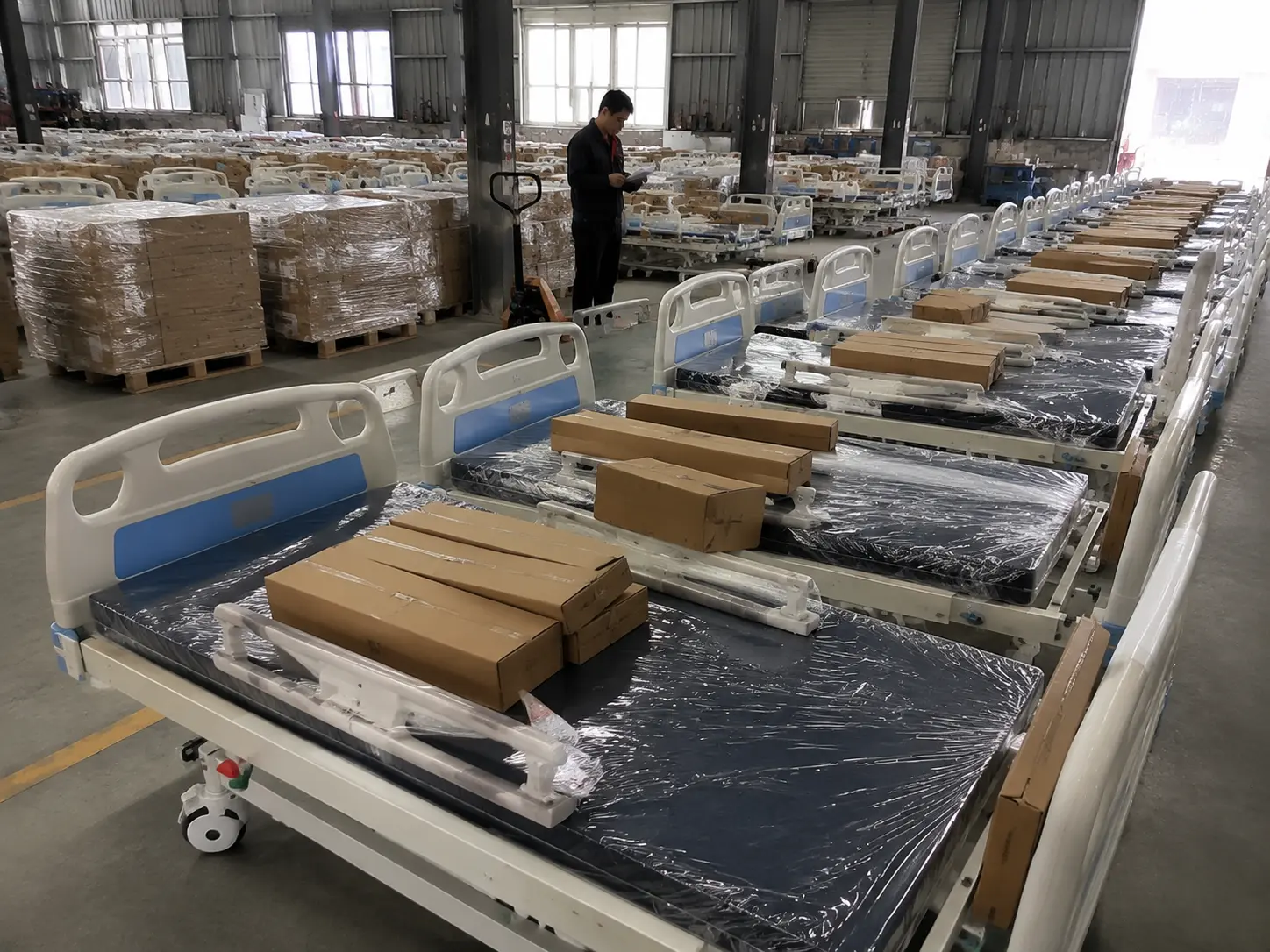
Hospital beds are bulky. Poor packing can cause scratches, deformation, missing accessories or higher freight cost. A good manufacturer should understand export packing and be able to explain how beds are protected during container shipping.
Ask these questions:
- Is the bed shipped assembled, semi-assembled or disassembled?
- How are rails, boards, motors and accessories protected?
- Can packing photos be provided before shipment?
- Can the manufacturer estimate container loading quantity?
- Are cartons, wooden cases or reinforced packing options available if needed?
For project orders, container planning should be discussed before final quotation. It affects shipping cost, loading efficiency and delivery schedule.
8. Test Communication Before Paying a Deposit
The manufacturer’s communication before payment is a preview of communication after payment. If your questions about model, accessories, documents and shipping are ignored during the RFQ stage, the order may become harder after production starts.
Good communication looks like this:
- The sales team confirms your application before recommending a model.
- Specifications are written clearly, not only described verbally.
- Optional accessories are separated from standard configuration.
- Lead time, packing and document support are discussed before payment.
- Questions are answered directly instead of avoided.
For importers, written confirmation is important. Keep a clear record of the selected model, configuration, price, quantity, packing and shipment terms.
9. Compare Manufacturers With the Same RFQ
To compare manufacturers fairly, send the same RFQ to each one. If each supplier receives different requirements, the quotations will not be comparable.
| RFQ Item | Example Detail |
|---|---|
| Bed type | 50 sets 3-function electric hospital beds for general ward use. |
| Destination | Destination country and port. |
| Configuration | ABS head/foot boards, side rails, castors, IV pole and mattress if required. |
| Electrical needs | Voltage, plug type and local electrical requirements. |
| Documents | Import, tender or registration-related document requests. |
| Timeline | Expected order date, shipment date and project deadline. |
When the RFQ is consistent, you can compare price, configuration, lead time and support more accurately.
10. Choose the Manufacturer That Reduces Total Purchase Risk
The lowest price is not always the lowest risk. For hospital bed procurement, the total purchase risk includes wrong configuration, unclear documents, weak packing, slow communication, missing spare parts and inconsistent repeat orders.
A strong manufacturer should make the purchase clearer, not more confusing. They should help you understand which bed fits your scenario and which details must be confirmed before production.
Quick Manufacturer Evaluation Scorecard
You can use this simple scorecard before choosing a hospital bed manufacturer. Give each area a score from 1 to 5.
| Evaluation Area | Score 1 Means | Score 5 Means |
|---|---|---|
| Product fit | Generic model recommendation. | Clear model match by application and buyer scenario. |
| Specification clarity | Only price and photo provided. | Complete specification sheet and configuration list provided. |
| Export support | Documents discussed only after order. | Document needs checked before quotation confirmation. |
| Spare parts | No clear replacement process. | Spare parts and accessories can be discussed for future support. |
| Communication | Slow, vague or inconsistent answers. | Fast, written and practical confirmation. |
If one manufacturer scores well in all five areas, they are usually safer than a cheaper supplier that only gives a low unit price.
FAQ: How to Choose a Hospital Bed Manufacturer
What is the most important factor when choosing a hospital bed manufacturer?
The most important factor is whether the manufacturer can match the correct bed configuration to your application and deliver it consistently. Price matters, but specification clarity, production control, documents and after-sales support are also important.
Should I choose a manufacturer or a supplier?
If you need direct production control, OEM support or repeat orders, a manufacturer is usually better. If you need product matching and sourcing support, a supplier can help. Many importers prefer a manufacturer-supplier that combines factory knowledge with export communication.
What should I include in a hospital bed RFQ?
Include bed type, quantity, destination country, destination port, functions, voltage, plug type, accessories, documentation requirements and target delivery schedule.
How can I compare two hospital bed quotations?
Compare the full specification, not only the price. Check functions, frame, side rails, castors, boards, motors, accessories, packing, documents, lead time and spare parts.
Can Haoshangjia Medical help choose the right model?
Yes. Haoshangjia Medical can discuss hospital bed type, configuration, quantity, destination country, accessories and documentation needs before preparing a quotation.
Next Step: Send a Clear RFQ
Haoshangjia Medical is a China hospital bed manufacturer and supplier for hospitals, nursing homes, clinics, rehabilitation centers and medical equipment distributors, supplying electric hospital beds, manual hospital beds, ICU beds, nursing beds and home care medical beds with export documentation and quotation support.
To compare options, review the hospital bed supplier category or request a hospital bed quote with your bed type, quantity, destination country, voltage, accessories and document requirements.