
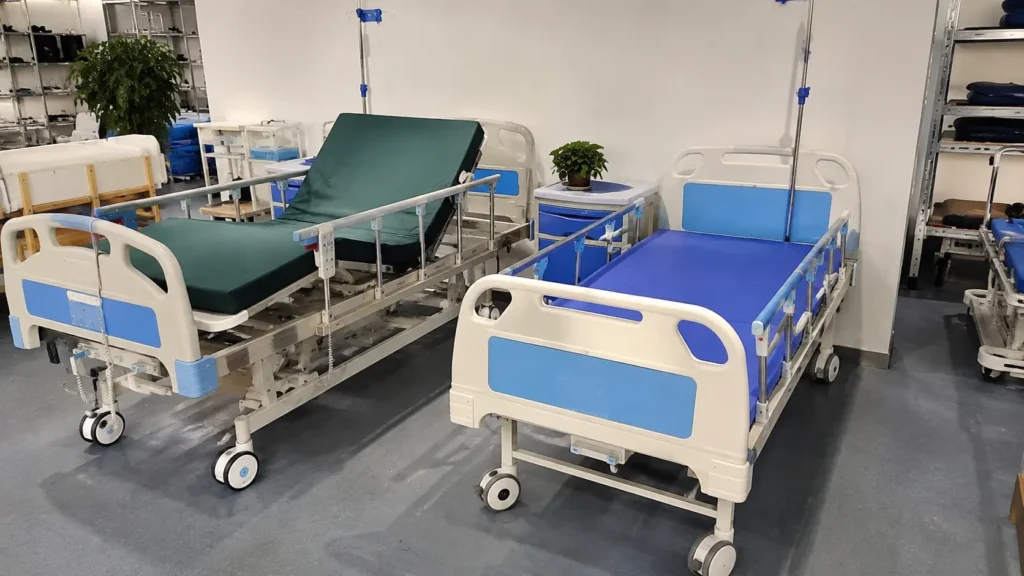
Short answer: choose a 2 crank manual hospital bed when the facility mainly needs backrest and leg-rest adjustment at a controlled cost. Choose a 3 crank manual hospital bed when caregivers also need to adjust the whole bed height for easier patient transfer, bedside care and daily nursing work. The third crank usually adds height adjustment, but buyers should always confirm the exact function list with the manufacturer.
This manual hospital bed 2 crank vs 3 crank guide is written for hospitals, clinics, nursing homes, distributors and medical project buyers. It explains the practical differences, suitable care settings, cost factors and specifications to confirm before sending an RFQ.
If you are still deciding between powered and non-powered beds, first read our electric vs manual hospital bed comparison. If a manual configuration already fits your project, the sections below will help you choose the right crank count.
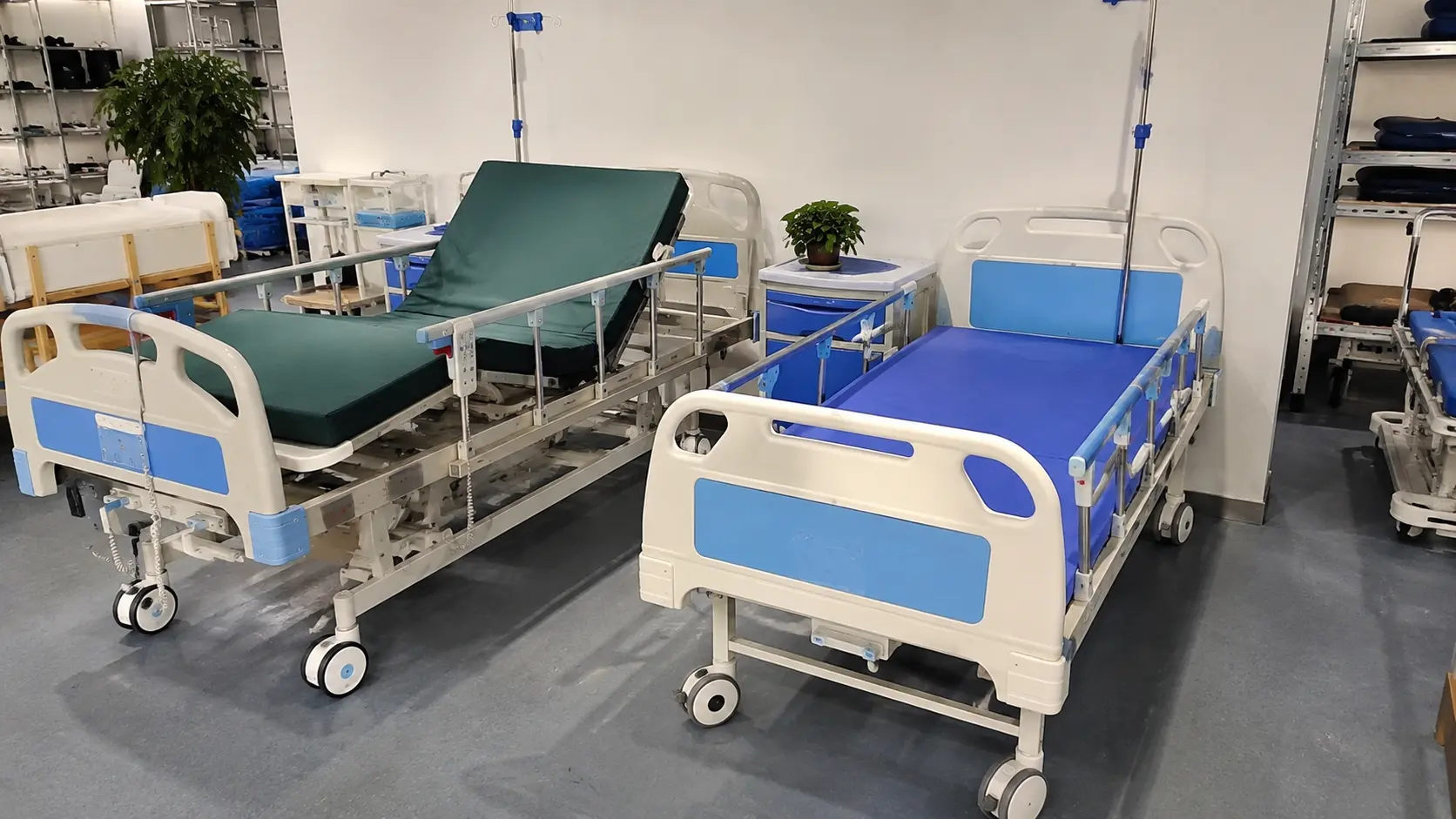
Manual Hospital Bed 2 Crank vs 3 Crank: Quick Comparison
The main difference is normally height adjustment. Both configurations usually adjust the backrest and leg-rest. A 3 crank bed commonly adds whole-bed height adjustment, which can improve caregiver ergonomics and make transfers easier.
| Comparison Item | 2 Crank Manual Bed | 3 Crank Manual Bed |
|---|---|---|
| Typical functions | Backrest and leg-rest adjustment | Backrest, leg-rest and bed height adjustment |
| Best fit | General wards, clinics and budget-sensitive projects | Hospitals, nursing homes and rooms with frequent bedside care |
| Purchase cost | Lower | Higher because of the lifting mechanism and frame design |
| Caregiver ergonomics | Fixed working height | Adjustable working height |
| Maintenance | Simpler mechanism | One additional crank and lifting system to inspect |
| Power requirement | None | None |
Function conventions can differ between suppliers. A quotation that says “3 crank” is not enough by itself. Ask for a function table, adjustment ranges, photos and a datasheet so every quotation is compared on the same basis.
What Is a 2 Crank Manual Hospital Bed?
A 2 crank manual hospital bed usually has one crank for raising the backrest and one for adjusting the knee or leg section. These are the two most common positioning functions needed in basic inpatient care.
The backrest function can help position a patient for meals, reading and routine care. The leg-rest function changes the knee section to support positioning and comfort. Both functions are operated mechanically, so the bed does not depend on electricity, motors or hand controls.
A 2 crank bed is often suitable when buyers need:
- A practical bed for a general ward or community clinic.
- A lower purchase price for a large procurement project.
- Basic patient positioning without whole-bed height adjustment.
- Simple maintenance in areas with limited technical support.
- Reliable operation where the power supply is unstable.
Buyers can review the available manual hospital bed range before confirming frame, side rail, castor and accessory requirements.
What Is a 3 Crank Manual Hospital Bed?
A 3 crank manual hospital bed commonly includes backrest adjustment, leg-rest adjustment and whole-bed height adjustment. The third function allows staff to raise the mattress platform for bedside work or lower it for patient access and transfer.
It keeps the main advantages of a manual bed: no motor, no control box and no dependence on mains power. At the same time, it provides more flexibility than a fixed-height 2 crank model.
A 3 crank bed is often a stronger choice when:
- Nurses perform frequent bedside care.
- The facility wants to reduce repeated bending during daily tasks.
- Patients regularly transfer between the bed, wheelchair or stretcher.
- The buyer wants an adjustable-height bed without electric components.
- The bed will be used for longer stays or higher nursing workloads.
A 3 crank model still requires manual effort. If users need frequent adjustments throughout the day, an electric bed may provide a better workflow even though its initial cost is higher.
Why Height Adjustment Matters
Height adjustment is the deciding factor for many buyers. A bed at a fixed height may be acceptable for basic accommodation, but it cannot adapt to different caregivers, transfer equipment or patient mobility levels.
| Use Scenario | How Height Adjustment Helps | Buyer Question |
|---|---|---|
| Bedside nursing | Raises the patient platform to a more practical working level. | How often will staff provide direct bedside care? |
| Wheelchair transfer | Allows the bed height to be aligned more closely with transfer equipment. | What is the wheelchair seat height? |
| Patient access | A lower platform can make entry and exit easier for some patients. | What is the minimum platform height? |
| Room cleaning | Changing bed height may improve access around the frame. | Is under-bed clearance sufficient? |
| Different staff members | Provides a more adaptable working level. | Will staff adjust height regularly? |
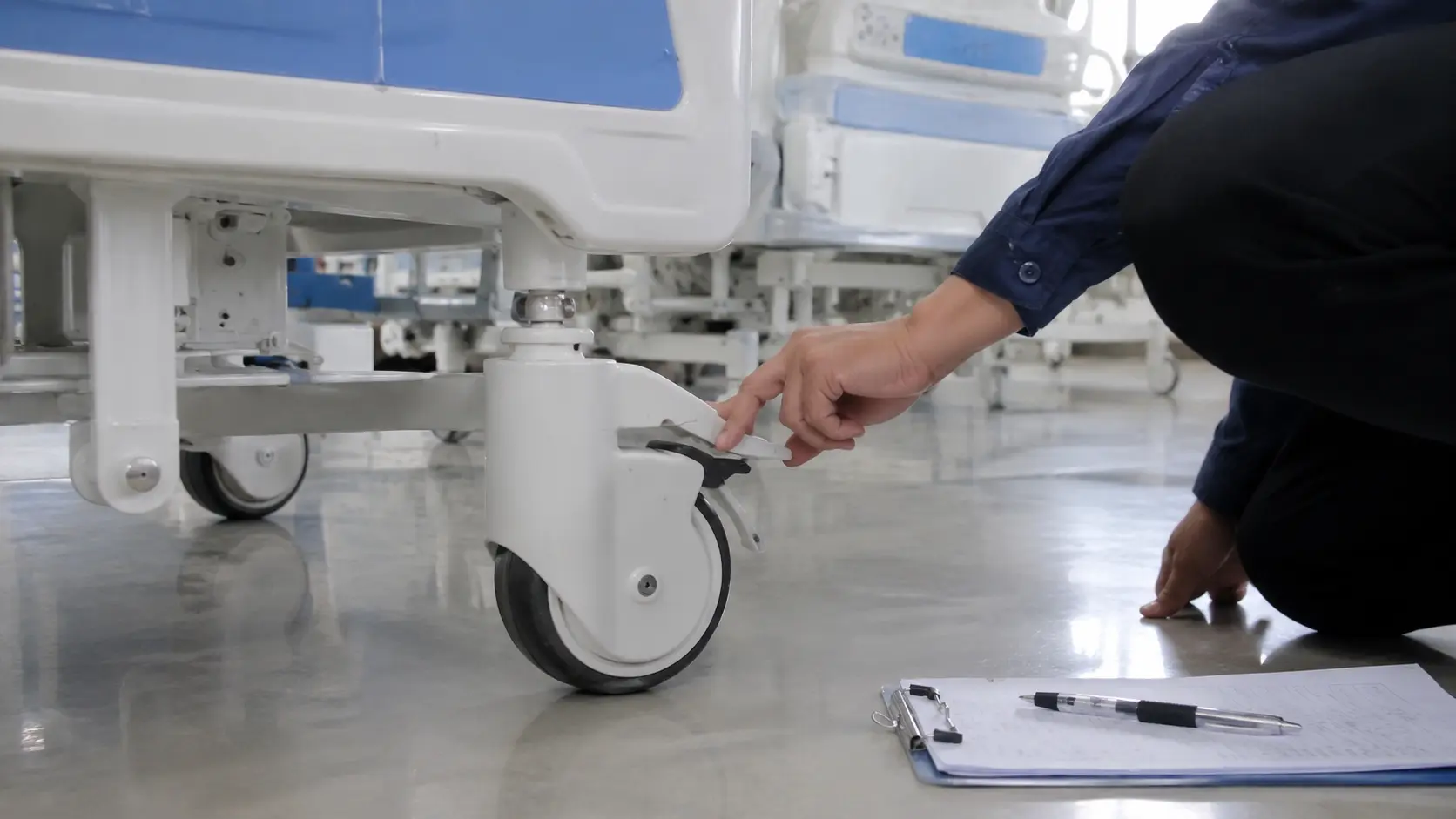
Height adjustment does not by itself guarantee safe transfers or prevent falls. Buyers should evaluate the complete configuration, including minimum height, side rails, castor brakes, mattress thickness and the facility’s transfer procedures.
Which Bed Fits Each Care Setting?
There is no universal answer for every facility. A hospital may use 2 crank beds in standard rooms and 3 crank beds in rooms with heavier nursing workloads. Distributors may stock both to cover different price levels.
| Facility or Buyer | Suggested Direction | Reason |
|---|---|---|
| General hospital ward | 2 crank or 3 crank | Choose according to nursing workload and project budget. |
| Community clinic | 2 crank | Basic positioning and simple maintenance may be sufficient. |
| Nursing home | 3 crank or dedicated nursing bed | Frequent daily care makes adjustable height more valuable. |
| Rehabilitation center | 3 crank | Height flexibility can support transfer routines and caregiver work. |
| Emergency or critical care | Dedicated higher-spec bed | A basic manual ward bed may not meet the required workflow or functions. |
| Medical distributor | Both models | A 2 crank value model and 3 crank upgraded model cover more tenders. |
| Public procurement project | Specification-dependent | The tender’s exact function and dimension requirements should control selection. |
For long-term elderly care, also compare a dedicated nursing bed. Nursing beds may offer configurations designed around daily care needs that are different from standard ward beds.
Cost, Maintenance and Lifetime Value
A 2 crank hospital bed normally costs less because it has a fixed-height frame and fewer mechanical parts. This can matter when a buyer needs hundreds of beds or must meet a strict tender budget.
A 3 crank bed has a higher initial cost, but the height adjustment may create operational value over years of use. Buyers should consider how often staff will use the function, not only the unit price.
Manual beds generally have fewer electrical maintenance requirements than electric beds. However, they are not maintenance-free. Procurement teams should confirm:
- Crank material, folding design and storage position.
- Lead screw or mechanical transmission construction.
- Recommended lubrication and inspection schedule.
- Availability of replacement cranks and transmission parts.
- Access to assembly instructions and spare-parts diagrams.
- Warranty scope for frame and mechanical components.
For imported beds, spare-parts planning is especially important. A small set of frequently used mechanical parts included with the shipment may reduce future downtime and international courier costs.
Specifications to Confirm Before Ordering
Crank count is only one part of the specification. Two beds described as 3 crank models may have different dimensions, adjustment ranges, safe working loads, side rails and castors.
| Specification | What to Confirm | Why It Matters |
|---|---|---|
| Overall and platform dimensions | Length, width and mattress platform size | Affects room layout, mattress fit and transport. |
| Adjustment ranges | Backrest, leg-rest and minimum/maximum height | Confirms that the function meets actual care needs. |
| Load rating | Ask whether the figure is safe working load or another test value | Prevents comparison of unlike specifications. |
| Side rails | Material, folding method, lock and rail height | Affects access, patient protection and cleaning. |
| Castors and brakes | Diameter, material, individual or central braking | Affects movement, stability and maintenance. |
| Head and foot boards | Material and removable design | Affects cleaning and emergency access. |
| Accessories | Mattress, IV pole, drainage hooks and overbed table | Changes the complete delivered cost. |
| Packing | Package dimensions, gross weight and assembly level | Affects container quantity, freight and installation labor. |
Ask the supplier to mark optional items separately. This makes it easier to compare quotations and prevents a low unit price from hiding missing accessories.
RFQ Checklist for 2 Crank and 3 Crank Beds
A clear RFQ helps a hospital bed supplier recommend the right configuration and prepare a more accurate quotation.
- Bed type: state whether you need 2 crank, 3 crank or both for comparison.
- Quantity: give the quantity per model and expected repeat-order demand.
- Care setting: explain whether the beds are for a hospital, clinic, nursing home or distributor.
- Required functions: list backrest, leg-rest and height adjustment explicitly.
- Dimensions and load: provide tender requirements or desired ranges.
- Side rails and castors: specify material, rail style, castor size and braking system.
- Accessories: list mattress, IV pole, drainage hooks, overbed table and other items.
- Documents: state the manuals, declarations, certificates or tender files required for your market.
- Branding: mention logo, label, color or packaging requirements.
- Destination: provide the destination country and port for packing and freight planning.
When comparing suppliers, send the same checklist to each company. A standardized RFQ makes differences in price, construction and included accessories easier to identify.
Common Buyer Mistakes
Assuming every 3 crank bed has the same functions
Function naming is not always consistent. Confirm each movement and its adjustment range in writing.
Choosing only by unit price
A lower quotation may use different side rails, smaller castors, fewer accessories or less protective packing. Compare the complete configuration and delivered cost.
Ignoring minimum and maximum height
The words “height adjustable” do not show whether the range fits the facility’s transfer and care routines. Request exact dimensions.
Using one bed type for every room
Mixed procurement can be more efficient. Use simpler beds where basic positioning is sufficient and upgraded beds where height adjustment creates practical value.
Forgetting spare parts
Cranks and mechanical components experience repeated use. Confirm replacement part codes, pricing and shipment options before the first order.
FAQ: Manual Hospital Bed 2 Crank vs 3 Crank
What is the main difference between a 2 crank and 3 crank hospital bed?
A 2 crank bed usually adjusts the backrest and leg-rest. A 3 crank bed usually adds whole-bed height adjustment. Confirm the exact function list because configurations can vary.
Does a 3 crank hospital bed need electricity?
No. A standard 3 crank manual bed uses mechanical cranks and does not need mains power or batteries.
Is a 3 crank bed better for nursing homes?
It can be better when staff provide frequent bedside care or need adjustable transfer height. A dedicated nursing bed may also be worth comparing for long-term care environments.
Is a 2 crank bed suitable for a hospital ward?
Yes, when basic backrest and leg-rest adjustment meets the ward’s needs. The hospital should evaluate caregiver workflow, patient mobility and tender requirements before selection.
Which model is easier to maintain?
A 2 crank model normally has a simpler mechanism. Both types still need routine inspection, cleaning, lubrication where specified and access to replacement parts.
Can buyers combine 2 crank and 3 crank beds in one order?
Yes. Mixed orders can match different room needs, but buyers should confirm packing, labeling, quantities and spare parts for each configuration.
Choose the Right Manual Bed Configuration
Choose a 2 crank manual hospital bed when basic positioning, simple maintenance and lower cost are the priorities. Choose a 3 crank bed when adjustable height will meaningfully improve caregiver work or patient transfers. The best decision should be based on actual room use, not crank count alone.
Haoshangjia Medical supplies manual hospital beds for hospitals, clinics, nursing homes, distributors and medical projects. To receive a configuration recommendation, request a hospital bed quote with your required quantity, functions, dimensions, accessories, destination country and documentation needs.