
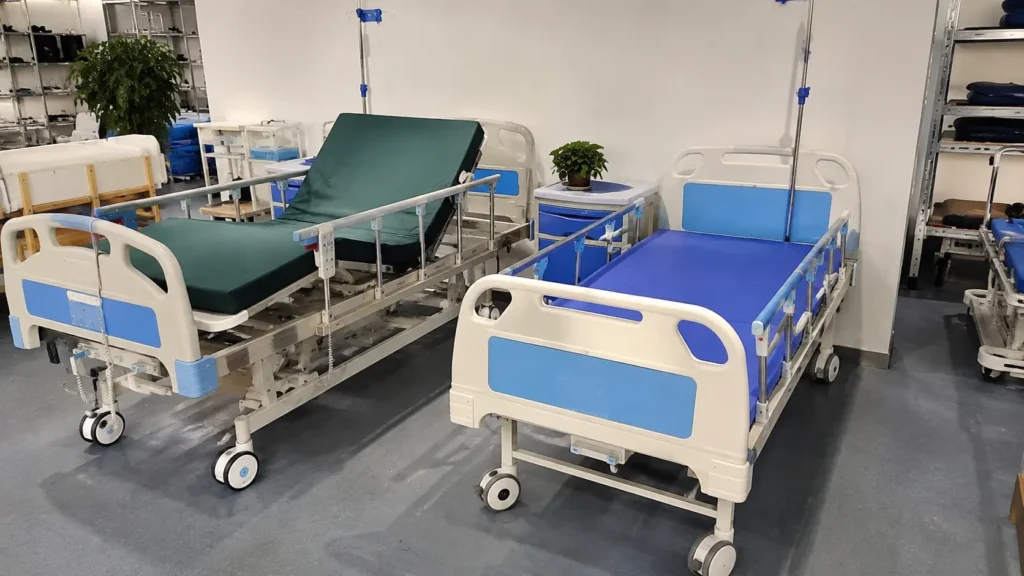
A hospital procurement equipment checklist should connect every item to its clinical area, required function, quantity, room constraints, utility needs, accessories, documents, installation, training, warranty, and delivery phase. Buyers should create a room-by-room equipment schedule before requesting prices, then require suppliers to quote the same specification and clearly mark included, optional, and excluded items.
This checklist is for hospital procurement teams, project contractors, importers, distributors, and clinic groups sourcing hospital beds and related medical equipment. It helps turn a general product list into a comparable RFQ while keeping hospital beds as the core equipment category.
1. Define Project Scope and Responsibility
Start by defining the facility, project stage, opening date, departments, bed count, destination, budget structure, and procurement responsibility. A new hospital, ward expansion, replacement program, and emergency purchase require different schedules and risk controls.
Create a responsibility matrix covering the hospital, consultant, contractor, importer, supplier, freight forwarder, installation team, and local registration agent. For each party, state who approves specifications, selects suppliers, verifies documents, arranges shipment, receives goods, installs equipment, trains users, and handles warranty claims.
Confirm whether the procurement package covers only equipment supply or also site survey, layout review, delivery to room, assembly, testing, commissioning, user instruction, maintenance training, and spare parts. Unclear scope produces quotations that look comparable but contain different services.

2. Build a Room-by-Room Equipment Schedule
Organize requirements by department and room instead of keeping one undifferentiated list. Give every line an item number, department, room type, product name, quantity, essential specification, optional features, utility needs, documentation requirements, and approval status.
| Field | What to Record | Why It Matters |
|---|---|---|
| Department and room | Ward, ICU, emergency, clinic, rehabilitation, imaging, or support area | Connects equipment to the actual workflow |
| Product and quantity | Base quantity plus approved spare or expansion quantity | Controls budget and shipment planning |
| Essential specification | Functions, dimensions, load, materials, utilities, and interfaces | Creates comparable quotations |
| Accessories | Standard, optional, reusable, and consumable items | Prevents missing components |
| Approval status | Draft, technical review, budget approved, or final | Prevents purchasing from an obsolete list |
Use controlled revision numbers and dates. When clinical users change a requirement, record who approved it and whether the change affects price, room layout, utilities, documents, or lead time.
3. Specify Hospital Beds by Care Area
Hospital beds should not be specified as one generic line. Match bed category and functions to each care area, then state the exact configuration. The hospital bed supplier category provides an overview of electric, manual, ICU, nursing, and home care models.
| Care Area | Starting Bed Category | Key Procurement Questions |
|---|---|---|
| General ward | Manual or electric hospital bed | Required movements, height, rails, casters, mattress, and accessories |
| ICU | ICU bed | Project-required positions, controls, rails, casters, accessories, and power |
| Emergency or observation | Mobile manual or electric bed | Movement frequency, brakes, access, cleaning, and room turnover |
| Long-term care ward | Nursing bed | Caregiver access, height range, resident needs, mattress, and rails |
| Clinic or low-acuity room | Manual hospital bed | Essential functions, budget, space, and maintenance |
For each bed, record platform and overall dimensions, movements and adjustment ranges, safe working load, frame and platform material, side rails, boards, casters, brakes, mattress, IV pole, drainage hooks, and other required accessories. For electric models, add voltage, frequency, plug, motors, controls, cable management, and the power-interruption procedure.
Buyers comparing ward options can review electric vs manual hospital bed. Technical ICU buyers should use the ICU bed specifications buying guide to structure model-level questions.
4. Record Technical and Utility Requirements
Technical requirements must reflect both the equipment and the site. Record room dimensions, door and elevator clearance, floor conditions, delivery route, storage area, and space for assembly. Confirm whether equipment must pass through completed areas or arrive before construction handover.
For powered equipment, state voltage, frequency, plug, outlet availability, grounding requirements, and any project-specific electrical standard. For networked, plumbing, gas, imaging, or other utility-dependent equipment, the hospital’s qualified project team should define and approve interfaces before purchasing.
Do not copy an old tender specification without checking the current room and workflow. Mark every requirement as mandatory, preferred, or optional. This lets suppliers identify compliant alternatives without silently removing essential functions.
5. List Accessories and Consumables Separately
Separate the main unit, standard accessories, optional accessories, spare parts, and consumables. Require a quantity per unit and total project quantity for each line. A hospital bed quotation, for example, should state whether the mattress, IV pole, dining table, drainage hooks, and other accessories are included.
Check compatibility between accessories and the exact model. Mattress thickness affects rail height and gaps. Mobile equipment must fit under or beside the bed. Replacement parts should be identified by model or part number where available.
For consumables, estimate initial stock, expected usage, shelf-life considerations, storage conditions, and local replenishment. Haoshangjia Medical also supplies medical dry films as a secondary product line, but film type and compatibility should be confirmed separately from the hospital-bed package.
6. Check Supplier and Product Evidence
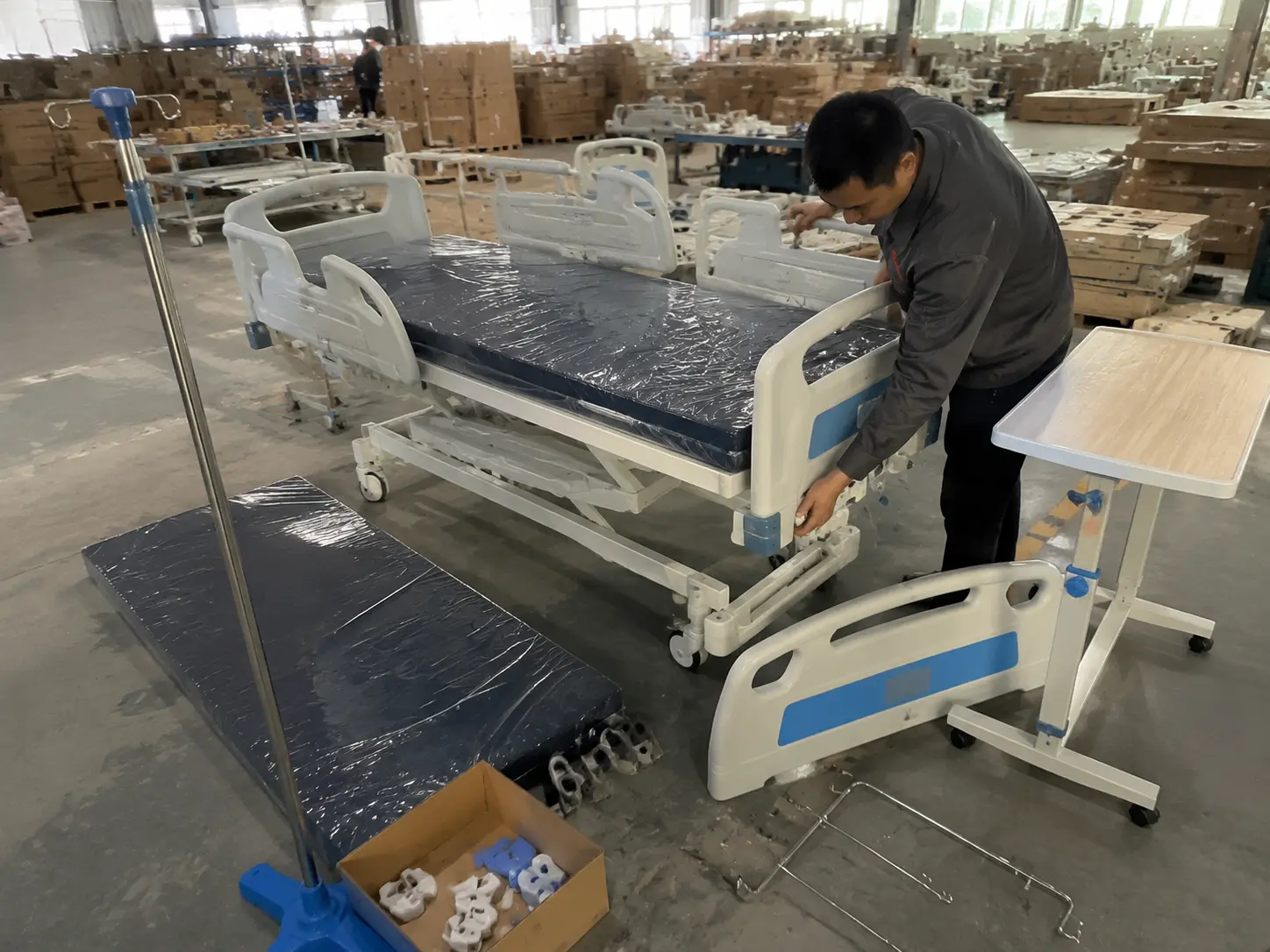
Verify the supplier’s legal and commercial identity, role in the transaction, quoted models, and responsibility for quality, documents, shipment, and warranty. Ask whether the supplier manufactures the item directly or coordinates another producer when that distinction matters to the project.
Product evidence may include model-specific specifications, photos, videos, drawings, labels, manuals, packaging examples, sample review, and inspection records. For high-value or high-risk orders, consider an independent inspection based on the approved specification.
Send the same RFQ to every shortlisted supplier. The guide on how to choose a hospital bed supplier provides a supplier scorecard covering specifications, documentation, commercial terms, and after-sales support.
7. Confirm Documents and Destination Requirements
Create a document register with the file name, responsible party, required language, due date, and approval status. Common items include quotations, commercial invoices, packing lists, model specifications, manuals, labels, inspection reports, and available conformity-related documents.
Requirements vary by destination, equipment type, model, procurement method, and regulatory pathway. The importer or local registration agent should define current requirements. Do not assume that a company-level certificate covers every product or guarantees acceptance in every market.
For tenders, copy each mandatory requirement into a compliance table and ask the supplier to respond with “complies,” “does not comply,” or a clearly described alternative, supported by the relevant document reference.
8. Compare Commercial and Logistics Terms
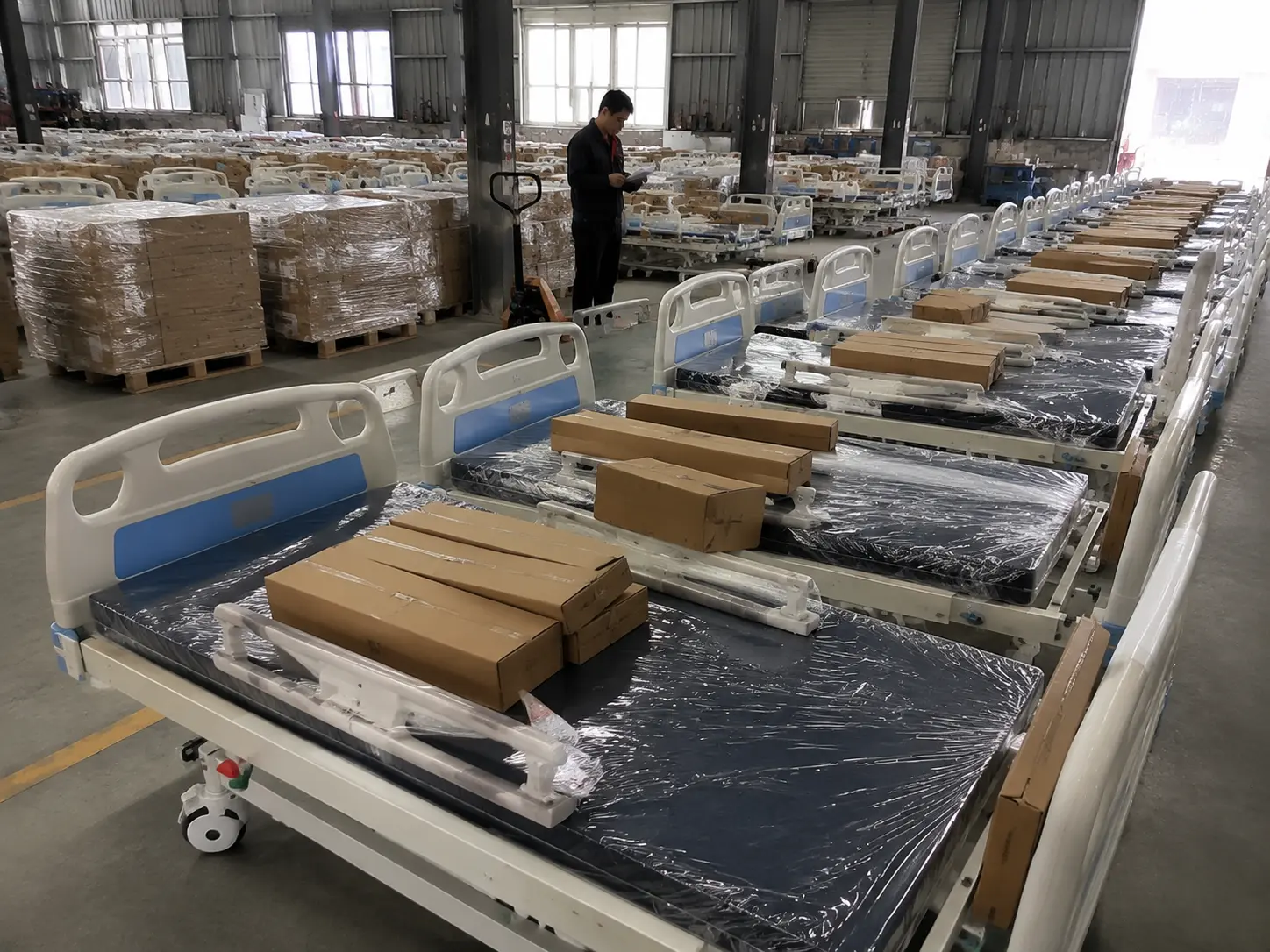
Compare the total defined configuration, not just unit price. Record MOQ, sample terms, quote validity, Incoterm and named place, payment stages, production lead time, inspection timing, packing, shipment window, warranty, training, installation, and excluded charges.
Ask for package quantity, dimensions, gross weight, volume, and a model-specific container-loading estimate. Confirm whether equipment ships assembled, semi-assembled, or disassembled and identify the largest and heaviest package.
For phased hospital projects, divide deliveries by building, floor, department, or opening date. Check storage capacity and the risk of equipment arriving before rooms are secure and ready. Include a procedure for shortages, visible damage, concealed damage, and mismatched accessories.
9. Plan Inspection, Installation, and Handover
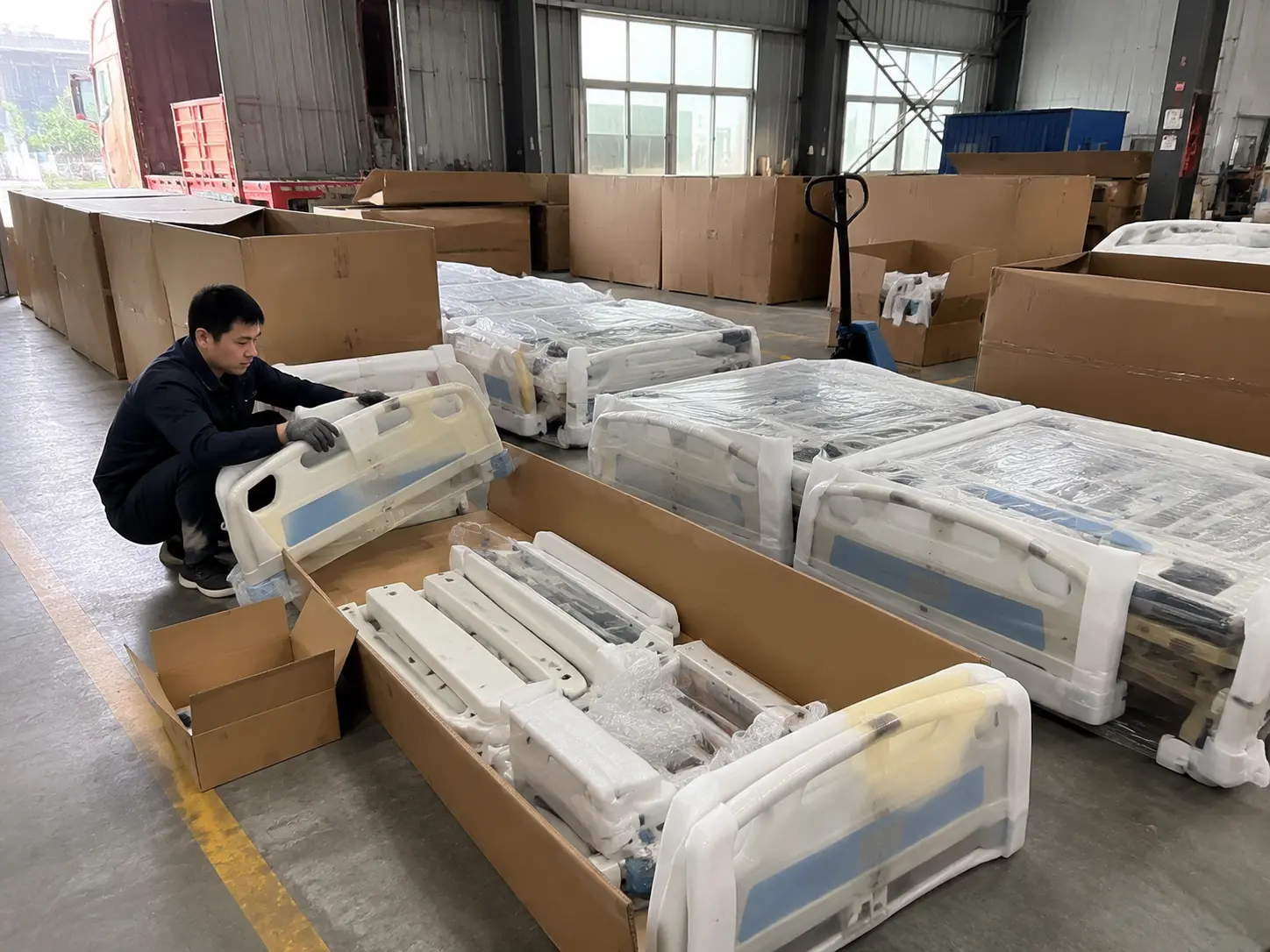
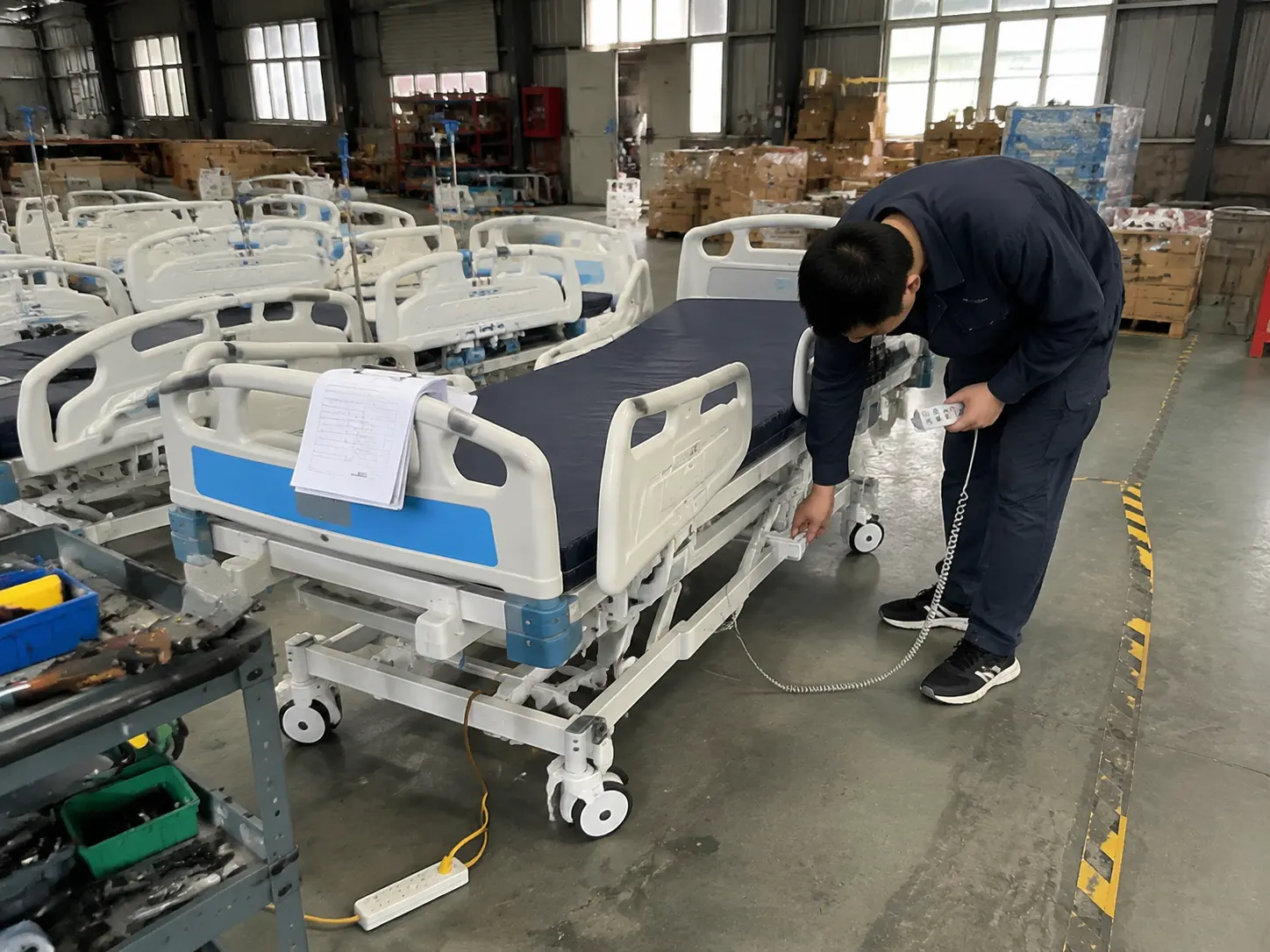
Define pre-shipment inspection criteria from the approved model and specification. Check quantities, appearance, functions, controls, dimensions where required, accessories, labels, documents, and packaging. Record accepted deviations in writing.
Before delivery, confirm site readiness, access, lifting equipment, installers, tools, waste removal, and temporary storage. After assembly, use a room-by-room handover form with asset identification, function check, accessory count, document delivery, and responsible signatures.
Training should be role-based. Users need operating and basic inspection information; cleaning teams need approved cleaning instructions; maintenance staff need service access, replaceable-parts information, and claim procedures. Keep attendance and handover records when required by the project.
10. Procurement Scenarios
New hospital project
Build the schedule from approved departments and room data, freeze mandatory specifications, and phase procurement around site readiness. Use compliance tables and coordinated logistics for mixed equipment packages.
Ward replacement program
Audit existing beds, accessories, room dimensions, maintenance history, and staff workflows. Standardize a limited number of replacement configurations and plan removal, installation, and continuity of care.
Distributor supplying a tender
Confirm every tender line with the manufacturer before submission. Align offer validity, lead time, documents, warranty, training, and payment exposure with the tender contract rather than relying on a general catalogue.
Clinic or small hospital expansion
Prioritize essential equipment and room fit. Separate immediate-opening needs from later upgrades, and avoid complex options that the local team cannot operate or maintain.
Hospital Equipment RFQ Checklist
- Project name, facility type, destination country, port, and deadline
- Department, room, product, model category, and quantity
- Mandatory functions, dimensions, load, materials, and utilities
- Standard accessories, options, spare parts, and consumables
- Electrical configuration and site-interface requirements
- OEM labels, manuals, languages, and packaging
- Required import, tender, registration, and handover documents
- Sample, approval, and inspection requirements
- MOQ, unit price, Incoterm, payment, and quote validity
- Lead time, delivery phases, package data, and loading estimate
- Installation, testing, training, warranty, and claim procedure
- Included items, exclusions, deviations, and optional alternatives
Frequently Asked Questions
What should a hospital equipment list include?
It should include department, room, item, quantity, essential specification, utilities, accessories, documents, delivery phase, approval status, and responsible party.
How should hospital beds be specified?
Specify each bed by care area, movements, dimensions, height, load, rails, boards, casters, brakes, mattress, accessories, and electrical configuration when applicable.
How can buyers compare supplier quotations?
Send the same RFQ, require suppliers to identify inclusions and deviations, and compare the complete configuration, documents, logistics, warranty, and services—not only unit price.
When should documentation be checked?
Before ordering. The importer, tender team, or registration agent should define model-specific and destination-specific requirements early enough to affect supplier selection.
Should spare parts be included in the first order?
Often yes for equipment that will be installed across many rooms or locations. Ask the supplier for a quantity-based recommendation and part identification.
What is the final step before shipment?
Inspect against the approved specification, confirm quantities and accessories, verify labels and documents, and approve packing and shipment in writing.
Request a Hospital Bed Project Quotation
Haoshangjia Medical is a China hospital bed manufacturer and supplier supporting hospitals, clinics, nursing homes, rehabilitation centers, distributors, and project buyers with electric, manual, ICU, nursing, and home care beds.
Request a hospital bed quote with your room schedule, quantities, required bed types, destination country and port, voltage, accessories, documents, delivery phases, and preferred trade term.