
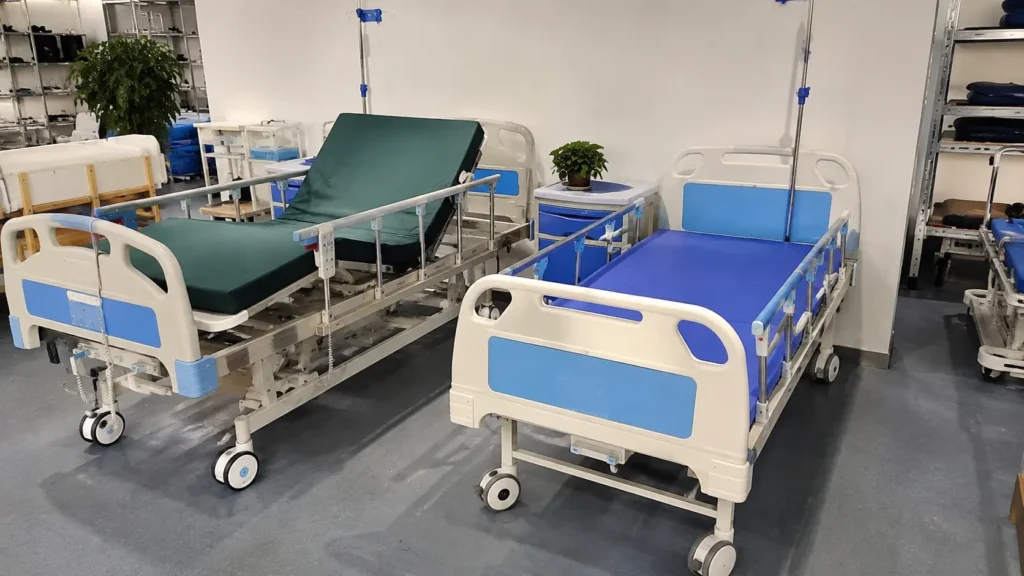
Clinic equipment sourcing should begin with the clinic’s services, rooms, patient flow, local regulatory requirements, and opening schedule. Buyers should create a room-by-room list, separate essential equipment from later upgrades, specify utilities and accessories, verify model-level documents, and send the same RFQ to shortlisted suppliers. For examination and treatment rooms that require medical beds, confirm bed functions, dimensions, cleaning, mobility, accessories, and service support rather than ordering a generic “hospital bed.”
This clinic medical equipment sourcing guide is written for private clinics, polyclinics, outpatient centers, distributors, importers, and project contractors. It focuses on practical B2B purchasing and export coordination, with hospital beds and related care products as Haoshangjia Medical’s core supply area.
1. Define the Clinic Scope
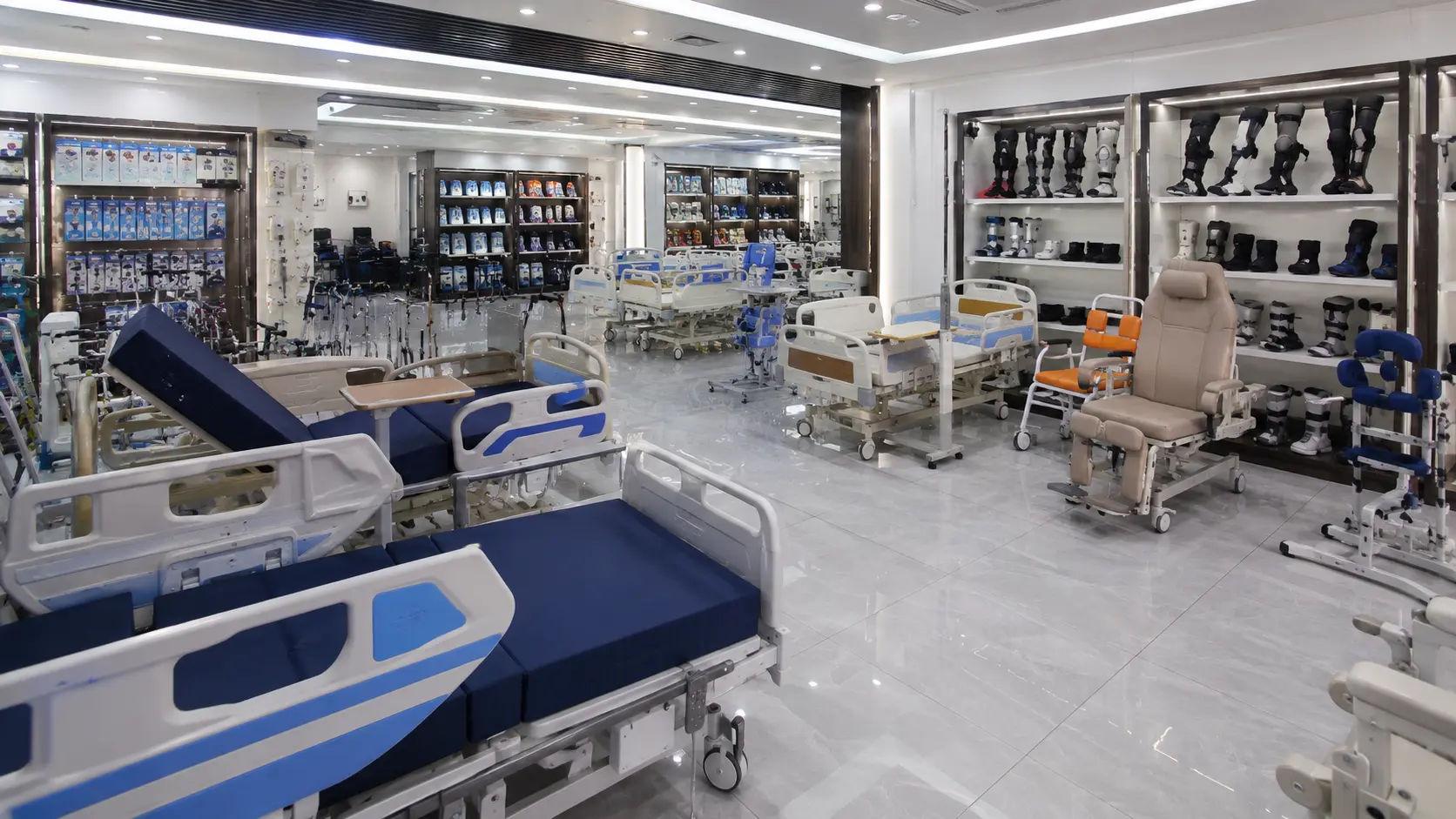
Do not begin with a supplier catalogue. First document the clinic’s service scope, projected patient volume, number of rooms, staffing, opening date, budget, and local licensing pathway. A general outpatient clinic, rehabilitation clinic, imaging clinic, and specialist clinic need different equipment and utilities.
Identify the project stage. A new clinic requires coordinated purchasing, delivery, installation, and opening preparation. An expansion project must work around existing operations. A replacement purchase should consider the dimensions, accessories, maintenance history, and utility connections of the current equipment.
Create a responsibility matrix. State who approves clinical requirements, technical specifications, supplier selection, documents, payment, customs clearance, site preparation, installation, user instruction, and warranty claims. When the importer, contractor, and clinic are different companies, unclear responsibility can delay the opening date.
2. Build a Room-by-Room Equipment List
Organize equipment by room and workflow instead of using one general shopping list. Each line should include department, room, product, quantity, mandatory specification, optional items, utilities, documents, and approval status.
| Room Type | Equipment Planning Focus | Questions to Confirm |
|---|---|---|
| Consultation room | Basic examination and patient positioning | Room size, bed or couch dimensions, step, stool, and cleaning |
| Treatment room | Procedure workflow and mobile access | Required bed functions, accessories, work surfaces, and storage |
| Observation room | Longer patient stay and monitoring access | Manual or electric bed, rails, mattress, casters, and power |
| Rehabilitation room | Transfer space and therapy equipment | Bed height, mobility, tilt table, braces, and floor clearance |
| Imaging support area | Workflow and compatible consumables | Printer or imaging system compatibility and dry-film specifications |
Use a controlled revision number. When the room layout or service scope changes, check whether equipment quantity, power, delivery access, documents, or budget must also change.
3. Separate Essential Equipment From Upgrades
Classify every line as opening-essential, preferred, or future expansion. This protects the opening schedule and prevents optional features from consuming the budget needed for core equipment, accessories, spare parts, and installation.
For each item, ask what task it must perform on opening day. If two products serve the same workflow, compare whether one can be postponed. If a higher-function model is proposed, require the supplier to explain which defined task each additional function supports.
Budget for the complete installed system. Include mattress, rails, casters, tables, IV poles, cables, manuals, spare parts, freight, customs costs, local delivery, assembly, testing, and training where applicable. A low equipment price may not represent a lower project cost.
4. Specify Medical Beds for Clinic Use
Clinics often need fewer bed functions than large hospital departments, but selection still depends on the room and workflow. A manual bed may suit a budget-controlled examination or observation area. An electric hospital bed may fit rooms requiring frequent position changes. A rehabilitation or longer-stay area may require a different height range or accessory set.
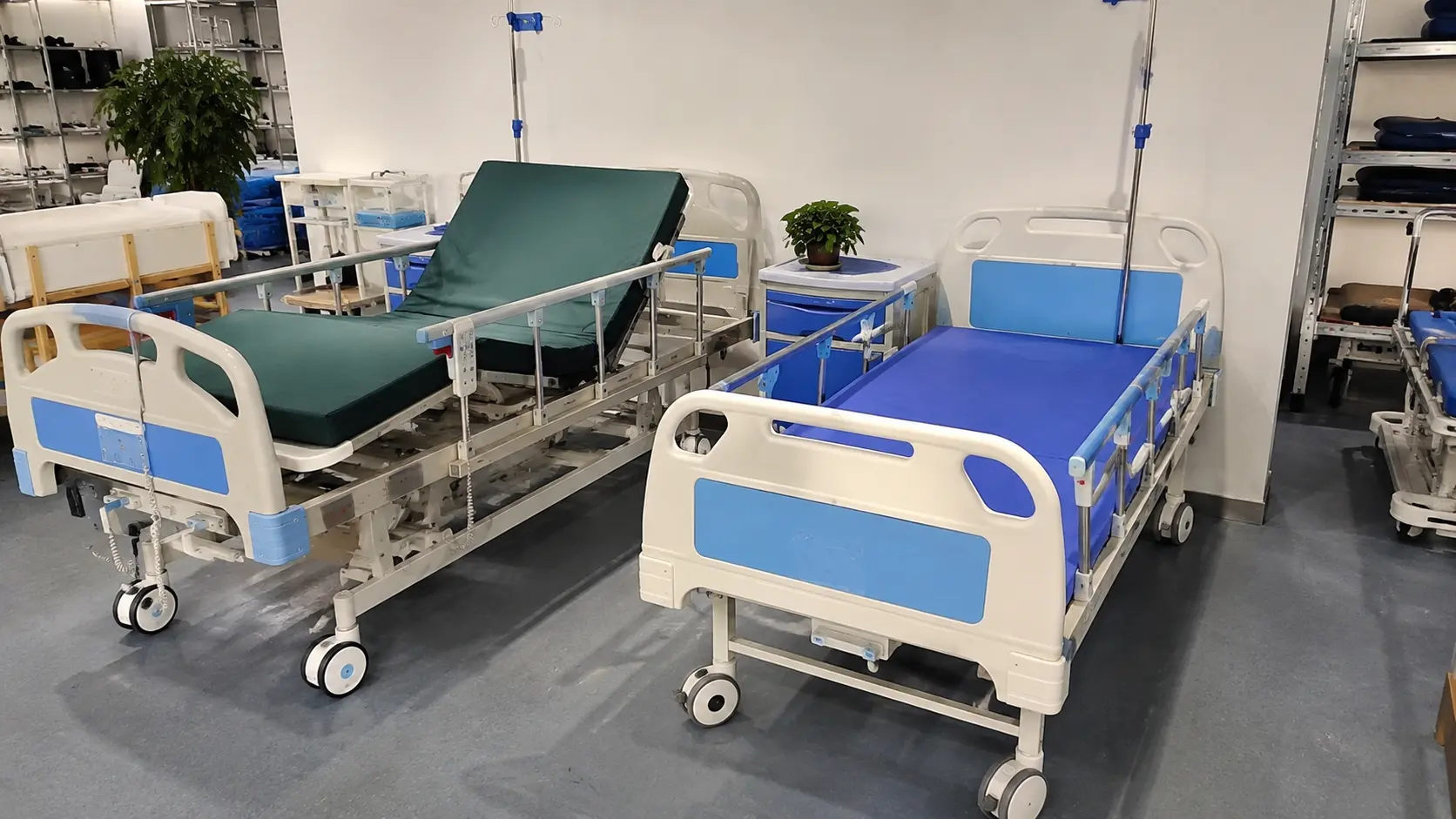
Record the exact model requirements:
- Manual or electric operation and every required movement
- Platform dimensions, overall dimensions, and height range
- Safe working load and any special user-size requirement
- Mattress, side rails, headboard, footboard, casters, and brakes
- Required accessories and quantity per bed
- Materials, surfaces, and compatible cleaning instructions
- Voltage, frequency, plug, controls, and cable management
- Assembly, warranty, and replacement-part support
The electric vs manual hospital bed guide provides a structured comparison. Clinics can also review the application page for a medical equipment supplier for clinics.
5. Confirm Space, Utilities and Interfaces
Measure entrances, corridors, elevators, doorways, corners, room dimensions, and the final assembly area. Compare these measurements with the largest shipping package or assembled component, not only the product’s working dimensions.
For powered equipment, record voltage, frequency, plug type, outlet position, and any project-specific electrical requirement. For equipment requiring water, drainage, network, imaging, ventilation, or other interfaces, the clinic’s qualified technical team should define and approve the requirements before ordering.
Check equipment relationships. A mobile trolley or wheelchair must approach the bed. A mattress must match the platform and rails. Imaging film must match the intended printer or output workflow. Orthopedic supports require a clear product and size range for the clinic or distribution channel.
6. Choose a Sourcing Structure
A single supplier can simplify communication and consolidated shipping, but only if it has genuine control over the quoted products and documents. Multiple specialist suppliers may provide deeper product support but increase coordination, minimum-order, and logistics work.
For each supplier, confirm:
- Whether it manufactures or sources each quoted model
- Who controls specifications, quality checks, labels, and packing
- Who issues the invoice, packing list, warranty, and claim response
- Whether mixed products can be consolidated safely
- How missing, damaged, or incorrect items will be handled
Send the same specification to all shortlisted suppliers. The guide on how to choose a hospital bed supplier provides a useful scorecard for transaction clarity, documentation, samples, logistics, warranty, and spare parts.
7. Verify Documents and Product Evidence
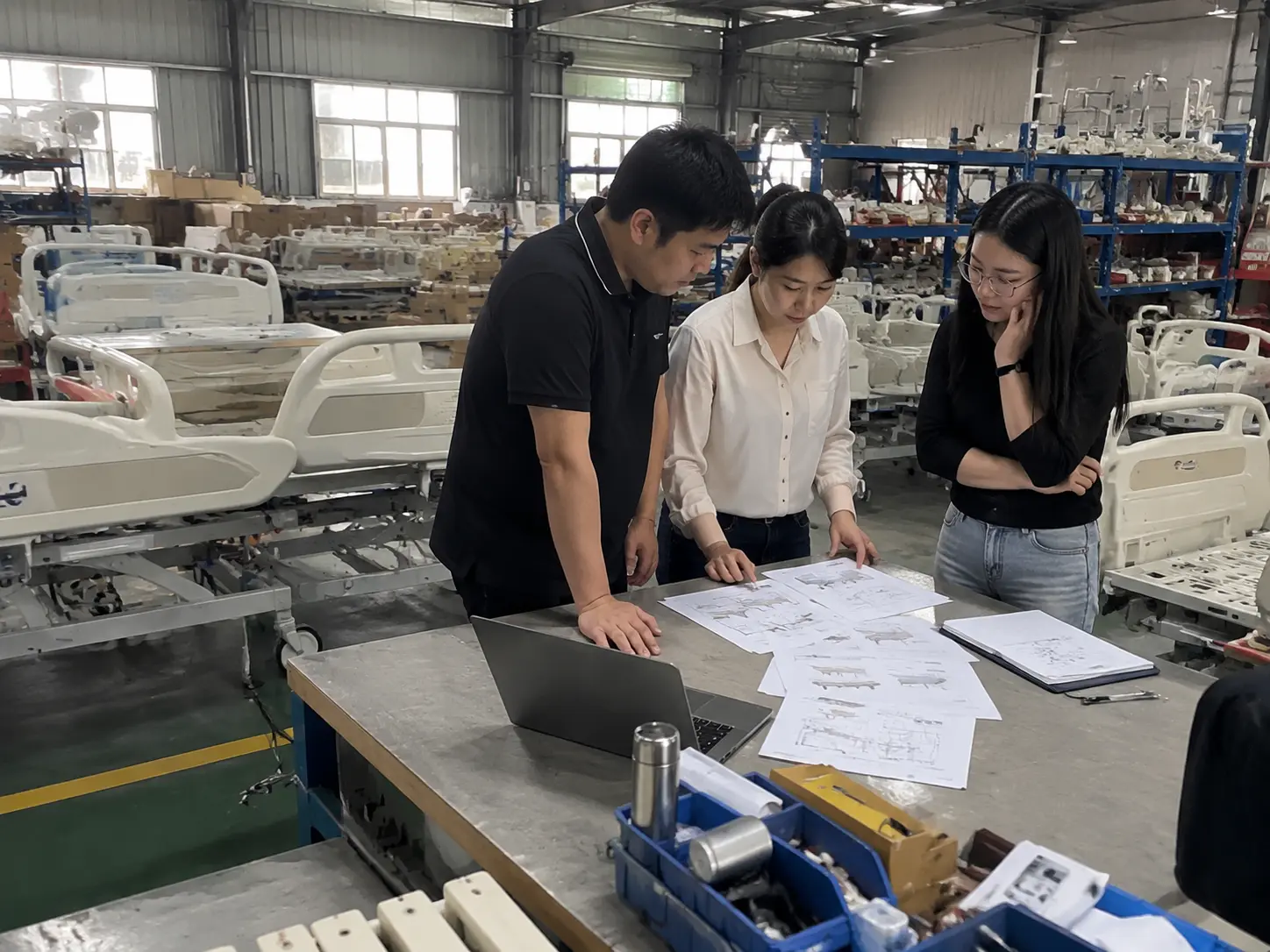
Create a document register for every product model. Include the required file, responsible party, language, due date, and approval status. Common items include quotations, specifications, manuals, labels, commercial invoices, packing lists, inspection evidence, and available conformity-related documents.
Requirements vary by destination, product, model, and clinic licensing pathway. The importer or local registration agent should define current requirements. Do not assume that one company certificate proves every product is accepted in every country.
Review product evidence such as current photos, videos, drawings, labels, packaging examples, sample units, and remote demonstrations. A model number should connect the quotation, specification, manual, labels, packing, and final inspection.
8. Compare Commercial and Logistics Terms
Compare the complete defined offer rather than unit price. Record MOQ by model, mixed-order policy, sample terms, quote validity, payment stages, production lead time, Incoterm and named place, warranty, packing, document support, and excluded charges.
Request package quantity, dimensions, gross weight, volume, and loading estimate. Ask whether equipment ships assembled, semi-assembled, or disassembled and what skills and tools are needed at destination.
Coordinate delivery with site readiness. Equipment that arrives before secure storage is available can be damaged or misplaced. Equipment that arrives too late can delay inspections, staff training, and clinic opening.
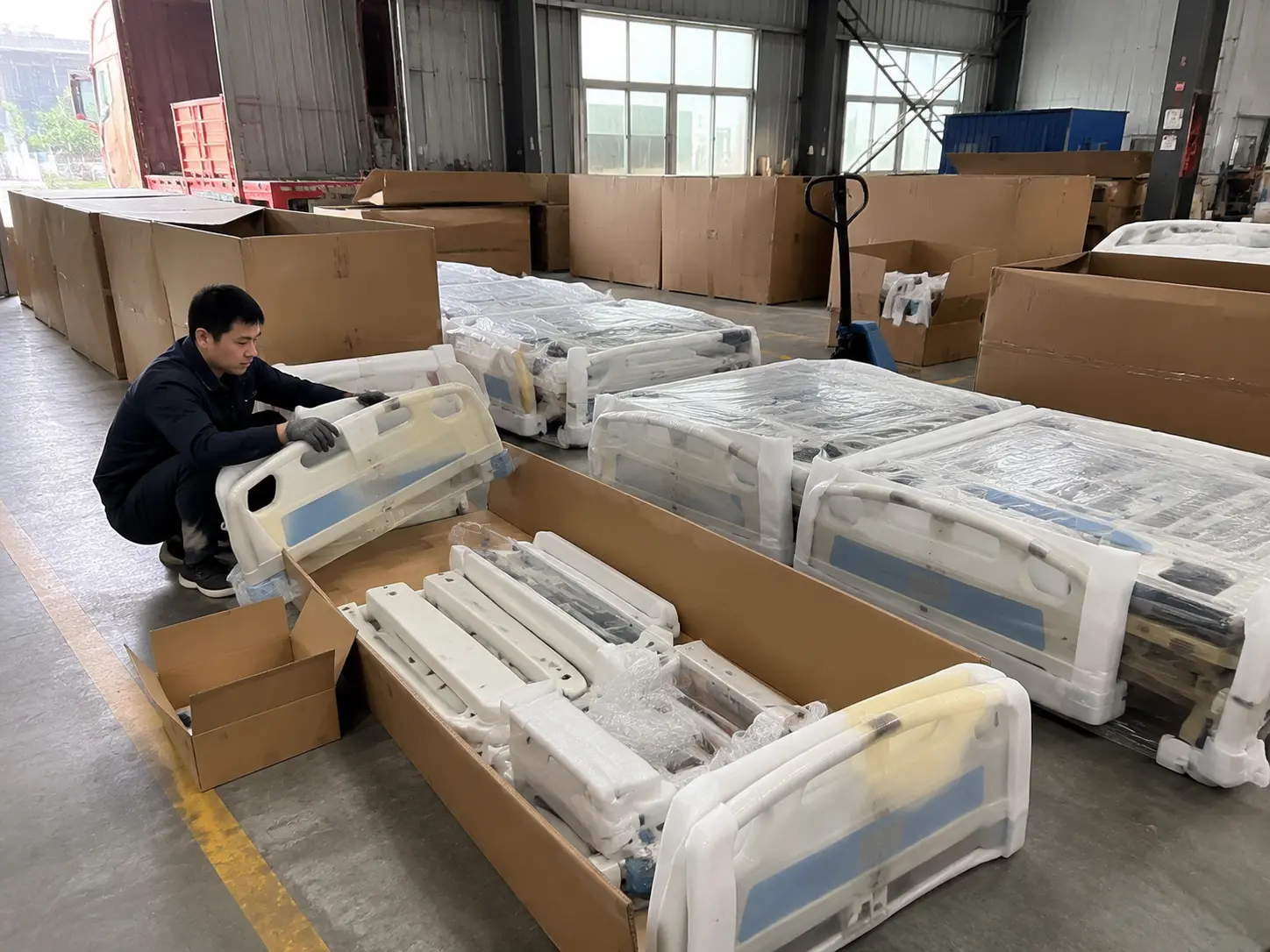
9. Plan Inspection, Installation and Handover
Write the inspection checklist from the approved specification. Check model, quantity, dimensions where required, appearance, functions, controls, accessories, labels, manuals, packaging, and documentation. Record any accepted deviation in writing.
At destination, check shipment condition and quantities before distributing equipment to rooms. Use a room-by-room handover sheet that records model, asset identification, accessory count, function check, document delivery, and responsible signatures.
Training should match roles. Users need operating and basic inspection information. Cleaning teams need approved cleaning instructions. Maintenance staff need service access, replaceable-parts information, and claim procedures. Keep warranty contacts and spare parts linked to the correct model.
10. Clinic Procurement Scenarios
New private clinic
Prioritize opening-essential rooms, freeze specifications early, and phase purchases around construction readiness. Avoid buying equipment before the service scope and utilities are approved.
Polyclinic with several specialties
Use one central equipment schedule but allow department-specific requirements. Standardize common beds, accessories, labels, and spare parts where practical.
Clinic chain replacement program
Audit existing models, failures, room dimensions, and staff feedback. Pilot the replacement model at one location before a larger rollout, then maintain a common spare-parts list.
Distributor supplying small clinics
Build a focused range that local staff can demonstrate and service. Define minimum order, mixed loading, OEM materials, manuals, local delivery, installation, warranty, and customer qualification questions.
Clinic Medical Equipment RFQ Checklist
- Clinic type, services, destination country, port, and opening date
- Room-by-room product list and quantity
- Mandatory functions, dimensions, load, materials, and interfaces
- Standard accessories, options, consumables, and spare parts
- Voltage, frequency, plug, and utility requirements
- OEM labels, manuals, languages, colour, and packaging
- Required import, registration, licensing, and handover documents
- Sample, approval, and inspection process
- MOQ, price, Incoterm, payment, and quote validity
- Lead time, delivery phases, packing dimensions, and loading estimate
- Assembly, testing, training, warranty, and claim procedure
- Inclusions, exclusions, deviations, and optional alternatives
Frequently Asked Questions
What equipment should a new clinic buy first?
Buy the equipment required for approved opening-day services and rooms first. Separate preferred upgrades and future expansion so they do not delay core procurement.
Does a clinic need an electric hospital bed?
It depends on the room, adjustment frequency, caregiver workflow, budget, and maintenance capacity. Some clinics need only manual beds, while observation or treatment rooms may benefit from electric adjustment.
Should a clinic source everything from one supplier?
Only when that supplier can control the specifications, documents, quality, packing, and after-sales responsibilities for each product. Otherwise, specialist suppliers may be safer despite additional coordination.
How can buyers compare clinic equipment quotations?
Send the same room list and specification, then compare the full configuration, accessories, documents, Incoterm, lead time, warranty, and services—not only unit price.
When should product documents be checked?
Before ordering. The importer or local registration adviser should identify destination and model-specific requirements early enough to affect product and supplier selection.
What should be checked before shipment?
Check model, quantity, functions, accessories, labels, manuals, documents, packaging, and approved deviations against the final purchase specification.
Request a Clinic Equipment Quotation
Haoshangjia Medical is a China hospital bed manufacturer and supplier serving clinics, hospitals, nursing homes, rehabilitation centers, home-care distributors, and international medical equipment buyers. Core products include electric, manual, ICU, nursing, and home care beds, with medical dry films and orthopedic supports as related product lines.
Request a hospital bed quote with your clinic type, room schedule, quantities, required bed functions, destination country and port, voltage, accessories, documentation needs, and delivery deadline.