
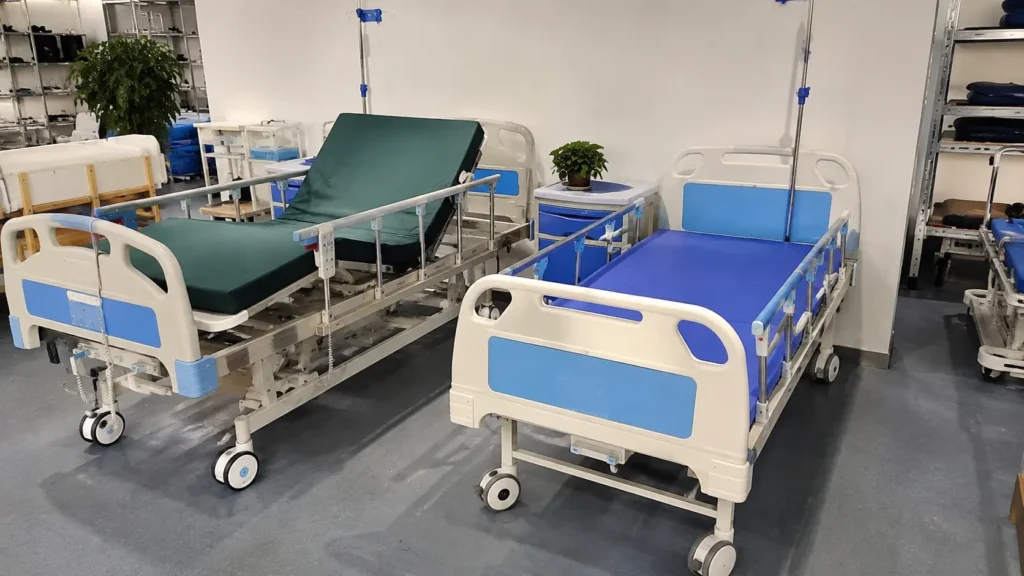
A suitable nursing bed should match the resident’s mobility, transfer needs, care frequency, room layout, and the facility’s maintenance capacity. Buyers should compare adjustment functions, side-rail design, working height, mattress platform, casters, accessories, cleaning requirements, and after-sales documentation—not simply choose the bed with the most functions. For nursing homes and long-term care projects, the best configuration is the one caregivers can use safely and consistently every day.
This nursing bed buying guide is written for nursing homes, rehabilitation facilities, medical equipment distributors, and project procurement teams. It explains how to turn care needs into a clear specification and RFQ while avoiding unnecessary features and ambiguous quotations.
What Is a Nursing Bed?
A nursing bed is an adjustable medical bed designed to support daily care, repositioning, transfers, rest, and longer-term use. Depending on the model, adjustment may be manual or electric and may include backrest elevation, leg positioning, overall height adjustment, or other care-oriented functions.
A nursing bed is not automatically the same as an ICU bed. ICU beds normally support higher-acuity clinical workflows and may require more complex positioning and accessories. Nursing beds are generally selected around repeated daily care, resident comfort, caregiver access, fall-risk management, cleaning, and long-term operating cost. Buyers who are sourcing specifically for long-term care can also review Haoshangjia Medical’s nursing bed options and the application overview for hospital beds for nursing homes.
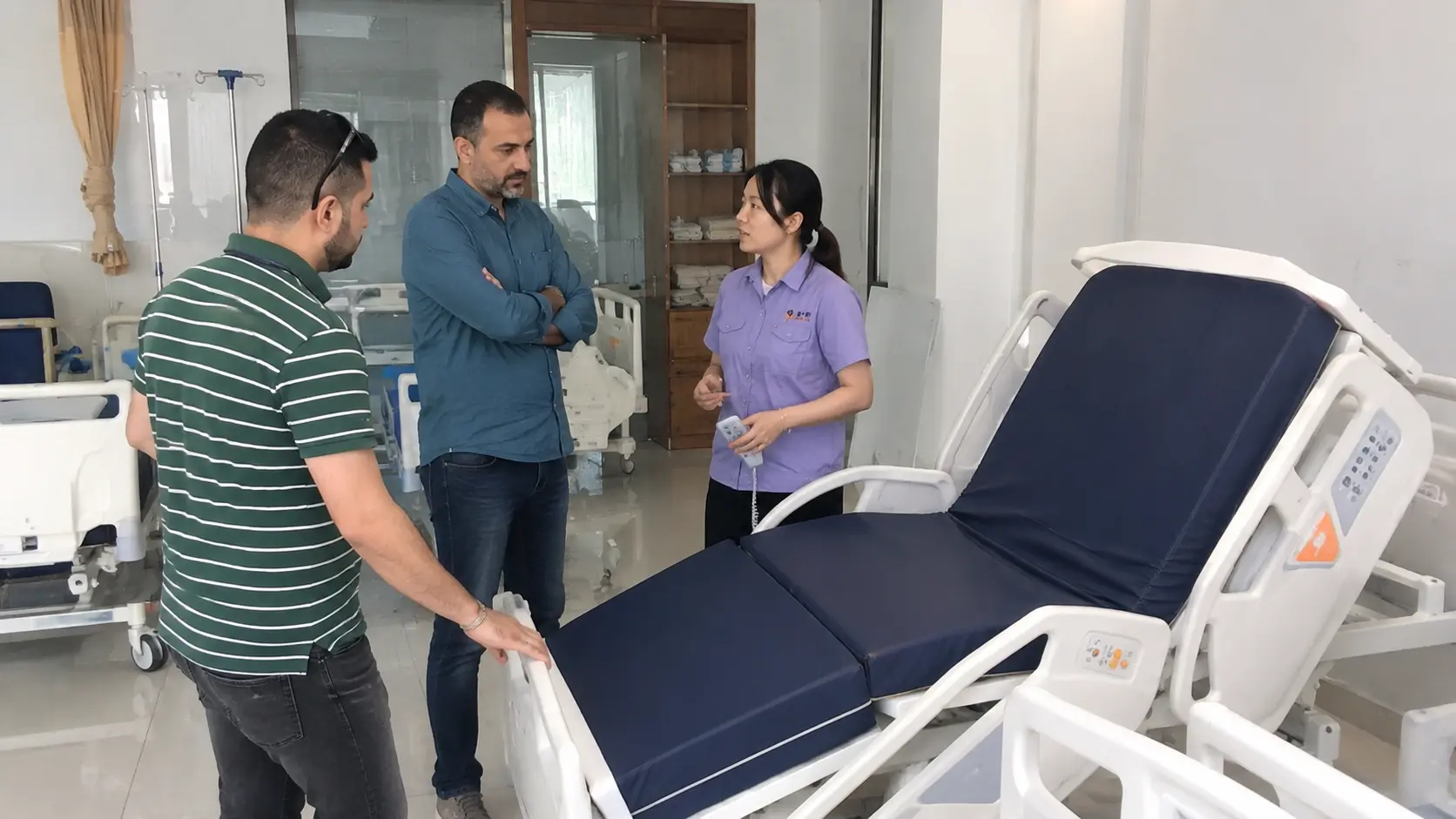
1. Define the Care Scenario Before Comparing Models
Begin with the users and the care routine. A specification based only on a catalogue photo often produces the wrong result. Procurement teams should ask whether residents can reposition themselves, whether staff perform frequent transfers, whether a patient lift or wheelchair must approach the bed, and whether the room is used for temporary recovery or long-term residence.
Record the expected resident profile without making unsupported medical assumptions. Useful operational questions include:
- Can the resident sit up, turn, and leave the bed independently?
- How frequently do caregivers reposition or transfer the resident?
- Will the bed be used with a wheelchair, transfer board, hoist, or bedside commode?
- Is adjustable bed height important for caregiver ergonomics?
- Is the room a shared ward, private room, rehabilitation room, or home-care setting?
- What mattress thickness, width, and pressure-care compatibility are required?
- Does the facility have reliable power and staff who can maintain electric equipment?
This use-case definition prevents overbuying. A higher-function electric model may be appropriate where frequent positioning and height adjustment reduce manual work. A simpler manual bed may be more practical where electricity is unreliable, maintenance resources are limited, or adjustments are infrequent.
2. Choose Functions Based on Daily Tasks
Each adjustment should solve a real care task. Backrest elevation can support an upright resting or eating position. Leg or knee adjustment may improve positioning stability and resident comfort. Overall height adjustment can help staff work at a more suitable level and can make certain transfers easier, depending on the bed, resident, and transfer method.
Do not compare beds only by a function count. Two beds described as “three-function” may differ in adjustment range, control method, platform dimensions, side rails, motors, casters, and included accessories. Ask the supplier to state each movement separately and provide the specification sheet for the exact quoted model.
Choose between electric and manual operation by considering frequency and staffing:
- Electric adjustment: useful when position changes are frequent, residents can operate an approved handset, or staff need quicker adjustment across repeated care tasks.
- Manual crank adjustment: useful for tighter budgets, lower adjustment frequency, or locations where simple maintenance and independence from mains power are priorities.
- Mixed or specialized configurations: should be evaluated only after the required movements, controls, and contingency procedures are confirmed.
For a broader operational comparison, see electric vs manual hospital bed. Buyers considering manual configurations can also review the 2-crank vs 3-crank manual hospital bed guide.
3. Compare Common Nursing Bed Configurations
| Configuration | Typical Fit | Main Advantages | Points to Confirm |
|---|---|---|---|
| Basic manual nursing bed | Lower adjustment frequency and budget-controlled projects | Simple operation, no mains power needed, easier maintenance planning | Crank locations, caregiver access, movements included, spare parts |
| Electric back and leg adjustment | Long-term care rooms with frequent resident positioning | Convenient adjustment and reduced repeated cranking | Motor and handset specification, voltage, plug, backup procedure |
| Electric height-adjustable nursing bed | Facilities prioritizing transfers and caregiver working height | More adaptable for daily care routines | Minimum and maximum height, safe working load, caster performance |
| Home-style care bed | Residential care and home-care distribution | Softer appearance and compatibility with domestic environments | Room access, delivery route, assembly, local service expectations |
| Higher-function medical bed | Complex facility requirements defined by a project specification | More positioning and accessory options | Whether every feature is needed, training, maintenance, total cost |
The table is a procurement starting point, not a substitute for model-level confirmation. Terms and function counts vary by supplier. Include a written configuration list in the purchase agreement so the quotation, pro forma invoice, and final inspection use the same definition.
4. Check Safety and Caregiver Usability
Safety must be assessed as a complete system involving the bed, mattress, side rails, resident, accessories, room, and care procedure. A feature that is appropriate in one facility may not be appropriate in another. The buyer should follow local regulations and the facility’s clinical risk-assessment process.
Side rails and gaps
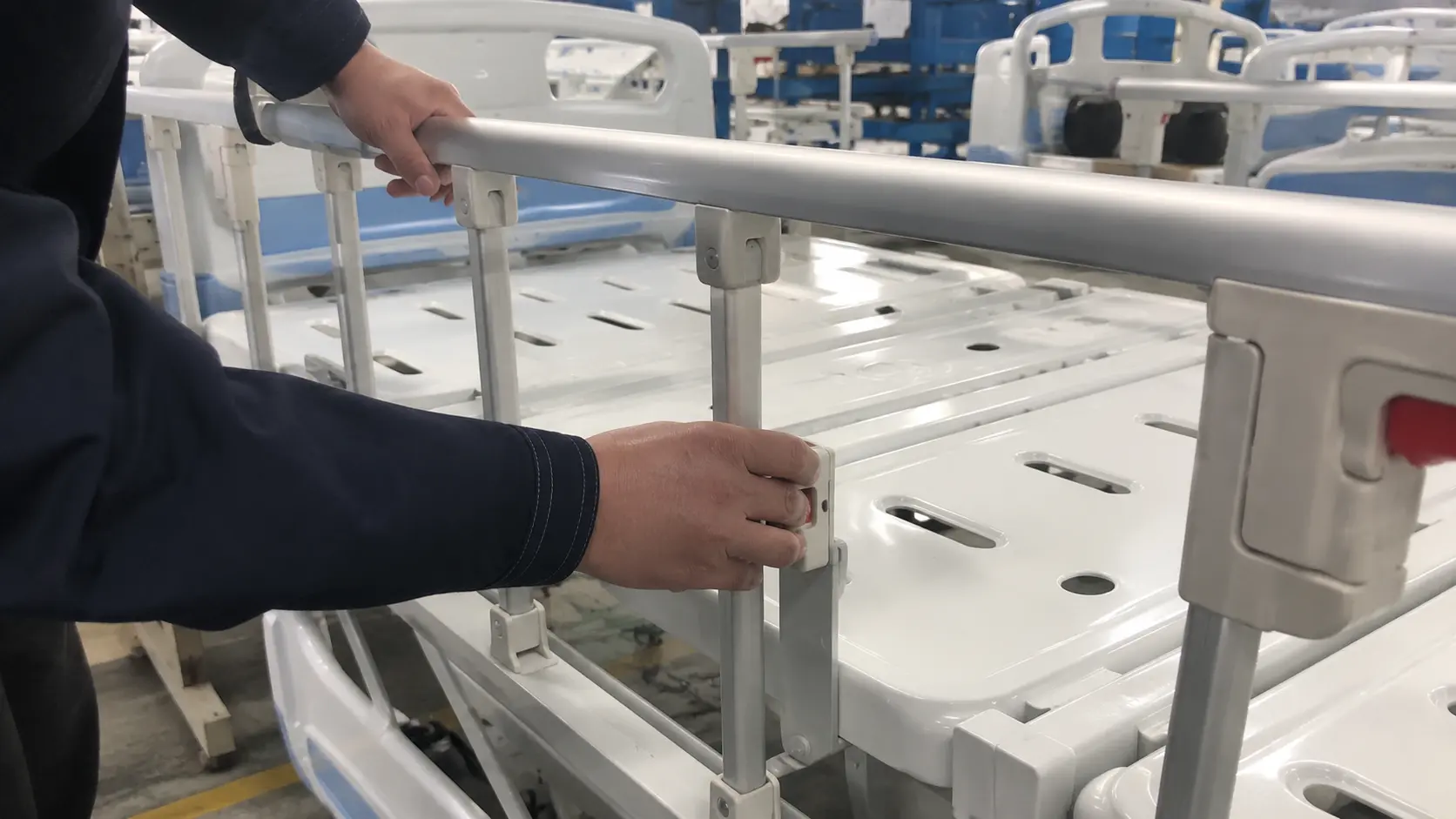
Confirm the rail type, rail movement, locking method, height above the intended mattress, and compatibility with the mattress dimensions. Ask for drawings or measurements of relevant gaps. Side rails are not a universal fall-prevention solution and should be selected through the facility’s own assessment.
Working load and resident size
Request the safe working load for the complete bed and clarify how it differs from the maximum patient weight, if applicable. Include the mattress, accessories, and anticipated loads in the assessment. Bariatric or unusually wide-bed requirements should be specified rather than assumed.
Casters and brakes
Check caster diameter, braking arrangement, steering needs, floor conditions, and how often the bed will be moved. A bed used mainly in one room has different mobility needs from one moved regularly through corridors and elevators.
Cleaning and service access
Look for accessible surfaces, removable components where appropriate, and clear cleaning instructions. Confirm which cleaning agents and procedures are compatible with the supplied materials. Maintenance teams should be able to reach motors, actuators, cables, controls, and mechanical parts without unnecessary disassembly.
5. Match the Bed to the Room and Workflow
Before ordering, verify the bed’s overall dimensions—not only the mattress platform. Measure doors, elevators, corridors, turning areas, and space beside and behind the bed. Include side rails, bumpers, headboards, footboards, and accessories in the clearance check.
For electric beds, state the destination voltage, frequency, and plug type in the RFQ. Ask how cables are routed and protected, what happens during a power interruption, and whether any backup function is included in the quoted model. Do not assume electrical configurations are identical across markets.
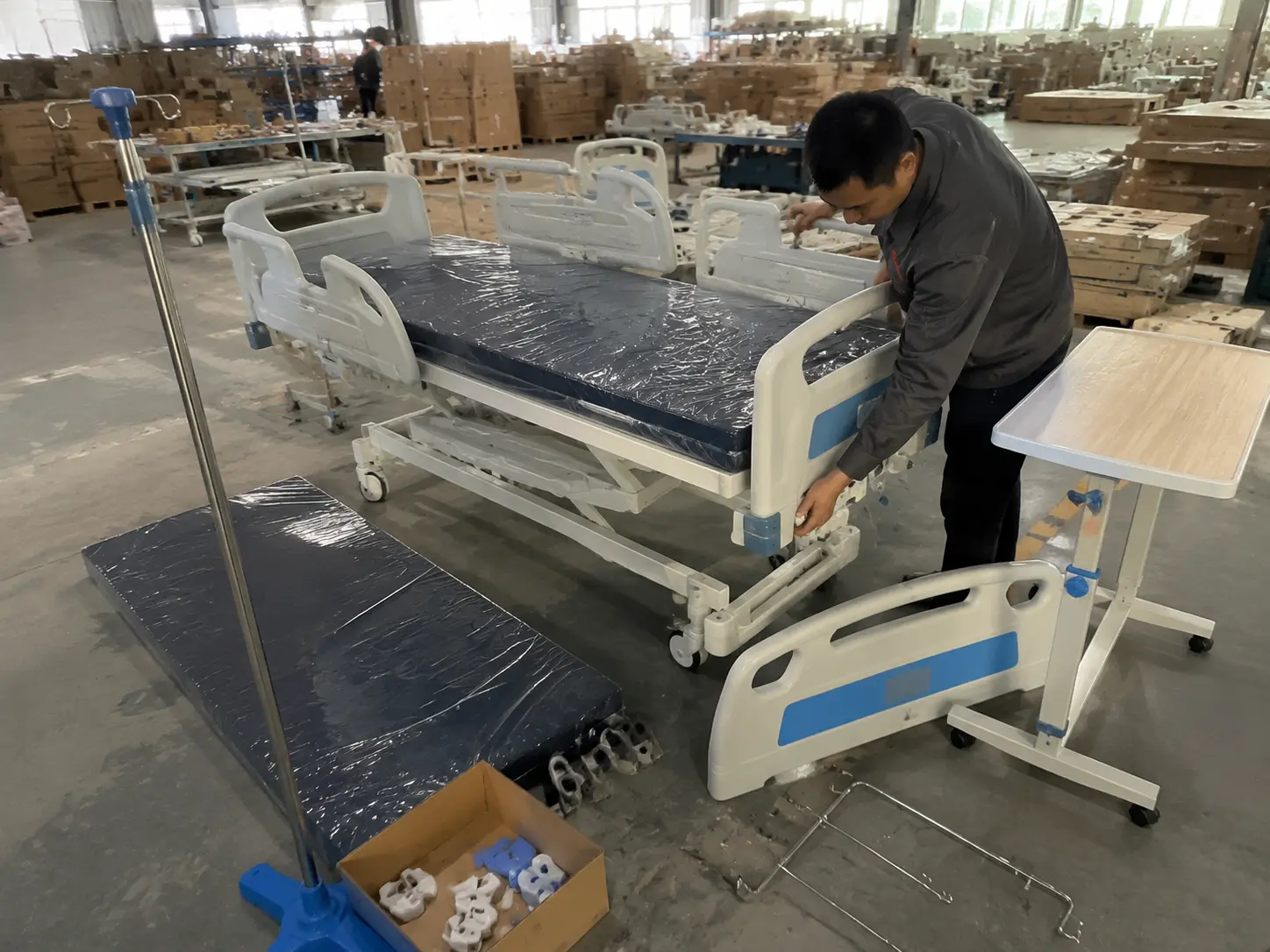
Also plan accessory interfaces. IV poles, dining tables, drainage hooks, mattress retainers, lifting poles, and other accessories may be standard, optional, or unavailable depending on the model. List required accessories by quantity and ask whether they are factory-installed, packed separately, or sourced locally.
6. Procurement Scenarios
Scenario A: Nursing home replacement project
A facility replacing mixed older beds should first standardize the essential functions and parts. It may choose one main electric model for most rooms and a simpler model for lower-dependency residents. Standardizing handsets, casters, rails, and common spare parts can simplify staff training and maintenance. The RFQ should identify existing room constraints and the planned replacement schedule.
Scenario B: New long-term care facility
A new project can compare beds by room type. Standard rooms, higher-support rooms, rehabilitation rooms, and isolation areas may need different configurations. Buyers should prepare a room-by-room quantity schedule, accessory schedule, delivery phases, and document list before requesting final pricing.
Scenario C: Medical equipment distributor
A distributor may need a small, serviceable product range instead of many overlapping models. A practical portfolio could include one manual entry model, one electric nursing bed, and one home-style option. Confirm OEM branding, packaging, manuals, spare-parts availability, carton dimensions, and minimum order quantities for each model.
Scenario D: Home-care channel
Home-care buyers must pay extra attention to doorway access, assembly, noise, appearance, caregiver training, and local delivery service. The product requirements may differ from institutional procurement. Review the dedicated home care hospital bed range when residential use and distributor resale are the main priorities.
7. Evaluate the Supplier and Documents
A quotation is useful only when it describes an identifiable configuration. Ask the supplier to connect the model number, function list, dimensions, load data, materials, motors or cranks, rails, casters, mattress, accessories, packaging, and documents in one offer.
For import or project procurement, confirm which documents can be provided for the exact model and destination. Documentation support may include product specifications, commercial documents, packing information, manuals, and available conformity-related documents depending on the model. Regulatory acceptance is market-specific, so the importer or local registration agent should verify requirements before the order.
Evaluate these commercial points as well:
- MOQ by model and whether mixed configurations are accepted
- Sample availability and sample lead time
- Production lead time after deposit and specification approval
- Warranty scope, exclusions, and claim procedure
- Recommended spare-parts list and availability period
- OEM logo, label, colour, manual, and packaging options
- Pre-shipment inspection method and photo or video records
- Packing dimensions, gross weight, and container-loading estimate
8. Nursing Bed RFQ Checklist
Send the same structured RFQ to shortlisted suppliers so their offers can be compared line by line.
- Buyer company, destination country, and destination port
- Facility type: nursing home, long-term care, rehabilitation, distributor, or home care
- Required quantity by model or room type
- Manual or electric operation and each required adjustment
- Required minimum and maximum bed height, if height adjustment is needed
- Mattress platform size, overall size limits, and required mattress
- Safe working load and any special resident-size requirement
- Side-rail type, caster and brake requirements, headboard and footboard
- Accessories and quantity per bed
- Voltage, frequency, and plug type for electric models
- OEM logo, labels, colour, manuals, and packaging requirements
- Required import, tender, or registration documents
- MOQ, Incoterm, lead time, warranty, and spare-parts request
- Inspection standard and requested packing or loading information
Attach a spreadsheet for multi-model projects. Keep optional items separate from the base configuration, and ask suppliers to state exclusions. This prevents a low headline price from hiding missing mattresses, rails, motors, accessories, or documentation.
Frequently Asked Questions
What is the most important factor when choosing a nursing bed?
The most important factor is fit with the actual care routine. Resident mobility, transfer method, adjustment frequency, caregiver access, room dimensions, and maintenance capacity should determine the configuration.
Is an electric nursing bed always better than a manual bed?
No. Electric adjustment is useful for frequent positioning and convenient operation, while a manual bed may suit lower adjustment frequency, constrained budgets, or locations prioritizing simpler maintenance. Compare total operating needs, not only purchase price.
How many functions should a nursing bed have?
There is no universal number. Specify the movements needed for daily care, then verify what the supplier means by each function. Function-count terminology can vary between models and suppliers.
Should the mattress be included in the nursing bed quotation?
It should be clearly included or excluded. State the required dimensions, thickness, cover, and care-related performance requirements, and confirm compatibility with side rails and the mattress platform.
What documents should an importer request?
Request the exact model specification, commercial and packing documents, user manual, available conformity-related documents, and any destination-specific files required by the importer or registration agent. Confirm availability before ordering.
Can nursing beds be OEM branded?
OEM branding may be available depending on model, quantity, labels, manuals, and packaging. Define the artwork, language, placement, approval process, and MOQ in the RFQ.
Build a Comparable Nursing Bed Quotation
Haoshangjia Medical is a China hospital bed manufacturer and supplier serving nursing homes, rehabilitation facilities, hospitals, home-care distributors, and medical equipment buyers. To receive a model-based quotation, send your quantity, required adjustments, destination country and port, voltage, accessories, documentation needs, and preferred trade term.
Request a hospital bed quote and ask for the specification sheet, optional accessory list, packing data, lead time, warranty terms, and available export documents for the proposed nursing bed.