
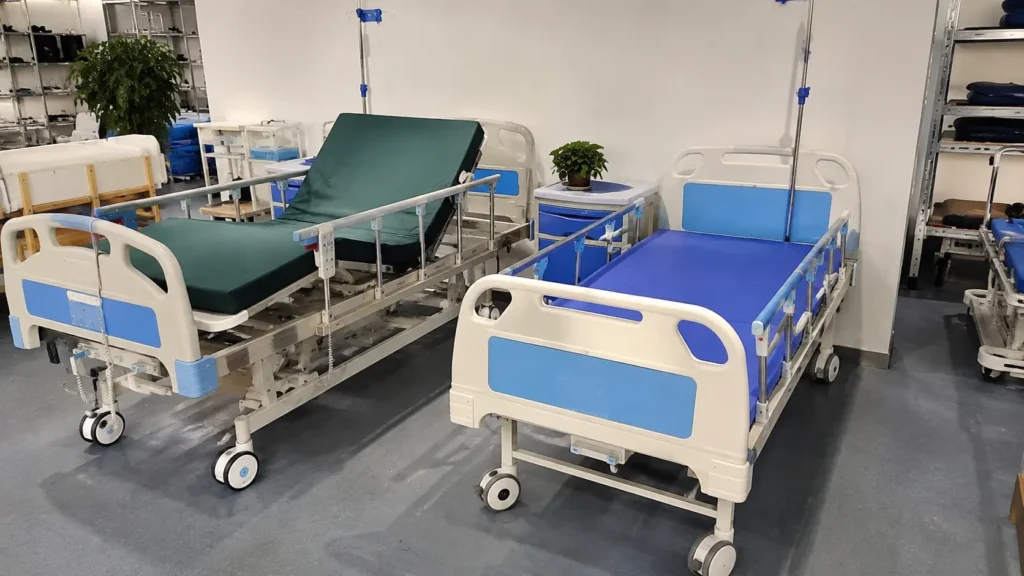
An elderly care bed should be selected by matching the older person’s mobility, transfer method, daily positioning needs, caregiver support, room environment, and maintenance resources. Buyers should not choose by appearance or function count alone. First define the care scenario; then compare adjustment type, working height, mattress platform, side rails, casters, accessories, cleaning, electrical configuration, and supplier support.
This elderly care bed selection guide is designed for nursing homes, assisted-living projects, rehabilitation facilities, home-care distributors, importers, and medical equipment procurement teams. It focuses on purchasing and configuration decisions. Individual use should still follow an appropriate local care assessment and applicable regulations.
The Core Selection Principle
The best elderly care bed is not necessarily the model with the most motors or accessories. It is the bed whose essential functions are used consistently, whose dimensions fit the room and transfer routine, and whose parts can be maintained by the buyer’s service system.
Procurement teams should separate three questions:
- What does the user need? Consider mobility, repositioning, transfer method, body size, and expected duration of use.
- What does the caregiver need? Consider working access, adjustment frequency, cleaning, controls, and equipment used beside the bed.
- What can the organization support? Consider budget, electricity, training, spare parts, maintenance coverage, and local compliance.
This approach reduces over-specification and helps buyers compare quotations on the same basis.
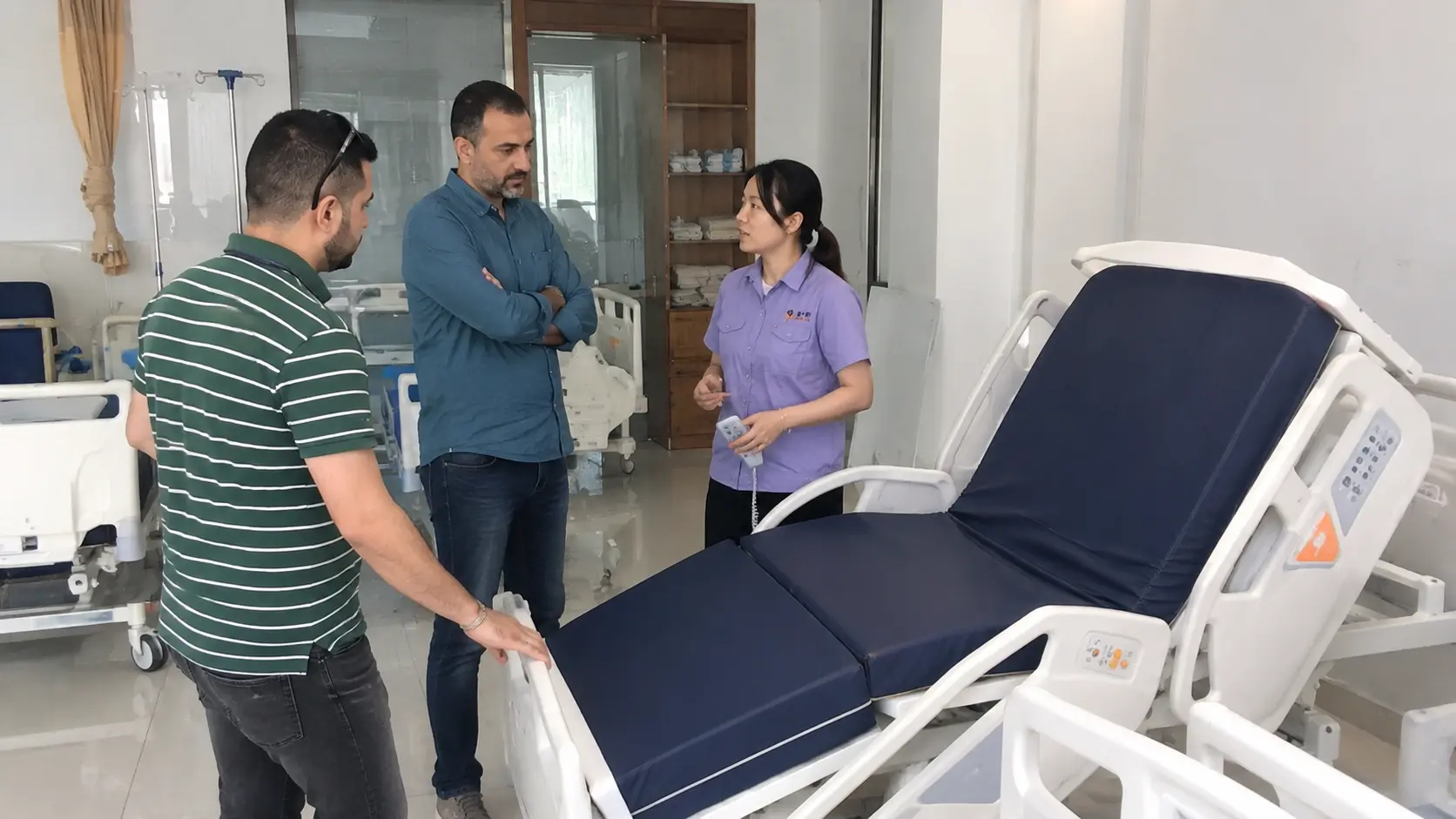
1. Build a Care and Mobility Profile
Before reviewing models, create a short operational profile. Avoid diagnosing the user; record only the practical factors that affect equipment selection. For group procurement, divide residents or customers into a small number of care scenarios rather than trying to make one configuration serve every situation.
- Can the person turn, sit up, and leave the bed independently?
- How frequently is repositioning required during the day?
- Is transfer performed independently, with caregiver assistance, by wheelchair, or with a lifting device?
- Does the user need frequent backrest or leg-position adjustment?
- Would adjustable bed height support the planned care workflow?
- What mattress dimensions and care-related mattress characteristics are required?
- Are there special body-size or load requirements?
- Is the bed intended for a private home, assisted living, nursing home, or rehabilitation facility?
For a nursing home project, the profile may show that most rooms need a standard electric nursing bed while a smaller number require a different height range or additional accessories. For a distributor, the same exercise can define a practical good-better-best product range.
2. Choose the Right Bed Category
| Bed Category | Best-Fit Scenario | Main Strength | Important Limitation or Check |
|---|---|---|---|
| Manual nursing bed | Lower adjustment frequency, limited power, budget-controlled projects | Simple operation and maintenance | Caregiver must access and operate cranks |
| Electric nursing bed | Frequent daily positioning in care facilities | Convenient repeated adjustment | Electrical parts, controls, voltage, and service plan |
| Height-adjustable care bed | Care routines involving frequent assistance or planned transfers | Adaptable working and transfer height | Minimum/maximum height and full system stability |
| Home care hospital bed | Private homes and home medical equipment channels | Designed around residential delivery and use | Doorways, assembly, appearance, and local service |
| Higher-function medical bed | Defined project needs requiring additional movements | More positioning options | Do not pay for functions without a clear use case |
A nursing bed is generally the most relevant starting point for long-term care facilities. Buyers can review the nursing bed product range and use the existing nursing bed buying guide for a detailed institutional procurement workflow. For residential channels, compare the dedicated home care hospital bed options.
3. Match Functions to Daily Tasks
Backrest adjustment
Backrest elevation can support upright resting and common daily activities. Confirm the adjustment method, range, controls, and whether the mattress and accessories remain correctly positioned during movement.
Leg or knee adjustment
Leg-platform movement may support positioning and help prevent the user from sliding when the back section is raised, depending on the configuration. Ask the supplier to show each movement separately rather than relying on a function-count label.
Overall height adjustment
Adjustable height may support caregiver access and some transfer routines. Record the required minimum and maximum platform height, including the intended mattress thickness. A low marketing label is not enough; request measurements for the quoted model.
Manual or electric operation
Electric operation is useful when adjustments are frequent or convenient control matters. Manual operation may be appropriate when adjustments are less frequent, budgets are constrained, or maintenance simplicity is a priority. Consider staff workload, power reliability, user capability, and service coverage together. See the electric vs manual hospital bed comparison for additional procurement factors.
Controls and access
Confirm who may operate the bed, where controls are positioned, whether any locking feature is available, and how cables or cranks are protected. Controls should be understandable for the intended setting, with instructions provided in the required language.
4. Evaluate the Complete Bed System
Safety cannot be judged from the frame alone. Evaluate the bed together with the mattress, side rails, accessories, user, room, and local care procedure. The buyer’s local team should assess suitability for individual users.
Mattress and platform
Confirm platform length and width, mattress dimensions and thickness, cover, cleaning method, retainers, and compatibility with bed movement. If a specialist mattress is required, verify that it works with the selected platform and does not create unsuitable rail height or gaps.
Side rails
Ask for rail length, movement, locking mechanism, release access, height with the intended mattress, and relevant gap measurements. Side rails are not appropriate as a universal response to fall risk. Their use should follow local guidance and individual assessment.
Load and stability
Request the safe working load and clarify its relationship to the permitted user weight. Include mattress, accessories, and other expected loads. Buyers with wider-bed or higher-load requirements should state them explicitly.
Casters and brakes
Check caster diameter, material, braking arrangement, floor compatibility, and movement frequency. Verify that caregivers can reach the brakes in the actual room layout and that the bed can be manoeuvred through required spaces.
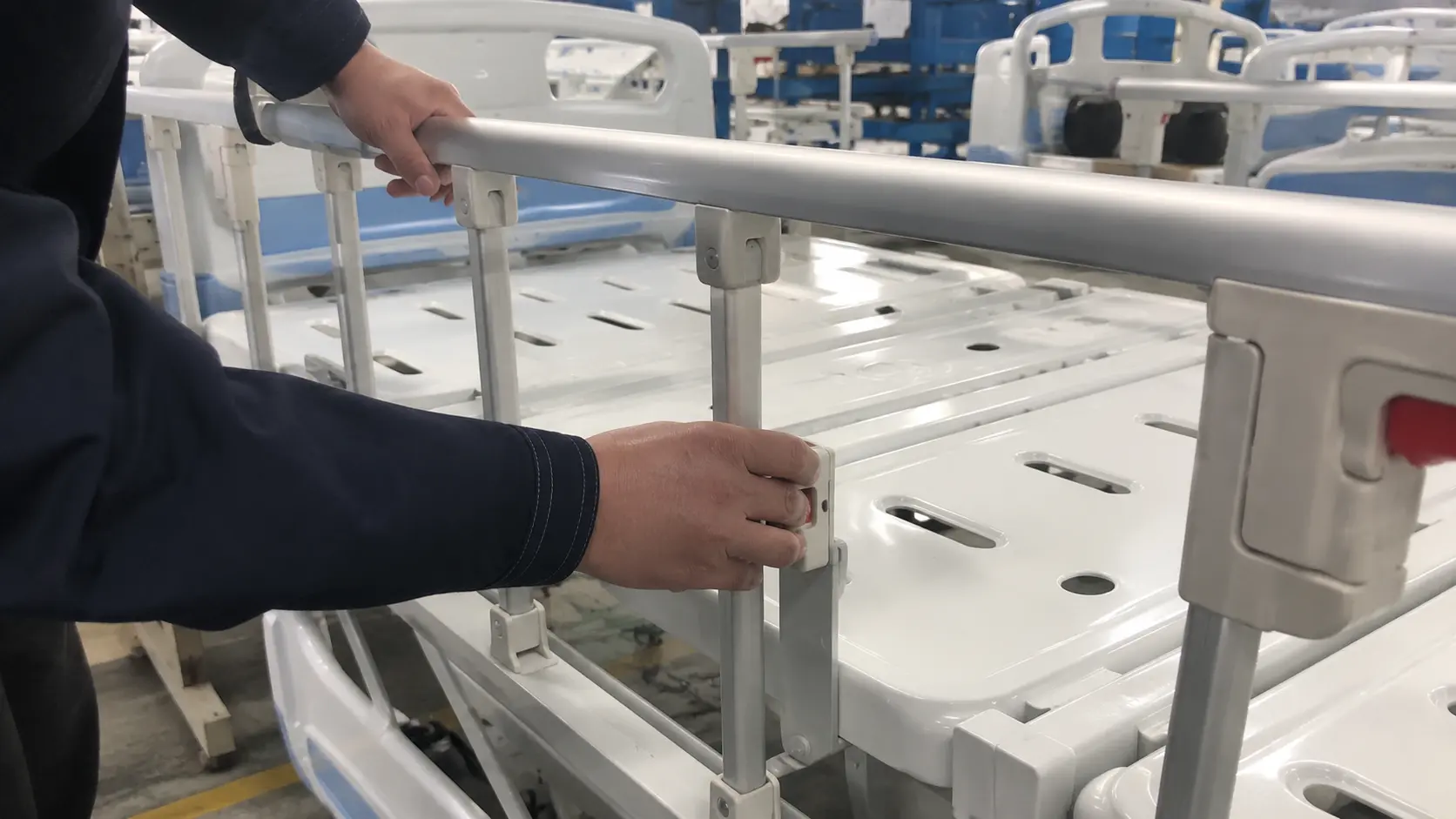
5. Check the Care Environment
Measure the total room and delivery route. Record entrances, doors, corridors, elevators, corners, stairs, and the final assembly area. Compare these measurements with the largest package or assembled component, not only the mattress width.
Leave usable space for caregivers, transfers, cleaning, and accessories. Confirm whether a wheelchair, patient lift, overbed table, bedside cabinet, or commode must approach the bed. Check under-bed clearance if mobile equipment is used.
For electric models, state the destination voltage, frequency, and plug type. Ask what happens during a power interruption and whether a backup feature is included in the exact quotation. Confirm cable routing and the location of suitable outlets.
Residential projects must also plan last-mile delivery and assembly. Facility projects should consider corridor movement, elevator dimensions, room standardization, and phased installation. Environmental fit is a procurement specification, not a detail to solve after shipment.
6. Apply the Guide to Procurement Scenarios
Scenario A: Nursing home standardization
The facility groups rooms by care intensity and chooses one standard model for most rooms, plus a limited number of alternative configurations. Standardized handsets, rails, casters, and spare parts can reduce training and maintenance complexity. Review the application requirements for hospital beds for nursing homes.
Scenario B: Assisted-living expansion
The buyer prioritizes residential appearance but still requires durable cleanable surfaces, reliable controls, and caregiver access. Room dimensions and resident profiles are checked before selecting the platform height, rails, and accessories.
Scenario C: Home-care distributor
The distributor offers a manual entry model, a standard electric model, and a height-adjustable option. Sales staff use an intake checklist, while service staff stock common parts and follow a defined installation and warranty process. The home care hospital bed buying guide covers delivery and channel details.
Scenario D: Rehabilitation project
The project coordinates bed selection with the planned transfer equipment and rehabilitation workflow. It confirms room access, height range, casters, accessories, and cleaning procedures rather than choosing a model only because it is described as a rehabilitation or elderly bed.
7. Compare Total Cost and Serviceability
Purchase price is only one part of cost. Buyers should compare the delivered configuration, installation, training, expected replacement parts, local labour, downtime, warranty handling, and the cost of stocking multiple incompatible models.
Ask whether motors, actuators, control boxes, handsets, casters, rails, boards, and mechanical components are replaceable. Request part identification and a recommended spare-parts list based on quantity and expected use. Confirm warranty duration, scope, exclusions, claim evidence, response method, and who pays freight for replacement parts.
A simpler model with dependable parts and clear documentation may produce a better total cost than a higher-function bed that the local team cannot service. For multi-site projects, standardization can improve purchasing leverage and reduce training and inventory requirements.
8. Check Supplier and Documentation Support
Require a model-specific specification and quotation. It should identify every movement, dimensions, load information, materials, controls, electrical configuration, rails, casters, mattress, accessories, packaging, and optional items.
Confirm MOQ, sample availability, production lead time, Incoterm, packing dimensions, gross weight, container-loading estimate, inspection process, OEM options, and spare-parts support. For private-label projects, define logo files, labels, manual language, carton marks, artwork approval, and model identification.
Ask which commercial, packing, manual, and conformity-related documents are available for the exact model. Documentation support can vary. Importers and local registration agents should verify destination-market requirements before placing an order; do not assume that one general certificate guarantees acceptance of every model.
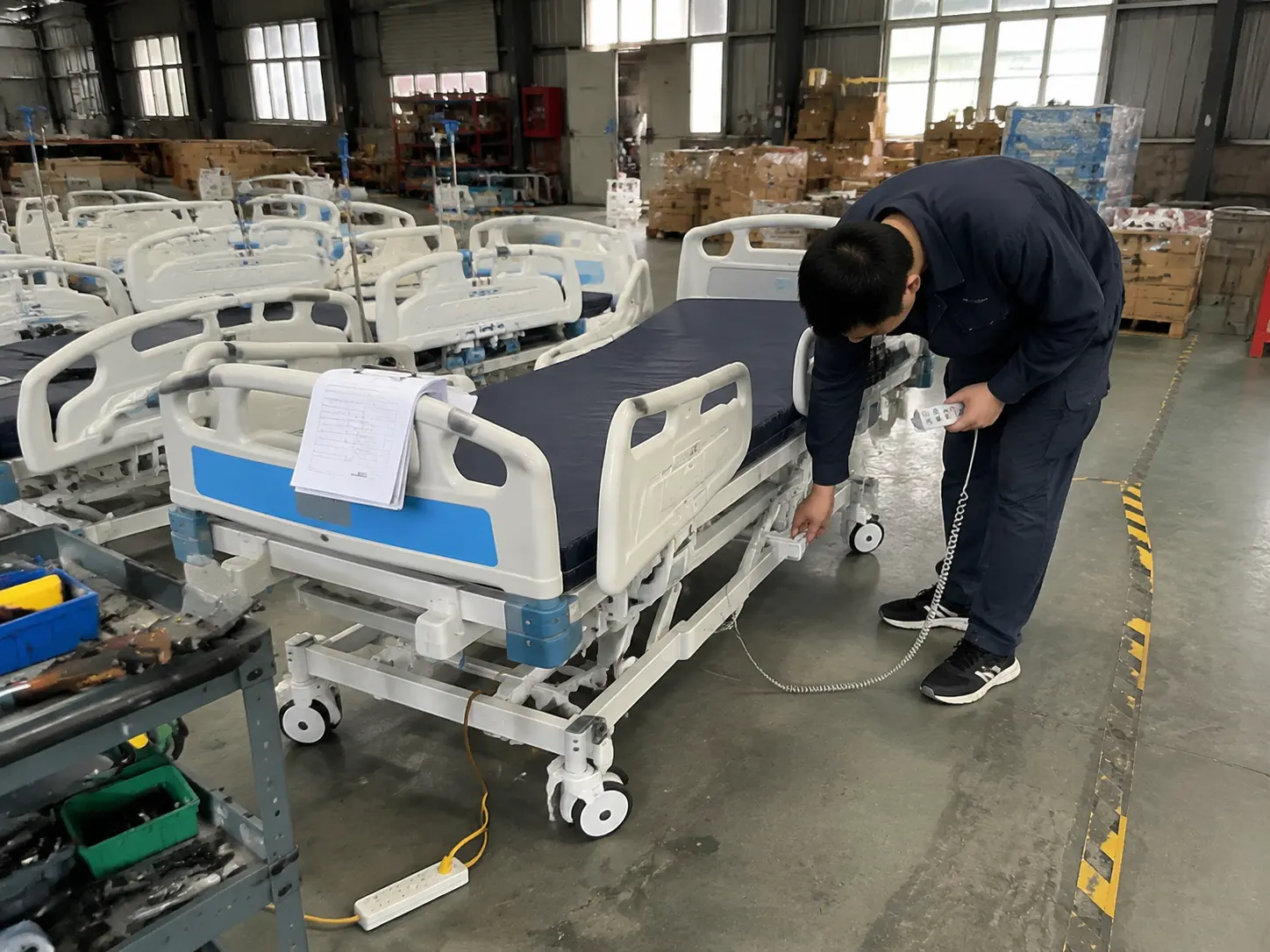
9. Elderly Care Bed RFQ Checklist
- Buyer, destination country, destination port, and care setting
- Quantity by resident group, room type, or model
- Manual or electric operation and each required movement
- Minimum and maximum height requirements
- Platform, mattress, overall, and package dimensions
- Safe working load and special size requirements
- Side rails, boards, casters, brakes, and accessories
- Voltage, frequency, plug, controls, and backup requirements
- Room, transfer-equipment, doorway, and elevator constraints
- Cleaning, assembly, training, and maintenance documents
- OEM labels, manuals, colour, and packaging requirements
- Import, registration, tender, or conformity documents required
- MOQ, sample, lead time, Incoterm, warranty, and spare parts
- Inspection method, packing data, and loading estimate
Send the same checklist to each shortlisted supplier and require optional items to be priced separately. This makes quotations comparable and establishes a clear basis for sample approval, purchase agreement, and pre-shipment inspection.
Frequently Asked Questions
What type of bed is best for elderly care?
The best type depends on mobility, transfer method, adjustment frequency, caregiver support, room layout, and maintenance capacity. Nursing beds and home care beds are common starting categories, but the exact configuration should follow the care scenario.
How many functions does an elderly care bed need?
Only the functions required for defined daily tasks. Ask suppliers to list each movement because terms such as two-function or three-function may not mean exactly the same thing across models.
Is an electric bed better for older people?
Electric adjustment can be more convenient when repositioning is frequent. A manual bed may be suitable where adjustments are less frequent or simpler maintenance is important. The user, caregiver, power, and service situation should be considered together.
Should buyers order the mattress with the bed?
The quotation should clearly include or exclude it. Confirm dimensions, thickness, cover, care requirements, and compatibility with the platform and rails before ordering.
What information should an importer request from the supplier?
Request the exact specification, included and optional items, packaging, lead time, warranty, parts support, manuals, commercial documents, and available model-specific conformity documentation.
Can elderly care beds be OEM branded?
OEM branding may be available depending on model and quantity. Define artwork, labels, manual language, carton marks, approval steps, and MOQ in the RFQ.
Request an Elderly Care Bed Quotation
Haoshangjia Medical is a China hospital bed manufacturer and supplier for nursing homes, home-care distributors, hospitals, rehabilitation facilities, and medical equipment buyers. Product details and available documents should be confirmed for the exact proposed model.
Request a hospital bed quote with your quantity, care setting, required movements, dimensions, destination country and port, voltage, accessories, OEM needs, and documentation requirements. Ask for the model specification, packing data, lead time, warranty terms, and spare-parts proposal.